Motion Control & Motors Blog
Linear Motor Basics
One exciting recent development in motor science is the rise of the linear motor. Linear motors are electric induction motors that use some very interesting principles. They make possible ultra-fast “maglev” (magnetic levitation) trains and other innovations.
Speed and Efficiency Make Linear Motors Different
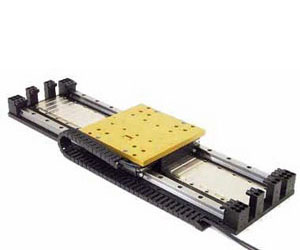
The average electrical motor produces rotational motion to move a load. Linear motors, as the name implies, produce motion in a straight line. Instead of having a rotating rotor that turns a static stator, the linear motor’s stator is unwrapped and laid out flat.
Linear motors can be extremely energy efficient and achieve amazing speeds. They typically use superconducting magnets cooled to ultra-low temperatures. This reduces power consumption and inevitable thermal wear and tear.
Linear Motors in Practical Applications
The basic ideas behind linear motors have been around for a long time. In fact, the fundamental principles that make them possible were first articulated in 1895. However, it was not possible to develop any practical applications until 1947, in the wake of World War II.
Since then, they have been embraced as “machines of the future” found in things like:
-
Overhead traveling cranes;
ROI Calculator

Discover the potential cost savings of robotic automation over a 20-year system life
This calculator compares your current manual labor costs against the total cost of owning and operating a robotic system over its 20-year lifespan.
-
Beltless conveyor devices;
-
High-speed trains.
Despite their immense power, linear motors are not mechanically complex. They build upon the AC induction motor, which uses electromagnets poised at the edge of the motor to create a rotating magnetic field. This induces currents that cause the rotor to spin. AC induction motors of this kind are very common in electric cars.
A linear motor is essentially one of these AC induction motors “cut open” and spread flat. A track of flat coils, usually made of aluminum or copper, serves as the stator – it is called the primary. A moving platform called the secondary acts as the rotor.
During operation, the secondary glides past the primary, supported by the magnetic field.
Superconducting Magnets are Key to an Effective System
If linear motors were understood for such a long time, what kept them from widespread use? The answer is found in the limitations of traditional electromagnets. It was simply too costly and expensive to develop appropriate magnets for much of the time linear motors existed in theory.
To overcome technical limitations, superconducting magnets were adopted. Superconducting magnets can be cooled to very low temperatures to reduce power consumption when doing big jobs – such as lifting a train.
Recent Posts
- Emerging Technologies Driving Modern Motion Control Systems: Five Trends Reshaping Factory Automation
- Electronic Camming: Enabling Superior Flexibility in Advanced Motion Control Systems
- Electronic Camming: Enabling Superior Flexibility in Advanced Motion Control Systems
- How Electrification is Reshaping Motion Control
- Motion Control in Harsh Environments: Engineering for Extremes
- Next-Generation Motion Control: Integrating IIoT and Real-Time Data Analytics
- View All Motion Control & Motors Blogs