
Motion Control & Motors Blog
Next-Generation Motion Control: Integrating IIoT and Real-Time Data Analytics
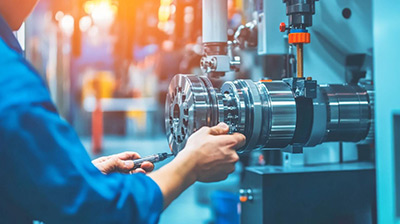 Motion control is undergoing a massive transformation as manufacturers adapt to Industry 4.0. Modern motion systems are no longer just executing moves; they are now expected to self-monitor, respond in real time, and contribute to overall operational intelligence. The fusion of industrial IoT (IIoT) connectivity and real-time data analytics is at the heart of this. Motion systems are becoming a key part of smart manufacturing.
This means rethinking how motion infrastructure is designed and deployed. Engineers need to align hardware, software, and data strategies to create scalable, secure and adaptable systems. The result is motion systems that increase throughput, energy efficiency, uptime, and data-driven decision making across the factory floor.
Insight-Driven Motion Control
Data-driven asset intelligence has become central to modern motion control. Rather than relying on scheduled maintenance or waiting for failure, IIoT-enabled controllers analyze sensor data to detect early signs of mechanical wear or imbalance. This enables proactive servicing that minimizes downtime and extends equipment life.
For example, Mitsubishi Electric equips smart drives with integrated sensors to monitor actuator health. When friction or vibration levels exceed preset thresholds, real-time alerts allow facilities to schedule repairs during planned shutdowns. This reduces spare part inventories and helps stabilize machine performance over time.
Retrofitting for Energy Intelligence
Using BB-400 Industrial Edge Controllers from Brainboxes LLC, an automotive lighting manufacturer upgraded their facility to track energy usage across machines and departments. This retrofit enabled the deployment of open-source dashboards that visualized power consumption and environmental metrics in real time. The flexibility of the system allowed the team to integrate data from legacy equipment alongside modern machinery, creating a unified view of facility-wide energy behavior.
The analysis identified idle-time energy drains, servo inefficiencies, and process-specific energy spikes. These insights enabled better workload distribution and guided upgrades based on energy intensity and ROI. As a result, the facility improved operational efficiency without major infrastructure changes.
Intelligent Systems and Edge Autonomy
Modern motion systems are intelligent nodes in the industrial network. They communicate in all directions by responding to real-time inputs, sharing data across platforms and cloud systems, and operator interfaces. This enables adaptive throughput based on line conditions, load balancing to manage energy consumption and extend equipment life, and continuous optimization through machine learning algorithms.
Edge computing is key to real-time control. By making decisions at the controller level, edge systems reduce cloud processing latency. Applications like vision-guided correction or synchronized multi-axis robotics rely on these immediate local responses to maintain speed, precision, and coordination.
Securing Connected Motion Infrastructure
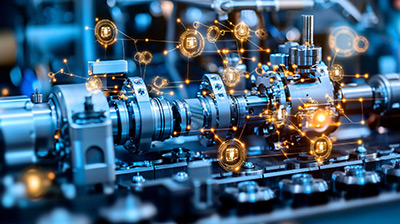 As motion systems get connected, they also get more vulnerable to cyber threats. Many legacy systems were not designed for network exposure and often lack basic security. Unencrypted communications, open ports, default credentials, and fragmented access controls are common vulnerabilities.
Certified Motion Control Professional Program
Strengthen Your Skills and Enhance Your Career
Become a Certified Motion Control Professional (CMCP) and join the elite group of system integrators, machine builders, manufacturers, end-users and others recognized in the industry for their professional knowledge and expertise.
To address this, leading manufacturers are implementing layered security. This includes network segmentation, zero-trust architecture, and secure-by-design motion controllers with encrypted communication, authentication, and secure boot. Endpoint detection tools are also deployed to flag unusual motion behavior or unauthorized configuration changes, protecting production assets and ensuring compliance with modern security standards.
Real-Time Data for Smarter Control
Motion systems are now data-generating assets that reveal much more than position and speed. When analyzed correctly, motion data can uncover load imbalances, mechanical fatigue, and synchronization issues, enabling predictive maintenance, quality assurance, and overall system optimization.
For instance, the Ultra5 fulfillment system from Packsize integrates Kollmorgen servo drives to gather cycle-by-cycle feedback. Not just a mechanical component, the system is a data-generating asset that informs ongoing operational decisions. This data supports predictive diagnostics and rapid product changeovers, allowing customers like Walmart to produce up to 600 custom-sized boxes per hour, each with up to two labels applied.
Modular Motion Platforms for Changing Demands
Modern motion platforms are designed for modularity and scalability. Engineers can remotely commission systems, add axes as needed, and automatically detect connected components. Encrypted over-the-air updates ensure systems stay current and secure without interrupting production.
In one automotive application, Cincoze’s CV-117/P1101 panel PC captured torque validation data, guided operators through procedures, and transmitted results to the MES in real time. Multi-interface connectivity enabled integration with barcode scanners and torque tools, improving traceability and enabling seamless upgrades without delays.
Designing with IIoT in Mind
IIoT in motion control requires strategic planning. Connectivity is not enough. Systems must be designed for interoperability, security, and data access. Engineers must ensure motion platforms support open protocols like OPC UA and EtherCAT to allow communication between devices, encrypted communication from the field to the cloud to protect sensitive data, real-time diagnostics to monitor torque, current, and temperature, and machine learning ready infrastructure to enable adaptive tuning and anomaly detection.
This design approach transforms motion systems from isolated components into active contributors fulfilling enterprise-wide goals in efficiency, reliability, and sustainability.
Shaping the Future of Motion Control
Motion control has matured from closed-loop logic to real-time optimization. With IIoT, edge computing, and analytics at the core, motion systems are now adaptive, predictive, and deeply integrated into operational intelligence. Engineers are creating data-rich environments where every movement informs smarter decisions.
The next generation of industrial leaders will be those who can bridge mechanical expertise with cybersecurity, system architecture, and data integration. As motion control converges with enterprise intelligence, those at the forefront of this evolution will define the future of manufacturing.
Watch our free webinar, AI-Enhanced Motion Control: Innovations Driving Automation Forward, to learn about the latest innovations and applications at the intersection of motion control and AI.
Share This On X:
Motion control meets machine intelligence. Learn how IIoT and real-time data are transforming automation — from predictive diagnostics to adaptive throughput: #IIoT #MotionControl #SmartManufacturing
Next-gen motion systems don’t just execute — they adapt. See how edge computing and analytics drive uptime and efficiency. #IndustrialAutomation #EdgeComputing #MotionSystems
Recent Posts
- Emerging Technologies Driving Modern Motion Control Systems: Five Trends Reshaping Factory Automation
- Electronic Camming: Enabling Superior Flexibility in Advanced Motion Control Systems
- Electronic Camming: Enabling Superior Flexibility in Advanced Motion Control Systems
- How Electrification is Reshaping Motion Control
- Motion Control in Harsh Environments: Engineering for Extremes
- Servo Systems vs. Stepper Motors: Finding the Optimal Solution for Precision Automation
- View All Motion Control & Motors Blogs