
Motion Control & Motors Blog
How Electrification is Reshaping Motion Control
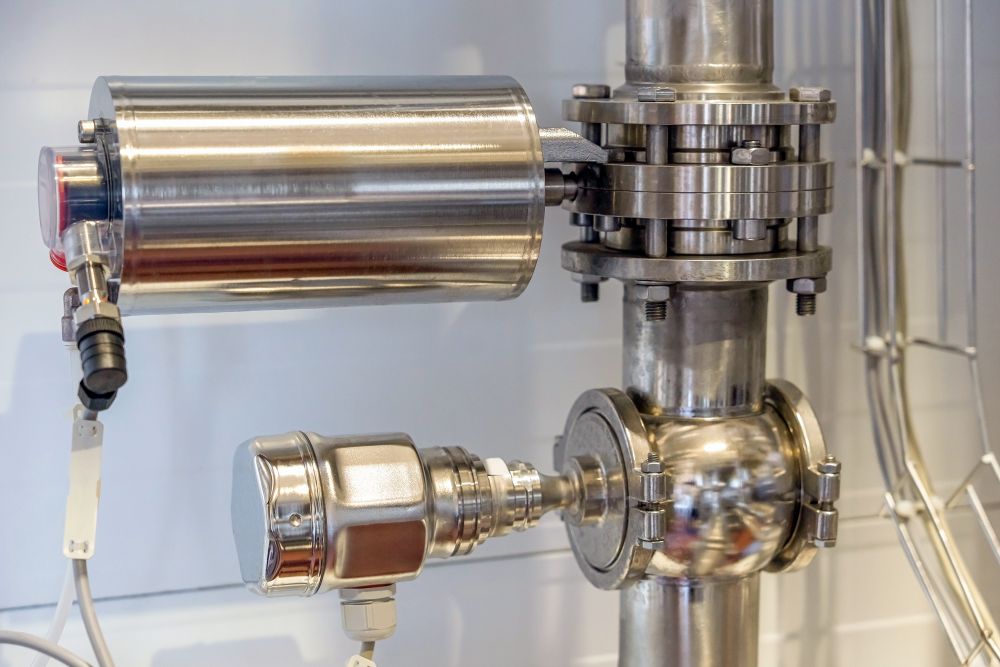 Industrial motion control traditionally uses three technologies: pneumatic systems, which use compressed air; hydraulic systems, which use pressurized fluid; and electric actuators powered by electricity. Pneumatics are known for their high-speed operation, especially in packaging. Hydraulics offer high force and are typically used in construction and industrial presses.
Historically, electric actuators occupied a narrow niche: providing precise, programmable control for tasks that required high accuracy. But they were largely limited to light-duty tasks. But as manufacturing shifts toward connected, data-driven operations aligned with Industry 4.0, electric actuators are gaining ground in applications traditionally dominated by fluid power.
Today’s electric servo and stepper motors deliver higher force density, while improvements in materials and bearing design have enhanced durability. But they still face limitations in extreme force applications, such as heavy presses and construction equipment, or in applications where electrical sparks pose safety risks.
Even so, the integration of microprocessors has transformed electric actuators from simple positioning devices into intelligent components able to deliver sub-millimeter positioning accuracy, execute complex motion profiles, report operational data in real time, and consume energy only during active motion. Most importantly, they offer native digital connectivity that enables real-time monitoring and control.
Connectivity is particularly critical in Industry 4.0 manufacturing, which relies on integration of physical equipment with digital control systems for real-time monitoring, predictive maintenance, and adaptive optimization. Electric actuators align naturally with this architecture in ways that distinguish them from pneumatic and hydraulic alternatives.
Digital Integration and Real-time Data
Many modern electric actuators incorporate integrated position sensors, current monitors, and temperature sensors as standard components. These generate continuous operational data, including position accuracy, motor current draw, operating temperature, velocity, and acceleration patterns.
This data feeds into Industrial Internet of Things (IIoT) platforms via communication protocols, such as Ethernet/IP, PROFINET, or EtherCAT, allowing the actuator to become an intelligent edge device able to report on operational status, flag anomalies, or support distributed control. Pneumatic and hydraulic systems, in contrast, require retrofitted sensors and additional infrastructure to enable this. For electric actuators, digital communication is inherent to their design.
Real-time data enables closed-loop optimization, allowing control systems — for example — to adjust motion profiles dynamically based on actual performance. This can help compensate for load variations, temperature effects, or mechanical wear without manual intervention.
Predictive Maintenance Through Condition Monitoring
Traditional maintenance based on fixed schedules can waste resources through premature replacement or, conversely, allow failures when components deteriorate faster than expected.
ROI Calculator
Discover the potential cost savings of robotic automation over a 20-year system life
This calculator compares your current manual labor costs against the total cost of owning and operating a robotic system over its 20-year lifespan.
Electric actuators enable condition-based predictive maintenance by continuously monitoring parameters that indicate component health. Increased motor current, for instance, might signal bearing wear. Temperature trends reveal lubrication degradation. Positioning accuracy changes could suggest mechanical backlash.
IIoT platforms analyze these streams using machine learning to establish baseline profiles and detect anomalies indicating impending failures. Maintenance can be scheduled during planned downtime before catastrophic failures occur, minimizing unplanned production interruptions.
Precision and programmable motion
Electric actuators provide positioning resolution measured in micrometers with exceptional repeatability. More significantly, they allow complex motion profiles to be programmed and modified through software. Users can easily adjust acceleration rates, velocity profiles, and positioning sequences to adapt motion control to product line switches without the need for mechanical adjustments.
This programmability gains more value when integrated with IIoT controls. Motion profiles can adapt automatically based on real-time process data — adjusting speeds for different product weights, compensating for temperature-related dimensional changes, or modifying force based on material properties detected by upstream sensors.
Flexibility and Rapid Reconfiguration
Manufacturing demands agility to rapidly switch between products, adjust production volumes, or reconfigure processes. The software-defined motion parameters of electric actuators enable these devices to excel in such settings.
A pneumatic system designed for specific stroke lengths requires valve changes to accommodate different requirements. A hydraulic system may need pump modifications. An electric actuator requires only parameter updates to its motion controller — changes implemented remotely through the IIoT network without physical equipment access.
This flexibility extends to integration with enterprise systems. Electric actuators respond to commands from enterprise resource planning systems, manufacturing execution systems, or real-time optimization algorithms, enabling dynamic production processes that adjust automatically to changing demands.
Electric Actuators Move Forward
Electric actuators are reshaping industrial motion control, rather than completely replacing pneumatic and hydraulic systems, which retain key advantages. Electrification offers expanded capabilities — native digital connectivity, real-time monitoring, and software-defined flexibility — essential to Industry 4.0. These features enable smart, adaptive production systems that optimize through continuous data analysis. As manufacturing evolves, the convergence of motion control with IIoT architecture is fundamentally changing how equipment communicates and improves.
Recent Posts
- Emerging Technologies Driving Modern Motion Control Systems: Five Trends Reshaping Factory Automation
- Electronic Camming: Enabling Superior Flexibility in Advanced Motion Control Systems
- Electronic Camming: Enabling Superior Flexibility in Advanced Motion Control Systems
- Motion Control in Harsh Environments: Engineering for Extremes
- Next-Generation Motion Control: Integrating IIoT and Real-Time Data Analytics
- Servo Systems vs. Stepper Motors: Finding the Optimal Solution for Precision Automation
- View All Motion Control & Motors Blogs