
Motion Control & Motors Blog
Emerging Technologies Driving Modern Motion Control Systems: Five Trends Reshaping Factory Automation
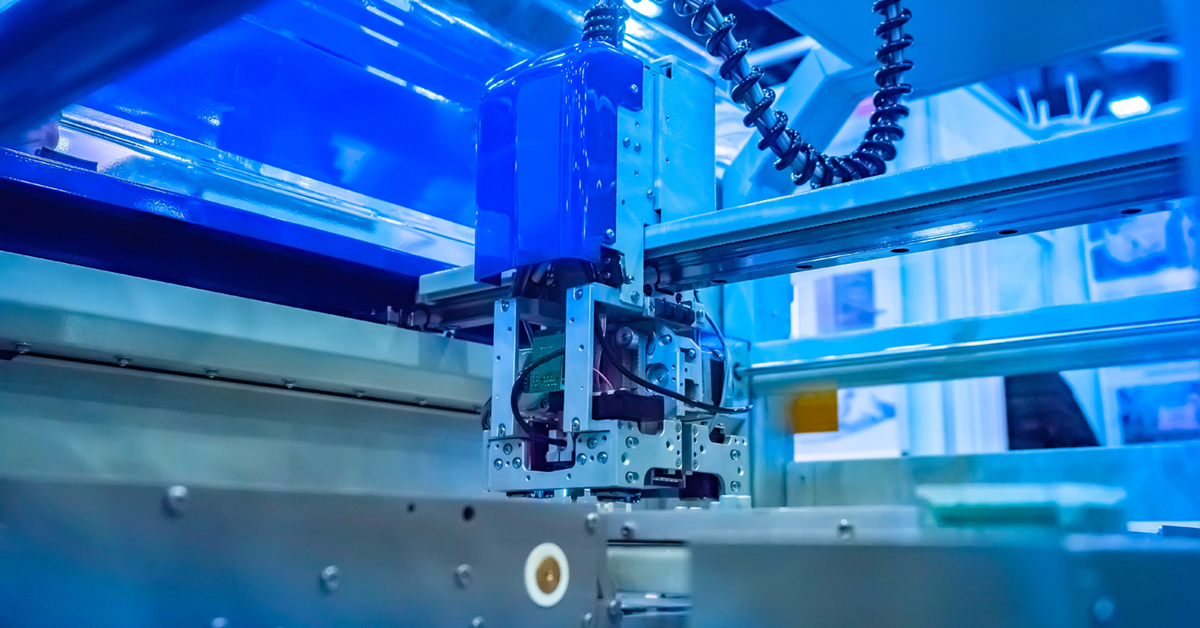
Motion control is evolving far beyond the precise movement of motors and machines. Today's systems are becoming intelligent, connected platforms that generate valuable data, support AI-driven decision-making, and help manufacturers improve productivity while reducing downtime.
Those trends took center stage during A3's webinar, Emerging Technologies Driving Modern Motion Control Systems, moderated by manufacturing influencer Jake Hall. Hall was joined by an expert panel that included Peter Zafiro, general manager of Lidmont USA; Scott Evans, vice president of strategy at Regal Rexnord; Hunter Golden, senior product manager at OnLogic; and Eric Rice, applications engineering manager at Festo.
Throughout the discussion, the panel explored how advances in software, edge computing, artificial intelligence, and connected devices are reshaping motion control, and what manufacturers should consider as they prepare for the next generation of automation.
Motion Control Is Becoming a Strategic Asset
For decades, motion control has been focused on speed, accuracy, and repeatability. While those fundamentals remain essential, the panel explained that modern systems are expected to do much more than execute precise movements.
Today's servo drives, controllers, and intelligent devices collect operational data that can be shared throughout the factory. Rather than functioning as isolated machine components, motion control systems are becoming valuable sources of information that help manufacturers optimize production, improve equipment utilization, and make more informed business decisions.
As factories continue their digital transformation, motion control is increasingly viewed as a strategic part of the overall manufacturing ecosystem.
Intelligent Software Is Driving Better Performance
One of the strongest themes throughout the webinar was the growing importance of software.
Modern motion control platforms are capable of analyzing data directly within drives and controllers, allowing manufacturers to identify trends before problems become failures. Instead of simply reporting values such as temperature or current, intelligent systems can detect abnormal operating conditions, identify excessive wear, and recommend maintenance before equipment unexpectedly goes offline.
The panel emphasized that this shift toward predictive maintenance helps manufacturers reduce costly downtime while extending the life of critical equipment.
Software also continues to simplify system configuration and commissioning, making advanced motion control more accessible for manufacturers facing engineering resource constraints.
Edge Computing Brings Intelligence Closer to the Machine
As manufacturing systems generate more data than ever before, processing information close to where it is created has become increasingly important.
The panel discussed how edge computing enables manufacturers to process sensor, vision, and machine data locally instead of transmitting everything to the cloud. This significantly reduces latency and allows machines to make decisions in real time.
Certified Motion Control Professional Program
Strengthen Your Skills and Enhance Your Career
Become a Certified Motion Control Professional (CMCP) and join the elite group of system integrators, machine builders, manufacturers, end-users and others recognized in the industry for their professional knowledge and expertise.
Applications such as robotics, machine vision, autonomous systems, and high-speed production lines benefit from these rapid response times, where even milliseconds can impact performance.
By combining powerful industrial computers with modern motion systems, manufacturers can analyze large volumes of operational data while maintaining the speed and reliability required for demanding industrial environments.
AI Is Enhancing Automation Today
Artificial intelligence was another major topic of discussion, with panelists noting that manufacturers are already realizing practical benefits from AI-powered technologies.
Rather than replacing traditional automation, AI is augmenting existing systems by helping operators interpret data, identify patterns, streamline programming, and optimize machine performance.
The panel also discussed how AI can support predictive maintenance, improve production quality, and simplify deployment of increasingly complex automation systems. Looking ahead, they expect AI agents and intelligent software assistants to become more common as industrial systems gain greater autonomy.
However, the panel stressed that successful AI implementation begins with quality data. Connected motion control systems provide much of the operational information needed for AI applications to deliver meaningful results.
Flexibility and Integration Are Shaping Future Systems
Manufacturers continue to face pressure from labor shortages, changing customer demands, and shorter product lifecycles. As a result, flexibility has become a primary design objective.
Rather than assembling individual automation components from multiple vendors, many manufacturers are seeking integrated motion solutions that reduce engineering complexity and accelerate deployment. Pre-engineered systems allow companies to bring new equipment online more quickly while simplifying long-term maintenance.
The panel also discussed the ongoing convergence of information technology (IT) and operational technology (OT). As motion systems become more connected to enterprise networks, cybersecurity must be considered from the beginning of every automation project.
The Future of Motion Control Is Connected and Intelligent
While each emerging technology offers unique advantages, the webinar highlighted one consistent message: motion control is becoming smarter, more connected, and increasingly software-defined.
Advances in AI, edge computing, predictive maintenance, and integrated automation are enabling manufacturers to move beyond simply controlling motion toward optimizing entire production systems. Organizations that embrace these technologies will be better equipped to improve uptime, respond to changing market demands, and unlock new levels of operational efficiency.
As industrial automation continues to evolve, motion control will remain at the center of smart manufacturing, connecting machines, data, and intelligence to drive the next generation of factory performance. Watch the full webinar here.
Recent Posts
- Electronic Camming: Enabling Superior Flexibility in Advanced Motion Control Systems
- Electronic Camming: Enabling Superior Flexibility in Advanced Motion Control Systems
- How Electrification is Reshaping Motion Control
- Motion Control in Harsh Environments: Engineering for Extremes
- Next-Generation Motion Control: Integrating IIoT and Real-Time Data Analytics
- Servo Systems vs. Stepper Motors: Finding the Optimal Solution for Precision Automation
- View All Motion Control & Motors Blogs