
Motion Control & Motors Blog
Motion Control in Harsh Environments: Engineering for Extremes
When a satellite camera shifts just a few microns due to thermal expansion, entire imaging sequences can fail. In offshore rigs or semiconductor fabrication facilities, even sub-nanometer vibration can ruin million-dollar processes. Precision motion control is no longer confined to stable lab benches and is increasingly expected to perform in environments that were once considered too volatile for nanometer-scale automation.
From semiconductor fabs and defense applications to mining vehicles and marine platforms, environmental extremes such as vibration, thermal fluctuation, and contamination now define the operational baseline. Designing motion systems for these realities requires a full-stack engineering approach that includes real-time feedback loops, thermal compensation strategies, and robust metrology loop architecture.
While traditional systems are tuned for laboratory stability, the applications pushing automation forward depend on reliable motion control amid instability. The next generation of manufacturing, metrology, and robotic mobility depends on rugged motion systems that retain accuracy in the face of dynamic interference, aggressive duty cycles, and shifting environmental inputs. This is the frontier of motion engineering for extremes.
Environmental Interference: A Precision Disruptor
Environmental interference fundamentally challenges a motion system’s ability to achieve accuracy and repeatability. Factors like thermal drift, floor-borne vibration, and acoustic pressure shifts create cumulative deviations that no amount of mechanical tolerance can fully overcome. In high-precision applications, such effects quickly exceed acceptable error margins, particularly when resolution requirements approach the nanometer scale.
One of the most common disruptors is thermal variation. Materials such as aluminum can expand enough with just a 1°C change to throw off precision by several microns. Airflow, HVAC cycling, and heat from internal electronics all contribute. Systems designed for harsh environments must include active thermal management strategies, from isolating airflow and using low-CTE materials to applying real-time temperature compensation in the control loop.
Vibration-Resistant Architectures
Vibration is among the most damaging environmental variables for high-precision motion systems. It introduces mechanical noise, disrupts feedback loops, and reduces both short- and long-term positioning stability. In applications like semiconductor metrology or atomic force microscopy, even sub-nanometer jitter can render a system unusable. Effective vibration mitigation strategies span structural, mechanical, and control layers of the system.
Key Mitigation Strategies:
- Flexure-based stages eliminate friction and backlash, offering inherent vibration resistance
- Direct-drive motors reduce mechanical compliance and enable cleaner trajectory control
- Input shaping and notch filtering suppress system resonances at the controller level
- Active isolation systems, including piezo-based platforms, counter external vibrations in real time
Passive isolation platforms and floor-decoupled structures offer baseline mitigation. Advanced systems incorporate active damping calibrated to the application’s resonant profile.
Motion Control in Vacuum, Cleanroom, and Extreme Terrain
Environments such as vacuum chambers, cleanrooms, offshore installations, and mobile mining systems impose extreme constraints on both motion components and control infrastructure. Systems must be engineered to handle not only positional demands but also material compatibility, ingress protection, and thermal reliability.
Vacuum applications require non-outgassing materials, vented fasteners, and dry-lubricated flexure designs. Cleanroom systems must be engineered for minimal particulate generation and chemical resistance. On mobile platforms, vibration, salt spray, and severe temperature swings demand sealed enclosures, shock isolation, and wide-voltage electronics. In all cases, motion systems must perform flawlessly despite the breakdown-inducing conditions surrounding them.
Cincoze, an A3 member company, provides a compelling example with its DX-1100 embedded computer, which powers autonomous mining vehicles operating in some of the harshest industrial environments. High dust loads, dramatic temperature swings, and rough terrain create ideal conditions for hardware failure. Cincoze addressed these challenges by integrating real-time computing, multi-sensor fusion, and wide-temperature componentry into a compact system rated for vehicle certification. Its shock-hardened architecture supports 24/7 operation and real-time route planning under conditions of vibration and electrical instability, underscoring the importance of rugged motion control architecture at the system level.
System-Level Compensation and Feedback Integrity
At the heart of every high-precision motion system is its metrology loop, the closed chain of command and measurement between the control system and the actual workpoint. Even slight offsets between encoder location and point of interest can introduce significant angular error under environmental stress. The farther the sensor is from the output target, the greater the amplification of error due to yaw, pitch, or flex.
Design Best Practices:
- Place feedback sensors as close as possible to the workpoint
- Use parallel kinematic structures such as hexapods or planar air-bearing systems to eliminate stacked-axis error accumulation
- Apply error mapping via lookup tables or real-time interferometry for multi-axis calibration
- Monitor environmental conditions like temperature and humidity to feed real-time compensation logic
Maintaining feedback fidelity under stress is not just about high-resolution sensors. It requires preserving structural and environmental alignment between where position is measured and where action is needed. Achieving this also depends on minimizing mechanical compliance and thermal drift along the entire measurement path, ensuring that real-time corrections are not undermined by structural instability.
Flexure-Based Precision in Harsh Conditions
Flexures are ideal for environments where conventional bearings or lubricated joints would degrade under heat, vacuum, or vibration. These monolithic mechanical structures deliver pure, frictionless motion and are naturally free from backlash or particulate generation.
Certified Motion Control Professional Program
Strengthen Your Skills and Enhance Your Career
Become a Certified Motion Control Professional (CMCP) and join the elite group of system integrators, machine builders, manufacturers, end-users and others recognized in the industry for their professional knowledge and expertise.
Paired with piezoelectric actuation and interferometric sensing, flexure stages are used extensively in semiconductor photonics, aerospace optics, and microscopy. These are applications where precision must be sustained through extreme thermal and vibrational instability. Their simplicity belies their sophistication. A well-designed flexure can deliver repeatability in the low-nanometer range under dynamic environmental conditions.
Flexure mechanisms also exhibit exceptional stability over time due to their lack of wear surfaces and lubricant dependencies. This makes them particularly well-suited for long-duration deployments in environments where maintenance access is limited or infeasible, such as space-based observatories, cryogenic test beds, or remote vacuum chambers. When integrated with capacitive sensors and digital closed-loop controllers, flexure systems can execute complex multi-axis positioning routines with sub-nanometer resolution, even when subjected to external drift or internal load variation.
Controller Intelligence and Real-Time Adaptability
As environmental complexity increases, servo loop design becomes a critical differentiator in system performance. High-performance controllers must anticipate and adapt to disturbances using real-time data across temperature, vibration, load inertia, and trajectory demands.
Advanced control architectures leverage:
- Nested PID loops, velocity, and current control: A layered control structure where each PID loop manages a specific aspect of motion: current for torque, velocity for speed, and position for accuracy. This enables precise, stable control under dynamic conditions.
- Frequency-domain tuning tools such as Bode plots, to target and suppress mechanical resonance: Analytical tools that visualize system response across frequencies, helping engineers identify and dampen resonant peaks to maintain motion stability in flexible or vibration-prone systems.
- Input shaping algorithms to precondition commands and minimize induced oscillations: These algorithms modify motion commands in advance to counteract a system’s natural resonances. By shaping the input waveform, they reduce overshoot and vibration in flexible structures, improving settling time and precision without requiring mechanical changes.
- Environmental sensors integrated into the control model for dynamic compensation: Sensors measuring temperature, vibration, and other ambient conditions feed real-time data into the control system. This allows the controller to adjust parameters on the fly, maintaining performance and stability as environmental factors fluctuate.
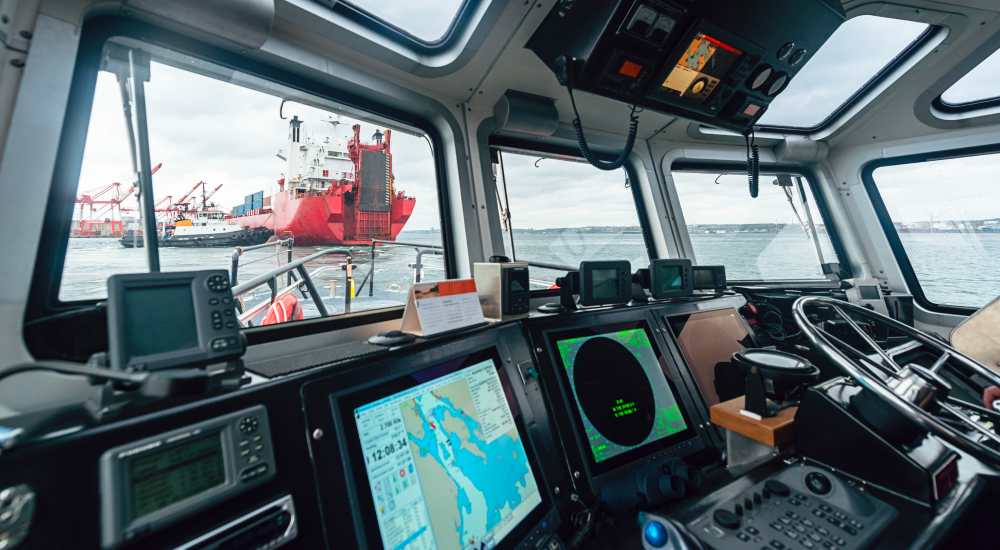
A compelling example of this adaptability can be found in Cincoze’s DS-1200, deployed in offshore tuna fishing operations. Onboard these vessels, the DS-1200 processes large volumes of radar and sonar data in real time, managing environmental feedback from moisture, salt spray, and vibration while navigating in dynamic oceanic conditions. Its industrial-grade protections and modular I/O support ensure accurate motion tracking and system control across mission-critical operations. This demonstrates how precision motion systems can be architected for sustained marine deployment, even when subjected to constant physical and electrical disturbances.
Hygienic Motion Control in Washdown Environments
Industrial motion systems operating in hygienic or food-grade environments face a unique combination of constraints: exposure to moisture, chemical agents, high-pressure washdowns, and strict regulatory oversight. Precision must be preserved even as systems are routinely cleaned and exposed to temperature fluctuations, impact, and physical wear.
Premio’s SIO Series Washdown Touchscreen Computer demonstrates rugged motion interface design for the food and dairy sector. Installed in dairy production environments, this IP66/IP69K-rated system is fully sealed and optically bonded to withstand high-temperature washdowns. With features such as touchscreen toggle modes, stainless-steel housings, and compliance with hygiene regulations, it maintains system operability during and after sanitation cycles. Premio's approach shows how motion-critical interfaces and feedback systems can remain both cleanable and precise, ensuring uptime in process-intensive manufacturing.
Engineering Precision Beyond the Lab
In extreme environments, precision is not the natural state. It is the engineered exception. Whether compensating for thermal drift, canceling vibration, or maintaining fidelity in vacuum chambers, motion control systems must be purpose-built for the environmental conditions they will face.
High-precision applications in semiconductor manufacturing, aerospace optics, advanced metrology, and rugged automation all depend on motion systems that can maintain nanometer-scale control across diverse and unforgiving conditions. Achieving this requires not only selecting ruggedized components but designing integrated solutions that address metrology integrity, environmental compensation, mechanical stability, and controller intelligence in unison.
As demands for performance in extreme environments grow, motion engineering must continue to evolve. It must blend classical mechanics with embedded intelligence and real-time adaptability. The future of manufacturing, metrology, and automation will depend on systems that perform not despite the environment, but because they are designed for it.
Stay Ahead in Motion Control Innovation
To explore cutting-edge motion control technologies, subscribe to the A3 Motion Control & Motors Newsletter. Gain exclusive insights, access technical case studies, and stay informed on the tools shaping precision in the world’s most demanding applications.
Share This On X:
See how engineers are building vibration-proof, thermally stable systems for real-world extremes #MotionControl #RuggedAutomation #PrecisionEngineering
Cleanroom? Underwater? Mining vehicle? Motion systems are going places they never could before - thanks to flexures, feedback loops, and real-time control #IndustrialDesign #A3Automation #HighPrecision
Recent Posts
- Emerging Technologies Driving Modern Motion Control Systems: Five Trends Reshaping Factory Automation
- Electronic Camming: Enabling Superior Flexibility in Advanced Motion Control Systems
- Electronic Camming: Enabling Superior Flexibility in Advanced Motion Control Systems
- How Electrification is Reshaping Motion Control
- Next-Generation Motion Control: Integrating IIoT and Real-Time Data Analytics
- Servo Systems vs. Stepper Motors: Finding the Optimal Solution for Precision Automation
- View All Motion Control & Motors Blogs