
Robotics Blog
What Keeps Robots Under Control Yet Moving Freely
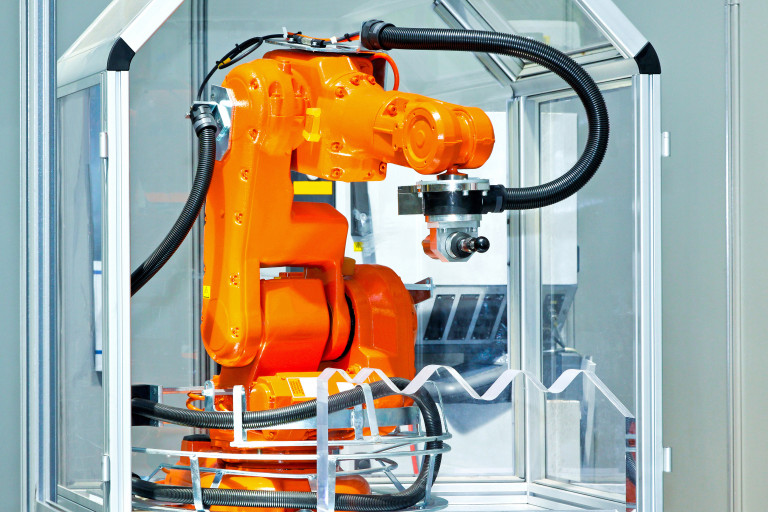
Several items lay in a bin and a robot picks through to find specific ones. Along an auto assembly line, the same robots are used to assemble different car models. In a small factory, people work safely alongside a robot that is cage-free.
Robots need safe and predictable motions in any environment where they work. As robots expand in their capabilities, they can't afford to become stuck where the software functions fail and communication with the hardware is lost. Their ability to adjust to changes around them is placing greater emphasis on robot controller design. Discover more of what's taking place with industrial automation controls.
Meeting Demands
More companies in a wider variety of industries are designing their products to be assembled and created using robots and other forms of automation. The article Design Your Product for Producability, Design for Automation reports that even the labor-intensive garment industry is automating. Product designs are being altered to use no-sew, bonded fabrics.
Some robots have a specific range of motion that works well in heavy industries like automotive assembly. Beverage makers used automation to affix labels on thousands of bottles in seconds. The programmed motion is predictable.
Robots are also used to mimic human force and movement within cars and factories that use robots for tasks like picking through random items. Finding something specific creates a need for flexible motion and the technology makes it possible to fulfill custom orders from the factory floor to the warehouse.
As robots can do more, people who don't have extensive programming skills can operate them.
Easier to Use
Robots are becoming easier to use thanks to integrated controls and human machine interfaces as noted in the article Packaging and Palletizing Robots Solve Industry's Pain Points. For palletizing and packaging, robots can insert bags or packages into cartons similar to the way a person would do it, but the advantage that a robot has is repeating the task many times over in exactly the same way.
ROI Calculator
Discover the potential cost savings of robotic automation over a 20-year system life
This calculator compares your current manual labor costs against the total cost of owning and operating a robotic system over its 20-year lifespan.
Industrial automation controls are helping companies diversify. In the write-up Robotic Assembly: Shrinking Footprint, Expanding Market robot control technology is used for more than robots. A flexible system allows for car manufacturers to be working on one model and then introduce up to five new body styles on the assembly line.
Moving Freely
Intelligence comes through algorithms. They are called "step-by-step paths to greater autonomy" in the write-up Our Autonomous Future with Service Robots. Algorithms are used for motion planning to generate movement that is considered "intelligent."
A repetitive industrial task plays back a sequence of events and some collaborative robots react against a force like a push. Research is helping robots become more flexible in the areas like personal care where there is little to no structure in the tasks that need completing.
Researchers are trying to make robots operate as freely as possible to do things like picking up a cup from a table or opening a door to a refrigerator and picking out specific items. Algorithms help the robot identify what needs to be done and control the motion so the task is completed safely and in a timely manner.
Making it Work
Manufacturers are working to meet new challenges as machinery becomes more capable, smarter and safer. Demands are growing for more sophisticated human interfaces and communications so motion control applications are becoming much more complex.
As noted in the article Machine Vision Moves Industrial, Collaborative Robot Applications Forward, it seems that "the robot wants to unbolt itself and move around." Coordinating movements between the robot, the vision system and the object creates obstacles for lighting and field of view. New algorithms with today's computing power support the manufacturers as they keep up with the fast-moving robotics industry.
Leverage the power of controls and automation for your operation. Stay on top of trends and news with resources available on A3.
Recent Posts
- Creating a Safety Culture in Your Organization at the International Robot Safety Conference
- 6 Companies Driving Automation in Mexico
- Humanoids on the Horizon: What Hurdles Remain for Widespread Adoption?
- Safety by Design: How Humanoid Robots Must Evolve to Depart the Walled Garden
- Are Robots Really Taking All the Manufacturing Jobs?
- The Shipping Industry Floats Emerging Opportunities for Maritime Automation
- View All Robotics Blogs