
Blog
Machine Vision Trends for Food Inspection Applications
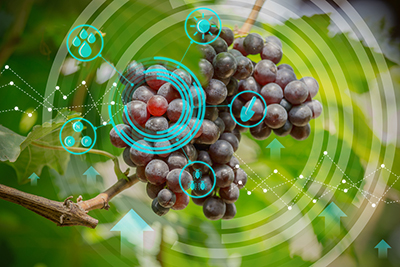 Packaging has long been inspected by machine vision technology. Barcode readers and machine vision cameras often verify that boxes are properly labeled. Lately, machine vision is becoming critical to food processing. For example, systems are expected to check a piece of fruit for bruises without disposing of good products.
People can be trained quickly on how to recognize a bruise, but it requires complex systems for a machine to learn the same. Machine vision inspections require lighting and sensors in order for food to be properly imaged and in-depth information to be ascertained.
Neural Net Machine Vision Inspection
Analytics and image processing are commonly completed through the use of neural nets. Machines learn acceptable and unacceptable quality from images in a training set. This simulation of a biological system adds human-like capabilities to machine vision. Deep learning emulates the decision-making that humans do when making a decision about quality.
Deep learning requires substantial computing horsepower. It’s a challenge for simple vision sensors. Neural net technology lets equipment deal with variations in size and color among food products. Care must be taken when training neural net technology - the machine must know clearly what the differentiator is. An example in real life includes rice sorters. They employ neural net machine vision where sensors image the rice and reject unwanted contaminants with the use of a puff of air.
ROI Calculator

Discover the potential cost savings of robotic automation over a 20-year system life
This calculator compares your current manual labor costs against the total cost of owning and operating a robotic system over its 20-year lifespan.
Near-Infrared (NIR) Machine Vision Inspection
Food and beverage applications have long used RGB sensors, but now processors want to include data from NIR. NIR provides useful information on food. NIR is in a spectral region where silicon sensors can still work. NIR filters and lighting may be required, but once set up, it’s like adding a new color. More data is generated and the analytics systems have more to work with.
3D Machine Vision Inspection
3D systems can find small structures on tiny surfaces. A 3D system can detect the location and orientation of a product. X, Y, Z measurements can quickly be calculated. Industrial-grade frame grabbers and software likely need to be used due to the increase of data from the implementation of 3D.
Sorting something like frozen peas moving by at a rate of 100,000 per minute is a lot of data to process. Several images may be needed to determine a pea’s quality or to weed out contaminants. A frame grabber may be able to increase responsiveness tenfold, thereby increasing quality and production.
Machine vision in food inspection enables the food producer to ensure consistency and safety among products.
Recent Posts
- How 3D Vision Systems Are Transforming Food Manufacturing
- These Farms Are Harnessing Machine Vision for Smarter Agriculture
- Revealing the Hidden Effects of Climate Change with Advanced Imaging
- Innovative Machine Vision Lenses and Trends
- An Early Look at GigE Vision 3.0
- Looking at the Latest Machine Vision Standards Updates
- View All Blogs