
Motion Control & Motors Blog
Permanent Magnet’s and MCMA’s PMD
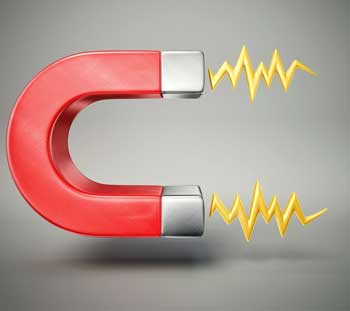 Permanent magnets are a crucial element within many motion control systems. Sensors, actuators, motors, and generators can all use permanent magnets, so selection of appropriate magnets is a major consideration in maximizing system performance.
A permanent magnet is any magnet that maintains its magnetic properties even in the absence of an inducing field or current. High-quality permanent magnets produce strong magnetic fields with a low mass and are highly resistant to demagnetizing forces.
Permanent magnets have a wide range of industrial and scientific uses. In the most general sense, they are transducers – facilitating transformation of energy from one form to another. In the process, they do not permanently lose their own energy.
There are four major categories of permanent magnet functions:
- Mechanical to mechanical: For example, attraction and repulsion
- Mechanical to electrical: Microphones and generators rely on this
- Electrical to mechanical: Motors and loudspeakers utilize this
- Mechanical to heat: An operating principle behind hysteresis torque devices
Permanent magnets can generate a number of specialized effects under certain circumstances. These include magneto resistance, Hall effect devices, magnetic resonance, and others. Effects often depend on the material and grade of the magnet.
In today’s commercial market, four major families of permanent magnets are found:
- Neodymium Iron Boron
- Samarium Cobalt
- Ceramic
- Alcino
Hysteresis Loop and Testing Permanent Magnets
Hysteresis loop testing allows engineers to develop a deep understanding of the magnetic properties of a given material. Also known as the “B-H Loop,” it shows the relationship between induced magnetic flux density (B) and magnetizing force (H). With this information, experts can forecast the practical effect of a given magnetic material on a proposed system. You can learn more about the hysteresis loop and testing permanent magnets through MCMA’s blog post on the topic.
Certified Motion Control Professional Program
Strengthen Your Skills and Enhance Your Career
Become a Certified Motion Control Professional (CMCP) and join the elite group of system integrators, machine builders, manufacturers, end-users and others recognized in the industry for their professional knowledge and expertise.
MCMA's Permanent Magnet Division (PMD)
Founded in 1959, MCMA's Permanent Magnet Division (PMD) is one of its oldest and largest professional interest groups. MCMA membership is required to participate in PMD and company members primarily represent magnet producers, fabricators, and suppliers. The PMD was formed to "increase the understanding, promotion and effective utilization of magnetic materials, assemblies and systems for the benefit of the Permanent Magnet Division members and all users of permanent magnet products.”
If you’re interested in getting involved or learning more, the PERMANENT MAGNET DIVISION Biannual Meeting will be held on Tuesday, October 12th at TechCon 2016. The meeting is open to all conference registrants. It’s not too late to attend this groundbreaking meeting of the minds: Find out more about registration today.
Recent Posts
- Emerging Technologies Driving Modern Motion Control Systems: Five Trends Reshaping Factory Automation
- Electronic Camming: Enabling Superior Flexibility in Advanced Motion Control Systems
- Electronic Camming: Enabling Superior Flexibility in Advanced Motion Control Systems
- How Electrification is Reshaping Motion Control
- Motion Control in Harsh Environments: Engineering for Extremes
- Next-Generation Motion Control: Integrating IIoT and Real-Time Data Analytics
- View All Motion Control & Motors Blogs