
Blog
How Robotics is helping stroke survivors learn to walk again
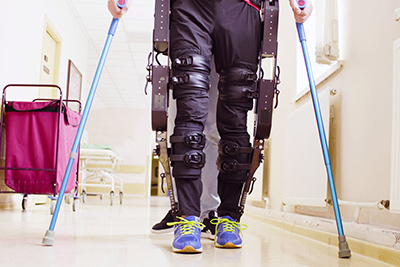 Stroke survivors can often spend months, or even years, trying to regain their mobility. Physical therapists are now using robotics powered by artificial intelligence to help patients learn to move their hands, arms, and legs again.
Hospitals and physical therapy centers currently use robotic harnesses attached to a treadmill to help lower costs. Even though such harnesses are set up to the individual at the start of a session, they don’t adjust to the patient in real-time and can actually hinder their progress.
Robotic Harnesses and Braces Speed Recovery
One manufacturer has found a solution to the limitations of conventional harnesses by designing a robotic harness that doesn’t only support a person's weight but also can detect and correct a person’s gait by pushing them forward, back, or side to side. The harness first collects information on leg movement, stride, and muscle activity with advanced body sensors. Artificial intelligence analyzes the data and offers custom support to encourage a more natural gait.
The new harness can help stroke survivors rebuild lost muscle mass and correct their posture and movement, but it ends up doing even more than that. It actually retrains the brain on how to balance between gravity and forward motion. And it gets fast results. In just a one-hour training session, patients showed an improvement in their gait over those who received no treatment.
ROI Calculator

Discover the potential cost savings of robotic automation over a 20-year system life
This calculator compares your current manual labor costs against the total cost of owning and operating a robotic system over its 20-year lifespan.
One of the newest robotic arm braces can sense electromyography (EMG) signals through non-invasive sensors. The device can then restore function to their otherwise paralyzed arms by detecting weak muscle signals and activating a motor to move the hand and arm as desired. Patients can use their brains to move their hands as they wish, leading to faster recoveries.
Exoskeletons Assist with Rehabilitation
For patients who have suffered muscle loss due to immobility, exoskeletons are now being used for rehabilitation. Like their industrial counterparts, these devices are fitted to a person’s body and boost their performance. This can help stroke survivors regain coordination as they get stronger.
Rehabilitation robots help patients to regularly perform their exercises at home. Sometimes to its own detriment, the human hand is adaptable. Without proper training, patients often end up with unnatural workarounds in their movements. Orthotic robotic arms correct this and also limit a patient’s degrees of motion to target specific muscles for strength training.
Recent Posts
- 6 Companies Driving Automation in Mexico
- Humanoids on the Horizon: What Hurdles Remain for Widespread Adoption?
- Safety by Design: How Humanoid Robots Must Evolve to Depart the Walled Garden
- Are Robots Really Taking All the Manufacturing Jobs?
- The Shipping Industry Floats Emerging Opportunities for Maritime Automation
- New to Robotics? Start with These Fundamentals
- View All Blogs