
Motion Control & Motors Blog
What are Frameless Motors Used For in Motion Control?
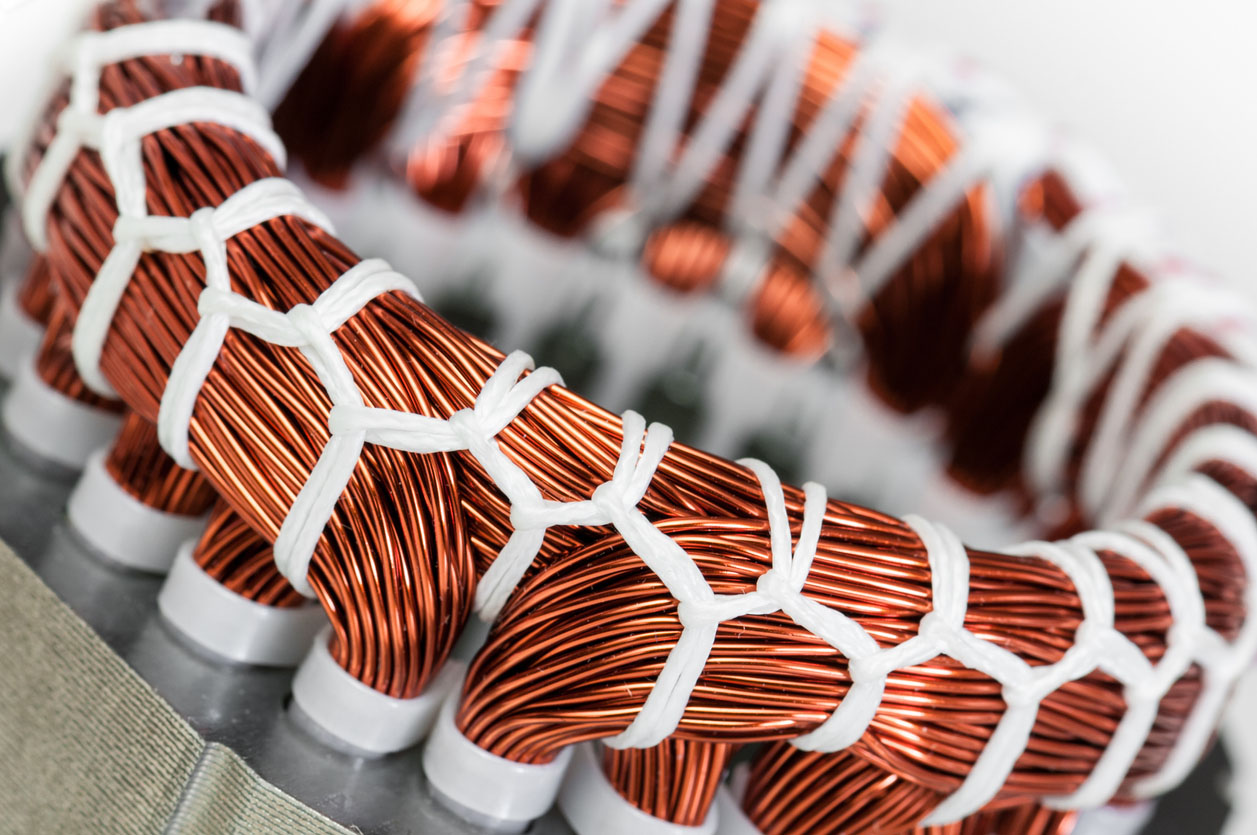 Frameless motors are, at their core functionality, similar to their housed counterparts, but differ in design and use. Housed motors are delivered as assembled devices in standardized frame sizes according to National Electric Motor Association (NEMA) and International Electrotechnical Commission (IEC) specifications.
Frameless motors do not require gearboxes, shafts or couplings and are shipped without shafts, encoders or sensors. They may or may not include mounting hardware. These types of motors are intended to be designed directly into other machines so that they’re tailored exactly to that application.
The Advantages and Disadvantages of Frameless Motors
Frameless motors give OEMs the flexibility to design a motor that works for their unique application. For example, bearings are a common point of failure in many motors. In a housed motor, the bearings are selected by the manufacturer without detailed knowledge of the application. In a frameless motor, the bearings are selected by those who understand the application requirements, and can choose a bearing that won’t fail in their environment.
Beyond the ability to design a motor that is uniquely tailored to a specific application, frameless motors offer tight, accurate speed and position control, particularly in situations that require through holes to provide clear access for beam, wiring or plumbing passage. There are many advantages to frameless motors, depending on the specific application and use.
Certified Motion Control Professional Program
Strengthen Your Skills and Enhance Your Career
Become a Certified Motion Control Professional (CMCP) and join the elite group of system integrators, machine builders, manufacturers, end-users and others recognized in the industry for their professional knowledge and expertise.
The Uses of Frameless Motors
Frameless motors can be used in a wide range of environments. Multi-axis gimbals in the aerospace and defense industries for beam steering and satellite communications are a common use of frameless motors. They allow for exact sizing of the motor to handle heavy loads without excess size or weight, which has several design and cost ramifications. Further, the lack of housing makes frameless motors lighter weight and more compact, both desirable qualities in a multi-axis gimbal.
Other uses may include machine tools, centrifuges, semiconductor reticle inspection equipment, laser marking, or robotics. The diversity of applications that use frameless motors speaks to their design flexibility and adaptability.
Frameless motors are intended to perform the same functions as housed motors, but their flexible design features give them an advantage in many types of applications. For OEMs in search of custom motion control solutions, a frameless motor may be the best choice.
Recent Posts
- Emerging Technologies Driving Modern Motion Control Systems: Five Trends Reshaping Factory Automation
- Electronic Camming: Enabling Superior Flexibility in Advanced Motion Control Systems
- Electronic Camming: Enabling Superior Flexibility in Advanced Motion Control Systems
- How Electrification is Reshaping Motion Control
- Motion Control in Harsh Environments: Engineering for Extremes
- Next-Generation Motion Control: Integrating IIoT and Real-Time Data Analytics
- View All Motion Control & Motors Blogs