
Motion Control & Motors Blog
How to Size a Motor for Your Motion Control Application
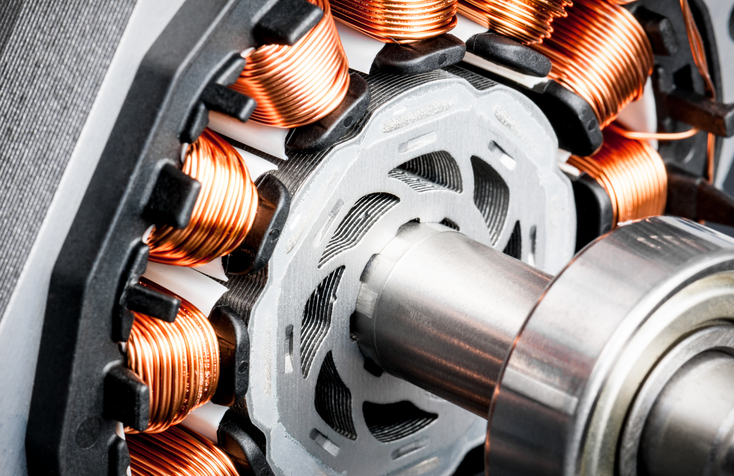 Finding the right size motor for motion control applications is critical to the future performance and reliability of the system. An improperly sized motor can lead to trouble controlling the load, overshooting and ringing, if the load is too small. If the motor is too large, it may control the load properly but come with an unnecessarily high price tag and be a bulky, heavy addition to a motion control system.
In the end, the wrong motor size leads to declines in productivity, increased downtime and an overall substandard product. On the other hand, finding the right size motor can lead to a productive, reliable motion control system that contributes to streamlined operations.
The Most Important Consideration for Sizing a Motor for Motion Control
Motion control is all about stopping, not starting. For any given motion control application, one of the most important sizing considerations is the expected inertia. An effective motor needs to be able to apply sufficient force (in a linear motor system) or torque (in a rotational system) to change the acceleration of a load in a controlled fashion.
To find the right motor size, the first consideration should involve a calculation of load inertia, which is essentially a measure of a system’s resistance to the application of torque. Once this value is calculated, the size and type of motor needed will be clearer, but there are other important considerations.
Other Considerations for Sizing a Motor for Motion Control
Inertia is an important calculation for selecting the right motor size, but there are plenty of other application-specific considerations you must take into account.
Certified Motion Control Professional Program
Strengthen Your Skills and Enhance Your Career
Become a Certified Motion Control Professional (CMCP) and join the elite group of system integrators, machine builders, manufacturers, end-users and others recognized in the industry for their professional knowledge and expertise.
- Torque: as mentioned above, a motor must be able to apply enough torque in relation to the load inertia. Typically, the desired acceleration and deceleration can be used to determine the amount of torque needed in an application.
- Infrastructure and environment: the amount of power being supplied to a motion control motor will affect its performance, as will the operating environment. For example, extreme cold may affect the way lubricants perform, which in turn could cause a motor to stall because it’s ill-equipped for the conditions it’s in.
- Physical Characteristics of the System: a powerful motor may control loads well, but not all motion control systems can afford to have a big, bulky motor. Further, larger motors are typically more expensive, and in the real-world there are always cost constraints to consider.
There are plenty of other considerations, depending on whether you’re using a servo or stepper motor, for example. However, the few listed above are among the most important for selecting the right motor size.
It’s critically important to any motion control application to properly size a motor. Otherwise, the intended efficiency and productivity of the system will not be delivered.
To take a deeper practical dive into sizing a motor, read our technical article, “How to Size a Motor.”
Recent Posts
- Emerging Technologies Driving Modern Motion Control Systems: Five Trends Reshaping Factory Automation
- Electronic Camming: Enabling Superior Flexibility in Advanced Motion Control Systems
- Electronic Camming: Enabling Superior Flexibility in Advanced Motion Control Systems
- How Electrification is Reshaping Motion Control
- Motion Control in Harsh Environments: Engineering for Extremes
- Next-Generation Motion Control: Integrating IIoT and Real-Time Data Analytics
- View All Motion Control & Motors Blogs