
Motion Control & Motors Blog
Integration of Machine Vision with Motion Control Enhances Manufacturing
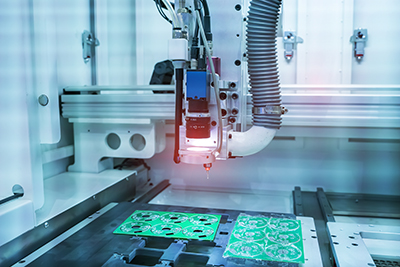 In the past, motion control systems had to work “blind,” without any assistance from machine vision technology. This meant actuators would be programmed to perform highly specific, repeated movements. While this was sufficient in previous decades, many industries today require complex applications enabled by vision technology for greater accuracy, speed, efficiency, and versatility.
By integrating machine vision with motion control, systems can perform complex tasks and adapt to environmental factors with impressive speed and accuracy. Advancements in machine vision technology now allow analysis and reaction to variables in 3D environments where once this was not possible. Integration is opening up expanded application possibilities while providing production efficiencies and higher quality.
What Processes Benefit From This Integration?
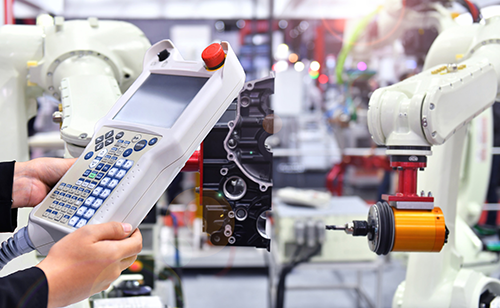
Robotic bin picking processes are among those that benefit from the ability to accurately and intelligently select needed parts for certain tasks like assembling products. Another application where these integrated systems are improving efficiency is in part inspection. Using machine vision, robotic devices can pick and examine complex parts from the assembly line in real-time to quickly and accurately separate damaged or defective products from the rest.
Certified Motion Control Professional Program
Strengthen Your Skills and Enhance Your Career
Become a Certified Motion Control Professional (CMCP) and join the elite group of system integrators, machine builders, manufacturers, end-users and others recognized in the industry for their professional knowledge and expertise.
The development of 3D machine vision promises even greater functionality for robotic bin picking and complex part inspection systems. Software for 3D vision technology is improving at a steady pace, facilitating real-time analysis of increasingly more complex objects beyond basic 2D figures. Key to the process of improving 3D vision is the development of new algorithms and artificial intelligence (AI) technology designed to learn and adapt from the machine’s actual operation, as opposed to static programming.
Motion control capabilities will continue to advance along with machine vision, expanding possibilities for a wider variety of applications for manufacturers.
Recent Posts
- Emerging Technologies Driving Modern Motion Control Systems: Five Trends Reshaping Factory Automation
- Electronic Camming: Enabling Superior Flexibility in Advanced Motion Control Systems
- Electronic Camming: Enabling Superior Flexibility in Advanced Motion Control Systems
- How Electrification is Reshaping Motion Control
- Motion Control in Harsh Environments: Engineering for Extremes
- Next-Generation Motion Control: Integrating IIoT and Real-Time Data Analytics
- View All Motion Control & Motors Blogs