
Motion Control & Motors Blog
Industrial Encoders: What are They and What are They Used For?
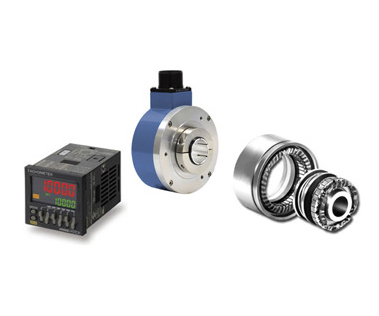 Industrial encoders are a commonplace technology in the industrial sector. Encoders are used in a variety of ways, but always to detect the speed and direction of motion in one form or another.
This is a critical process that enables all kinds of different motion applications, but to fully understand their impact, it’s important to first understand the different types of encoders.
Types of Industrial Encoders
Regardless of type, all encoders provide some method of orientation detection that’s used for motion control. It’s the method of detection that varies between different types of encoders.
Optical encoders are the most accurate encoders, although they are highly susceptible to contamination from dust, vibration and other environmental conditions in an industrial environment. They detect changes in angular position to communicate motion control information.
Magnetic encoders are used in rugged industrial environments because they are less vulnerable to contamination than optical encoders, but they are generally less accurate. In this type of encoder, sensors detect changes in magnetic field of a rotating disc and translate this information into a digital format.
ROI Calculator

Discover the potential cost savings of robotic automation over a 20-year system life
This calculator compares your current manual labor costs against the total cost of owning and operating a robotic system over its 20-year lifespan.
Encoders also come in linear or rotary models, depending on the direction of motion they detect, and can be categorized into light duty, medium duty and heavy-duty models based on how rugged an environment they can withstand. Industrial encoders are either incremental or absolute, depending on how they use location information.
Industrial Encoder Applications
Encoders can be used in linear measurement, registration mark timing, web tensioning, backstop gauging, conveying, filling and more. But by far the most common application is providing feedback in motion control of electric motors. In the industrial sector, nearly half of all electricity goes to power electric motors. The majority of these motors have encoders of some sort.
For example, encoders are often used in robotics, particularly in material handling and pick and pack applications where force sensing and adjustment is highly important, as is precise control of the robotic system.
There are many other ways in which encoders are used, but their most common and possibly most valuable use is the motion control of motors. Encoders come in many shapes and sizes, but always detect the speed and direction of motion in one way or another.
Recent Posts
- Emerging Technologies Driving Modern Motion Control Systems: Five Trends Reshaping Factory Automation
- Electronic Camming: Enabling Superior Flexibility in Advanced Motion Control Systems
- Electronic Camming: Enabling Superior Flexibility in Advanced Motion Control Systems
- How Electrification is Reshaping Motion Control
- Motion Control in Harsh Environments: Engineering for Extremes
- Next-Generation Motion Control: Integrating IIoT and Real-Time Data Analytics
- View All Motion Control & Motors Blogs