
Motion Control & Motors Blog
Comparing Permanent Magnet, Servo and AC Induction Motors
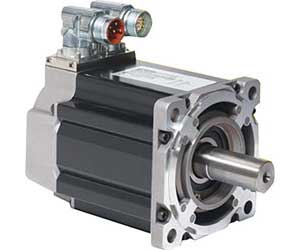 For most projects, rotary motion will ultimately be powered by electric motors. It’s crucial to understand competing motor technologies – though they provide similar functionality, they offer significant performance differences in terms of efficiency, speed, and power.
Today, engineers have the opportunity to choose from three main motor implementations:
- AC Induction: Induces magnetism which is then leveraged to create rotary motion;
- Permanent Magnet: Magnets on or in the rotor work with the motor’s magnetic fields;
- Servomotor: Uses feedback signals to control closed loop systems – work is the variable.
Competing Motor Technologies at a Glance
One of the first technical considerations in any engineering project is the selection of a motor. Once the maximum load and load range are both known, choosing the right motor becomes essential to ensuring peak performance for all the system’s various components.
Let’s review the basic considerations that might favor one motor type over another:
Induction Motors
Induction motors tend to be the least expensive to purchase, but have higher operating costs over time. They suffer from reduced efficiency at low loads, and crucial insulation might be damaged by waste heat. Despite these drawbacks, a well-maintained induction motor may operate many years beyond its rating. Accuracy can be high, though speed range and power density are both low compared to permanent magnet motors.
ROI Calculator

Discover the potential cost savings of robotic automation over a 20-year system life
This calculator compares your current manual labor costs against the total cost of owning and operating a robotic system over its 20-year lifespan.
Permanent Magnet Motors
Permanent magnet motors are more expensive than induction motors, but they are also much more compact and energy efficient, leading to low operating costs. Their great efficiency is bolstered further by reduced operating temperatures and strong construction – both of which can simplify maintenance and extend effective life. Though slower and less accurate than servomotors, a rare earth permanent magnet motor offers excellent torque for its size.
Servomotors
Servomotors are often the last option considered for a project thanks to their prohibitively high cost. In exchange, they reach the highest speeds of any motor. Brushless DC servomotors in particular have an exceptional spectrum of speeds for their rated load. Servomotors can operate across a very wide range of voltage, though efficiency is lost at lower voltages. Though servomotors suffer the fewest physical issues of any motor type, they must be sized carefully to prevent system failure. They consistently deliver rapid acceleration and extraordinary accuracy.
More than one motor option might be appropriate for a given project. Engineers should know the possibilities well in order to make the best selection.
Recent Posts
- Emerging Technologies Driving Modern Motion Control Systems: Five Trends Reshaping Factory Automation
- Electronic Camming: Enabling Superior Flexibility in Advanced Motion Control Systems
- Electronic Camming: Enabling Superior Flexibility in Advanced Motion Control Systems
- How Electrification is Reshaping Motion Control
- Motion Control in Harsh Environments: Engineering for Extremes
- Next-Generation Motion Control: Integrating IIoT and Real-Time Data Analytics
- View All Motion Control & Motors Blogs