
Blog
Multi-Axis Motion Controllers Steadily Advance Motion Control Capabilities
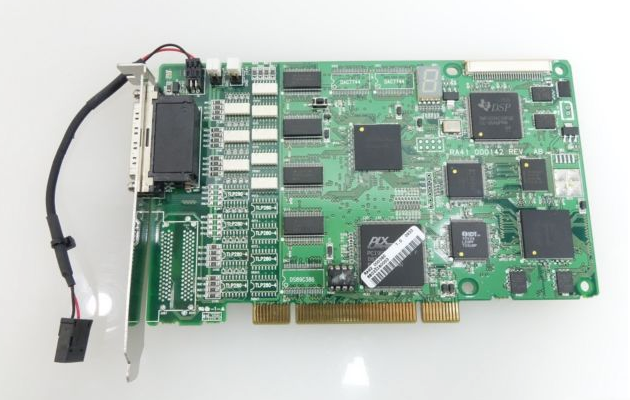 A recent study revealed that the global market for multi-axis motion controllers will grow at an 11% compound annual growth rate (CAGR) between 2017 and 20211. The rising need for precise control systems is identified as one of the main reasons for this expected growth.
But what does a multi-axis motion controller actually do? Why is it important in the motion control industry?
What is a Multi-Axis Motion Controller?
For a long time, motion control design was straightforward. Each axis had one motor, each motor had one drive, and it was all connected by cables and housed in an enclosure. More axes meant a more complicated design and excess heat.
Then, the advent of digital buses like CANopen and EtherCAT enabled smarter, multi-axis drives. These smart drives, in turn, eliminated the need for a centralized motion controller and enabled a more distributed architecture.
Essentially, a multi-axis motion controller controls the motion of automated systems on more than one axis. They play an important part in enabling smart, discrete multi-axis drive designs.
How Do Multi-Axis Motion Controllers Work?
Multi-axis drives, enabled by multi-axis controllers, can achieve performance levels that are nearly impossible with single-axis distributed drives. In this way, multi-axis controllers are an important part of advanced motion control systems.
Certified Motion Control Professional Program
Strengthen Your Skills and Enhance Your Career
Become a Certified Motion Control Professional (CMCP) and join the elite group of system integrators, machine builders, manufacturers, end-users and others recognized in the industry for their professional knowledge and expertise.
In this type of system, a controller sends a multiplexed signal to the box’s microprocessor, where it is decoded into separate signals for each drive. This type of synchronization doesn’t rely on a communications bus or network, but on the processor clock, which enables motion control to nano-scale accuracies.
These types of systems are particularly useful for high-value, high speed applications like semiconductor wafer inspection. Applications like these demand a high level of precision, speed and reliability because every moment of downtime is incredibly expensive.
Multi-axis motion controllers play an important part in the steadily advancing capabilities of motion control. Their expected growth over the next few years is directly a result of their value and consistent performance.
1. https://www.technavio.com/report/global-multi-axis-motion-controller-market
Recent Posts
- Emerging Technologies Driving Modern Motion Control Systems: Five Trends Reshaping Factory Automation
- Electronic Camming: Enabling Superior Flexibility in Advanced Motion Control Systems
- Electronic Camming: Enabling Superior Flexibility in Advanced Motion Control Systems
- How Electrification is Reshaping Motion Control
- Motion Control in Harsh Environments: Engineering for Extremes
- Next-Generation Motion Control: Integrating IIoT and Real-Time Data Analytics
- View All Blogs