
Blog
3 Types of Conveyor Technology Moving the Industry Forward
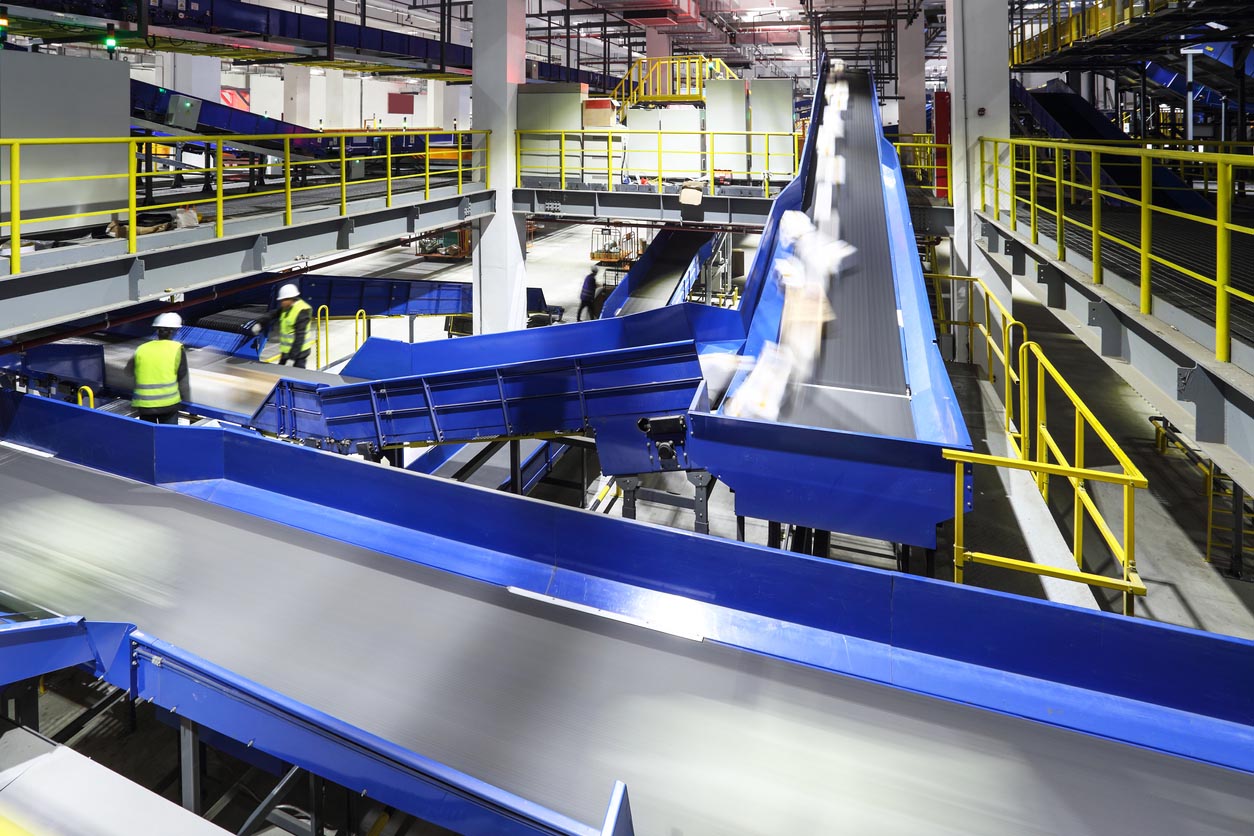 Conveyors are at the heart of many manufacturing and distribution services across the world. They play an indispensable role in transporting goods within a facility, creating often overlooked efficiencies in day-to-day operations.
Analysts project that the global conveyor market will reach $12.3 billion by 2022, which is up from $8.2 billion in 2016. This translates to a compound annual growth rate (CAGR) of 7.5% – 2.5x higher than the projections for overall global economic growth. The Asia-Pacific region is set to experience the fastest expansion.
Much of this growth is driven by technological advances in smart conveyors and associated equipment.
3 New Technologies for Better Conveyors
Today’s conveyors are capable of precise motion control, stopping a product exactly where it needs to be for inspection or to be picked by a robotic arm. There are a few key technologies pushing this industry forward.
- Direct Drive Technology
Direct drive motors in modern conveyors are a part of the system itself. They can be built into the conveyor at either ends of the rollers or even inside the roller. This minimizes the amount of gearing stages, allowing a simplified and compact design with precise motion control abilities.
Certified Motion Control Professional Program
Strengthen Your Skills and Enhance Your Career
Become a Certified Motion Control Professional (CMCP) and join the elite group of system integrators, machine builders, manufacturers, end-users and others recognized in the industry for their professional knowledge and expertise.
- Active Conveyor Belts
Active conveyor belt technology is based on the roller belt – a belt embedded with an array of rollers controlled by actuators underneath. This type of system allows for positioning of a load within the local coordinate system even as it is traveling in the global coordinate system, which leads to more compact, economical and efficient positioning.
- Smart Conveyor Technology
Smart conveyors, comprised of a system of carts individually and asynchronously routed along tracks, leverage advanced motion control technology for real-time programming. The result is a highly responsive transport system for a wide range of applications.
Conveyors are the unsung heroes of the modern industrial sector. The latest conveyor technology is expanding their capabilities in a number of different applications – partially responsible for the robust growth the industry is expecting.
Share This On X:
Conveyors are at the heart of many manufacturing and distribution services across the world. With several technological advances, the conveyor market will continue to grow.
Conveyors are the unsung heroes of the modern industrial sector. The latest conveyor technology is expanding their capabilities in a number of different applications.
Recent Posts
- Emerging Technologies Driving Modern Motion Control Systems: Five Trends Reshaping Factory Automation
- Electronic Camming: Enabling Superior Flexibility in Advanced Motion Control Systems
- Electronic Camming: Enabling Superior Flexibility in Advanced Motion Control Systems
- How Electrification is Reshaping Motion Control
- Motion Control in Harsh Environments: Engineering for Extremes
- Next-Generation Motion Control: Integrating IIoT and Real-Time Data Analytics
- View All Blogs