
Vision & Imaging Blog
Demand for Near Infrared Imaging is Heating Up
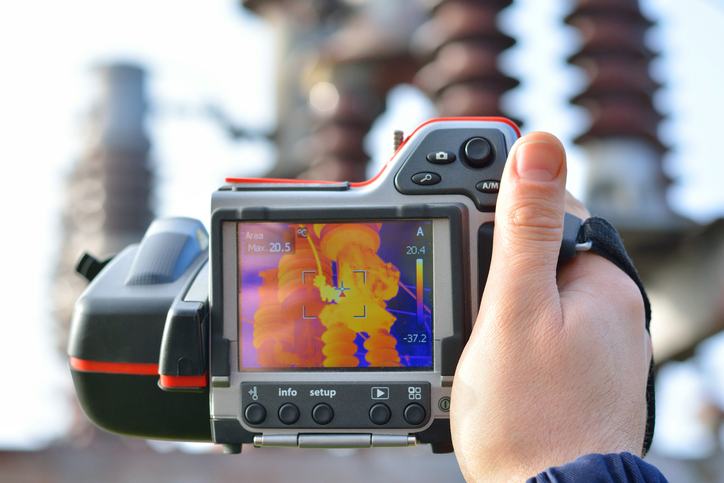 Near infrared (NIR) imaging is growing in demand around the globe, typically as a replacement for thermal or far-infrared (FIR) vision for night vision. NIR cameras are able to detect the wavelengths of light directly adjacent to the visible light spectrum. Unlike thermal cameras, NIR cameras still detect photons like a camera in the visible light spectrum, just at a different wavelength. In the NIR spectrum, there are actually more detectable photons at night, which is what makes NIR cameras so valuable for night vision.
But how does better night vision lead to global growth in NIR imaging? And what types of applications are using NIR cameras?
What’s Driving Demand for Near Infrared Imaging?
According to a recent study1, the market for all infrared devices will be worth $11.36 billion by 2022. The market will grow at a steady compound annual growth rate (CAGR) of 8.32% between 2016 and 2022. Surveillance applications and long-wavelength infrared (LWIR) devices were expected to see the most growth, but NIR devices will still represent a solid portion of this growth.
Technological advances in NIR imaging will be a major driver of growth in the coming years. NIR sensors often have low quantum efficiencies (QE), topping out at 58%2. Recent breakthroughs, such as thicker silicon and extended deep trench isolation (DTI) architecture for increased photon absorption, can bring QEs as high as 90%. This makes them much more suitable for a wide range of applications, especially applications where range and accuracy are vital.
Certified System Integrator Program
Set Yourself at the Forefront of the Global Vision Market
.jpg) Vision system integrators certified by A3 are acknowledged globally throughout the industry as an elite group of accomplished, highly skilled and trusted professionals. You’ll be able to leverage your certification to enhance your competitiveness and expand your opportunities.
Vision system integrators certified by A3 are acknowledged globally throughout the industry as an elite group of accomplished, highly skilled and trusted professionals. You’ll be able to leverage your certification to enhance your competitiveness and expand your opportunities.
Near Infrared Imaging Applications – Advanced Driver Assistance Systems (ADAS)
One of the best examples of NIR imaging in commercial applications would be their use in advanced driver assistance systems (ADAS). The U.S. and the E.U. have both mandated that all vehicles have some form of ADAS by 2020, so this technology will proliferate quickly.
When compared to thermal vision, NIR vision is a clear winner. Thermal vision only detects heat. It’s not good at producing crisp, clear images to facilitate semi- or full-autonomy.
NIR vision, on the other hand, is independent of an object’s heat and takes clear images for ADAS to function properly at night. The only technical problem currently facing NIR vision deployment in ADAS is their limited effective range – often less than 600 feet.
Despite this shortcoming, recent technological advances have addressed this problem and NIR imaging is still the best solution for applications like ADAS.
Demand for NIR imaging will grow around the globe for the foreseeable future. NIR cameras are particularly adept at functioning at night with little to no sources of light and will start making their way into a number of applications like imaging in ADAS systems.
1. https://www.marketsandmarkets.com/PressReleases/IR-imaging.asp
Recent Posts
- How 3D Vision Systems Are Transforming Food Manufacturing
- Autonomous Driving Technology: Dueling Approaches Fight for Control of the Wheel
- These Farms Are Harnessing Machine Vision for Smarter Agriculture
- Revealing the Hidden Effects of Climate Change with Advanced Imaging
- How Vision Systems Are Transforming Predictive Neurodiagnostics
- Innovative Machine Vision Lenses and Trends
- View All Vision & Imaging Blogs