
Vision & Imaging Blog
Embedded Vision Technology Powers the Popularity of Drones
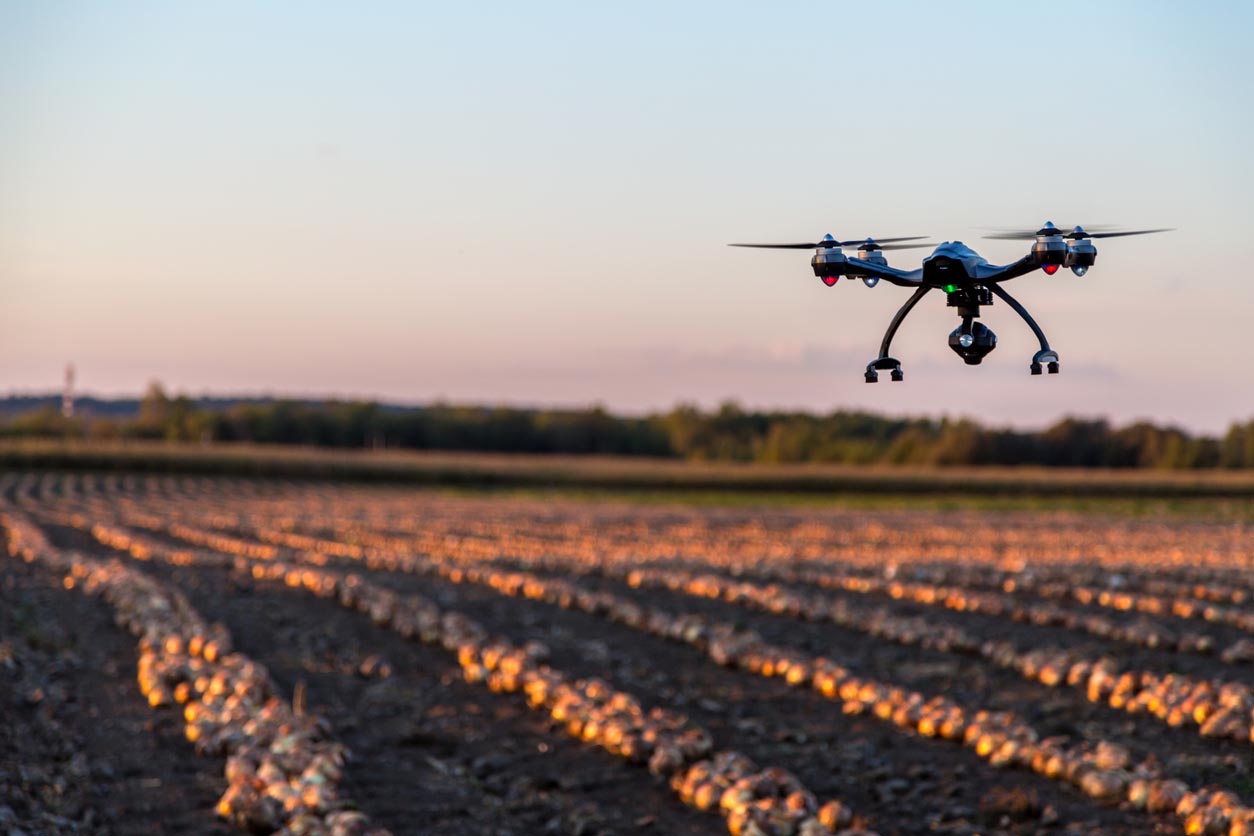 Unmanned aerial vehicles (UAV) rely on embedded vision technology to complete many of their core functions. Without vision, a UAV would have difficulty navigating to its destination and providing any form of intelligence from the air. It certainly would not be able to execute complex functions like simultaneous localization and mapping (SLAM) for autonomous navigation.
As embedded vision technology advances, so do the capabilities of UAVs - the growth of both technologies is intertwined. A closer look at some of the more common UAV applications reveals why.
Embedded Vision and UAVs for Infrastructure Inspection
UAVs have found an immediate niche in the inspection of infrastructure. Infrastructure in the drilling and transport of oil, for example, is a common use of UAVs today. In these applications, UAVs must be able to conduct aerial imaging with a high degree of accuracy and reliability.
In order for a drone to conduct these inspections with accuracy and reliability, the associated vision system must be capable of capturing high-resolution images and transferring these images with high data integrity. An inspection UAV incapable of producing clear images would not be useful or profitable. In this way, embedded vision is an essential component of these UAVs.
Certified System Integrator Program
Set Yourself at the Forefront of the Global Vision Market
.jpg) Vision system integrators certified by A3 are acknowledged globally throughout the industry as an elite group of accomplished, highly skilled and trusted professionals. You’ll be able to leverage your certification to enhance your competitiveness and expand your opportunities.
Vision system integrators certified by A3 are acknowledged globally throughout the industry as an elite group of accomplished, highly skilled and trusted professionals. You’ll be able to leverage your certification to enhance your competitiveness and expand your opportunities.
Embedded Vision and UAVs for Agriculture
Agriculture has been experiencing an automation revolution over the past few years. UAVs have proven particularly useful for quickly and accurately surveying fields in a way that farmers could not do manually. UAVs can complete soil and field analysis, monitor irrigation, and assess the health of crops.
Once again, these vision systems must have ultra-high resolutions and speed to reliably capture this information. In some instances, advanced thermal or near-infrared (NIR) imaging capabilities are required to capture the relevant data.
In both scenarios listed above, the UAV would not be able to perform its assigned task without the use of an advanced embedded vision system. Aerial imaging with UAVs in general requires a robust vision system.
Recent Posts
- How 3D Vision Systems Are Transforming Food Manufacturing
- Autonomous Driving Technology: Dueling Approaches Fight for Control of the Wheel
- These Farms Are Harnessing Machine Vision for Smarter Agriculture
- Revealing the Hidden Effects of Climate Change with Advanced Imaging
- How Vision Systems Are Transforming Predictive Neurodiagnostics
- Innovative Machine Vision Lenses and Trends
- View All Vision & Imaging Blogs