
Robotics Blog
How Self-Healing Robots Repair Themselves
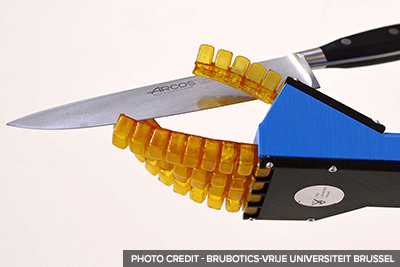 Robots equipped with artificial intelligence will soon be able to “feel pain” and know they need repair. This is becoming more necessary as collaborative robots find their way out of factories and laboratories and into the household.
Robots that work side by side with humans must not only be able to work with dexterity to ensure human safety, they often also are built from materials more flexible than typical robotic materials. This is a failsafe — softer materials are less likely to hurt people. Of course, this also makes the robots susceptible to cracks and other damage, and repairs can be long and costly.
Self-Healing Robots Will Save Time and Money
To help mitigate downtime and expensive repairs, scientists have developed polymers that can heal themselves, creating new bonds after being damaged in as little as 40 minutes. Embedding functional material will soon let robots use artificial intelligence to sense and actuate the self-healing process without the need for human intervention.
ROI Calculator

Discover the potential cost savings of robotic automation over a 20-year system life
This calculator compares your current manual labor costs against the total cost of owning and operating a robotic system over its 20-year lifespan.
Researchers will consider it a success when they can create a soft robot made from a self-healing material that can detect damage, take the steps to heal the defect, and then complete the work that was in progress when the damage occurred. The self-repair mechanism of this kind of robot could make complex, costly repairs a thing of the past.
Self-Healing Robot Applications and Advancements
In other applications, soft robotic hands are used to perform tasks from picking fruit to minor surgery. The jelly-like plastic used is thought to be the solution to many challenges with robot end effectors. They are dexterous, safe for humans to be around, and smooth enough to prevent bacteria and fungus growth (which require a porous surface to thrive).
Recent Posts
- 6 Companies Driving Automation in Mexico
- Humanoids on the Horizon: What Hurdles Remain for Widespread Adoption?
- Safety by Design: How Humanoid Robots Must Evolve to Depart the Walled Garden
- Are Robots Really Taking All the Manufacturing Jobs?
- The Shipping Industry Floats Emerging Opportunities for Maritime Automation
- New to Robotics? Start with These Fundamentals
- View All Robotics Blogs