
Robotics Blog
Collaborative Robots Offer Chronic Pain Relief Therapy to Patients
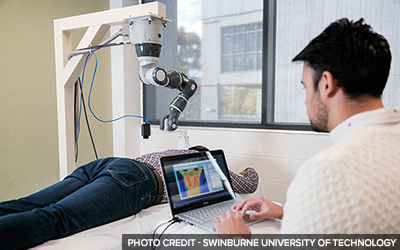 Researchers have found a way to automate the treatment of pain by using collaborative robots. Thanks to a thermal camera and targeted laser therapy, the collaborative robot system automatically treats back, neck, and head pain caused by soft tissue injury.
Dr. Mats Isaksson, the Senior Lecturer at Swinburne University in Melbourne, Australia, says collaborative robots were chosen because they are designed to work alongside people.
Collaborative Robot Substitutes for Skin Contact
At the University of British Columbia, researchers have designed a therapeutic robot that simulates human skin-to-skin contact. This contact has been found to reduce pain in babies that must spend time in the neonatal intensive care unit. The collaborative robot, known as Calmer, mimics a parent’s heartbeat sounds, breathing motions, and the feel of human skin.
Researchers have found that Calmer worked no differently than hand hugging during blood collection. Hand hugging involves using the hands to contain an infant’s head, arms, and legs. The robot could help when a child’s parents are not available or, as discussed, not allowed to have contact with their baby.
Calmer is compact enough to fit inside a NICU incubator, replacing the standard mattress. Using Calmer to help shield premature babies from pain is key to their healthy development — early exposure to pain has been shown to have a negative effect on premature babies’ brain development.
ROI Calculator

Discover the potential cost savings of robotic automation over a 20-year system life
This calculator compares your current manual labor costs against the total cost of owning and operating a robotic system over its 20-year lifespan.
Robots Distract Children from Their Pain
Other robots designed to help people deal with pain have been deployed elsewhere. At a hospital in Alberta, Canada, humanoid robots interact with children while they have painful medical procedures performed. The robots serve as pain coaches, educators, and personal companions during medical procedures.
The system that powers these robots, called MEDi, offers exceptional support in pediatric comfort, better care for the patient, and efficient improvements for nurses and therapists. MEDi has been shown to reduce pain during procedures and increase vaccination rates.
The robot interfaces with applications that tell it what to say and do to distract children from needles, bandages, or whatever else is involved. Cognitive behavioral interventions are used to coach children through the procedure. Researchers hope that collaborative robots can be adapted for use in a wide range of procedures, from blood tests to chemo.
Collaborative robots continue to expand their place in the medical industry. Rehabilitation robots will soon support the lives of the infirm or elderly. These robots will likely further assist with rehabilitation, training, and therapy.
Share This On X:
Calmer, the #collaborativerobot, mimics a parent’s heartbeat sounds, breathing motions, as well as the feel of human skin to soothe babies in the neonatal intensive care unit.
Humanoid #robots have been deployed in a hospital in Canada to interact with children while they have painful medical procedures done. #collaborativerobot
Recent Posts
- 6 Companies Driving Automation in Mexico
- Humanoids on the Horizon: What Hurdles Remain for Widespread Adoption?
- Safety by Design: How Humanoid Robots Must Evolve to Depart the Walled Garden
- Are Robots Really Taking All the Manufacturing Jobs?
- The Shipping Industry Floats Emerging Opportunities for Maritime Automation
- New to Robotics? Start with These Fundamentals
- View All Robotics Blogs