
Robotics Blog
Fashionable Robots: Automation in Clothing Factories
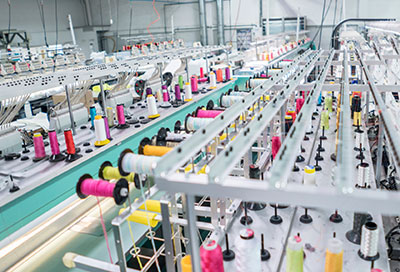
Garment manufacturing is one of the core sectors that launched the Industrial Revolution. From that day to this, however, it has also been associated with significant safety issues. Despite many positive changes over the years, the textile industry remains one where employees often face danger and hard working conditions.
Thanks to the latest advances in robotics, that may be about to change.
Robotic Production Arrives in Textiles
Though some of the earliest industrial labor-saving machines were designed for textile workers, the underlying production strategy of the industry has not transformed. Because of the inherent flexibility of textiles, machines often have problems moving them, stacking them, or lining up seams and edges during ordinary tasks.
This leads to low-quality products, hampering innovation.
The LOWRY automated textile handling system may offer solutions. Using a four-axis design and a combination of the latest computing, robotics, and machine vision technology, it is capable of activities no previous system has handled effectively:
- It can manage all basic fabric handling and transfer operations;
- It can perform “pick and place” operations on the shop floor;
- It can execute direct sewing tasks with minimal distortion.
Patterns from most common pattern design formats can be transferred directly into the robot’s memory. Specific details can be fine-tuned using CAD software for sewing.
ROI Calculator

Discover the potential cost savings of robotic automation over a 20-year system life
This calculator compares your current manual labor costs against the total cost of owning and operating a robotic system over its 20-year lifespan.
“Sewbots” are Already Appearing Around the World
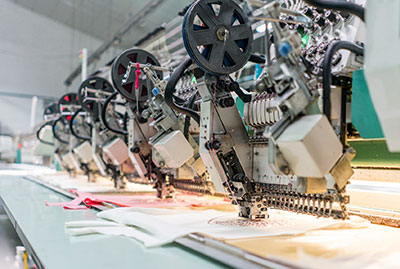
Adidas recently unveiled an innovative footwear production plant – called a “speedfactory” – in its home country of Germany. After a successful pilot program, the concept is expected to reach the United States in 2017.
Both plants are expected to reach a mature production level of 500,000 pairs of shoes annually.
This will help improve supply chain issues that have traditionally plagued the industry. In the case of footwear, consumers receive products many months after a retailer has placed an order. That can result in reduced sales, quality, and customer experience.
Garment companies have much to gain by implementing innovative robotic technology. Still, they are not the only ones positioned to experience accelerated growth. Suppliers of robotic textile equipment stand to achieve unprecedented industry partnerships – and profit.
At the 2016 Texprocess America conference, vendors demonstrated new automation capabilities touching on dozens of sewn products. Today’s technology allows for automated fabrication of virtually any textile product, and it will only get better from here.
Within a few years, robotic technology could be a dominant force in the textile industry.
Recent Posts
- 6 Companies Driving Automation in Mexico
- Humanoids on the Horizon: What Hurdles Remain for Widespread Adoption?
- Safety by Design: How Humanoid Robots Must Evolve to Depart the Walled Garden
- Are Robots Really Taking All the Manufacturing Jobs?
- The Shipping Industry Floats Emerging Opportunities for Maritime Automation
- New to Robotics? Start with These Fundamentals
- View All Robotics Blogs