
Robotics Blog
Collaborative Robots in the Laboratory
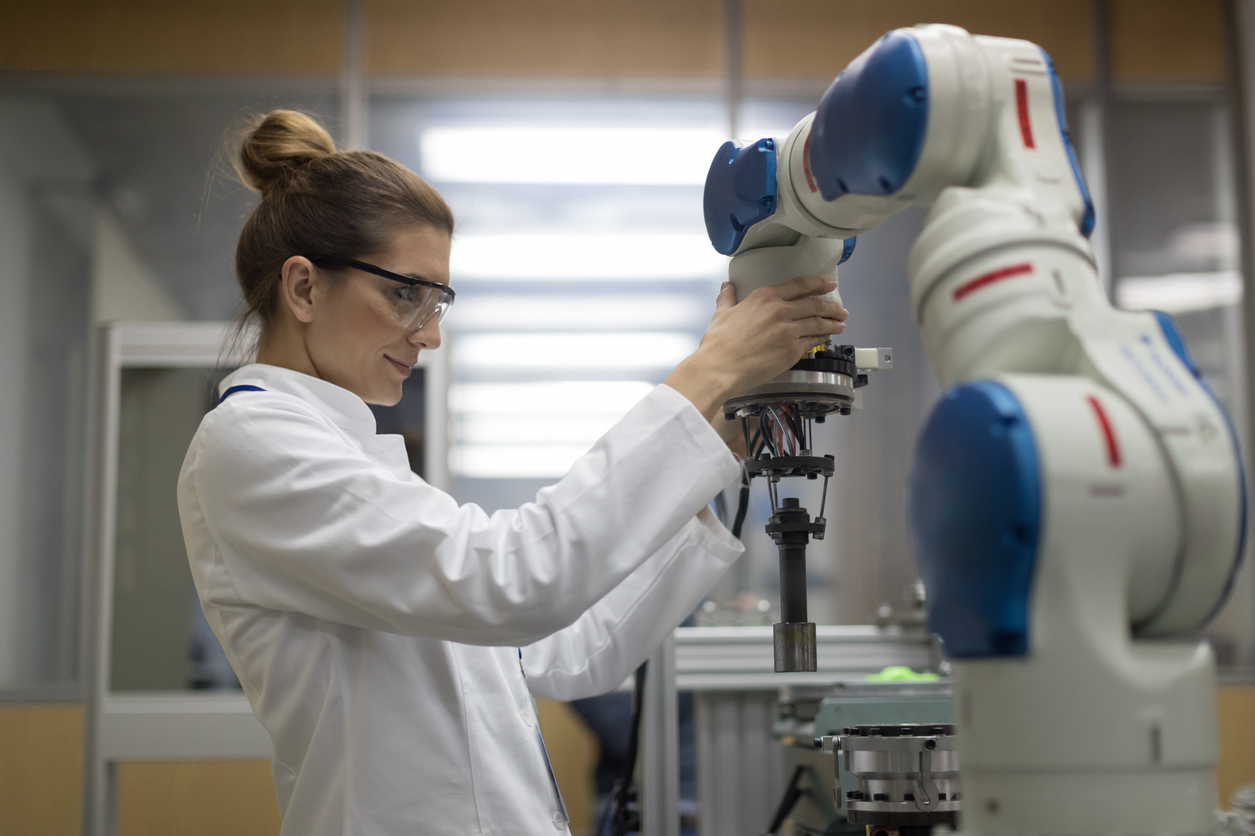 As the technology behind robotic automation improves, robots are popping up in more and more unique places. Their ability to solve a wide variety of productivity problems in many different applications is constantly improving.
One of the more recent applications to be tested is the use of collaborative robots in laboratory settings, and the results are promising.
What are Collaborative Robots Used for in the Laboratory?
A lot of the physical work required in a laboratory setting is mundane and repetitive – making it a prime target for robotic automation. Tasks that collaborative robots can perform include cultivating and transferring cells, and treating samples in a centrifuge, among several other things.
However, the significance of collaborative robotics in life sciences is more than about the tasks they can perform. In industrial settings, robotic automation is all about productivity and efficiency. In life sciences, it's all about the reproducibility in research.
Even the smallest amount of human-error in research can cause either false results or, at the very least, barriers that make it harder to confirm complete accuracy. Robots are, by design, able to complete tasks with accuracy and reproducibility that's simply not possible for a human.
ROI Calculator

Discover the potential cost savings of robotic automation over a 20-year system life
This calculator compares your current manual labor costs against the total cost of owning and operating a robotic system over its 20-year lifespan.
In this way, collaborative robots are poised for significant impact in the laboratory setting, improving the accuracy of research across the globe.
Have Collaborative Robots Been Proven Effective in the Laboratory Yet?
A recent study in Tokyo suggests that collaborative robots are already primed for widespread use in the life sciences. The researchers in this study mentioned that nearly 80% of life science experiments could benefit from collaborative robots.
They tested the reproducibility of various dual-arm robots currently available on the market by having several test groups attempt to isolate the same gene in a test sample. Each robot successfully isolated the correct gene.
Here, it is important to note that these robots will not replace laboratory workers. There's a reason labs are using collaborative robots – to work alongside humans.
Most research laboratories are staffed with individuals with advanced degrees. Allowing robots to perform mundane tasks with increased reliability, frees up workers to use their specialized knowledge to improve laboratory research in other ways.
Collaborative robots are a major force in the life sciences industry due to their accuracy, efficiency and reproducibility. While they have not yet seen widespread adoption yet, you can expect to see collaborative robots quickly become a staple of life science research.
Recent Posts
- Creating a Safety Culture in Your Organization at the International Robot Safety Conference
- 6 Companies Driving Automation in Mexico
- Humanoids on the Horizon: What Hurdles Remain for Widespread Adoption?
- Safety by Design: How Humanoid Robots Must Evolve to Depart the Walled Garden
- Are Robots Really Taking All the Manufacturing Jobs?
- The Shipping Industry Floats Emerging Opportunities for Maritime Automation
- View All Robotics Blogs