Neuralyze®: AI Software for 100% Quality Assurance
A Tool for All Tasks
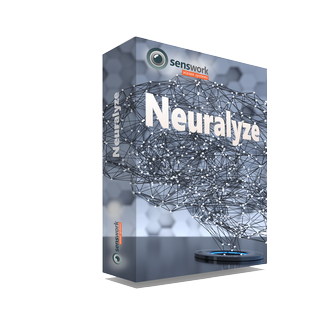
Neuralyze® combines all steps for the implementation of AI applications in one software platform
Deep Learning is often the solution for optical quality assurance tasks that were previously considered problematic or difficult to implement. Properties such as reflectivity or transparency of component surfaces, or even complex and varying features can be efficiently tested.
As experts in Vision AI, senswork has been developing the Neuralyze® software toolkit. The software platform provides all necessary functionalities required for the implementation of AI applications on image data. In doing so, we place great emphasis on user ergonomics in order to offer both experienced and new users the easiest possible usability. Neuralyze® significantly expands the spectrum of solutions that can be reliably solved with the help of optical inspection and measurement technology.
Error Detection without Prior Knowledge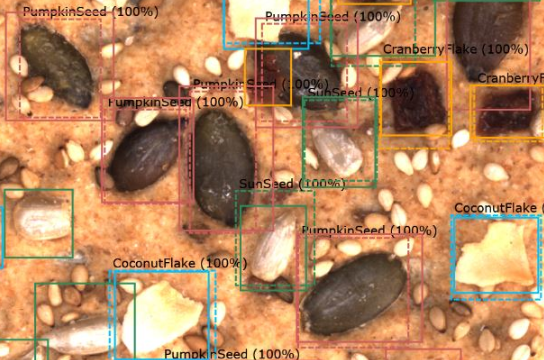
Neural Networks - the Basis for Deep Learning
Artificial intelligence based on neural networks is proving to be an extremely powerful methodology in machine vision. For this reason, the approach has now established itself as a key analytics tool.
While conventional image processing is based on rules and a defined model of the test object for pattern recognition, Deep Learning / Machine Learning (DL/ML) is based on a self-learning methodology.
In this approach, a neural network is presented with image data and the desired decisions. Using a large amount of this data, the system is able to determine an appropriate solution path. The patterns and properties leading to the decision are derived independently.
It is assumed that the decision path can be considered universal with increasing statistical variance of the input data. This makes it possible to apply the method accurately to the analysis of previously unknown data.
Vision AI with Neuralyze®
Analyze image data with neural networks - intuitively and flexibly
The implementation of Deep Learning in the industrial environment places high demands on companies that want to use this technology.
Vision AI is a complex research topic in computer vision with a variety of approaches, both directly algorithmic and in terms of a structured development process for customized applications.
Neuralyze® makes it easier to get started with this technology by implementing tried-and-tested solutions as part of an integrated software platform. The tool provides all the steps for successful implementation in an intuitive user interface. This makes it possible to use AI in optical quality assurance even without expert knowledge.
But experts also benefit because Neuralyze® simplifies recurring tasks. It offers standard functionality that creates the freedom to focus on the essentials of a problem and therefore accelerates the operationalization of solutions.
From the Real World, for the Real World
What makes Neuralyze different from other AI tools?
Since 2019, senswork has been developing Neuralyze as an easy-to-use and scalable software concept for deep learning applications. The functionality is essentially based on the requirements and practical experiences that have been and are being demonstrated in the course of senswork's implementation of a large number of vision AI systems.
Neuralyze offers proven Deep Learning approaches such as classification, object detection or semantic segmentation. Furthermore, it is able to read fonts reliably. By concatenating several neural networks, hybrid approaches can also be realized. This makes many more complex problems achievable.
As a platform, Neuralyze® represents the concept of Machine Learning Operations (MLOps). It thereby combines all necessary steps from the management of image data to the customized, executable solution. In combination with senswork's VisionCommander®, immediate deployment in industrial high-throughput environments is consistently possible.
In the development of Neuralyze®, senswork places great emphasis on software ergonomics and low-threshold accessibility to pave the way for experts and newcomers alike to easily implement AI quality assurance systems.
Features
Classification
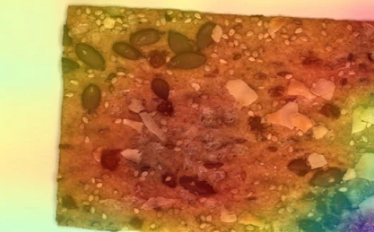
Classification is the process of assigning a complete image data set to one or more property classes. Very often, this is used to perform a binary classification that distinguishes between faulty and perfect objects. In addition, the method allows the definition and assignment of multiple classes. A statement is always made globally for the entire input image.
Object Detection
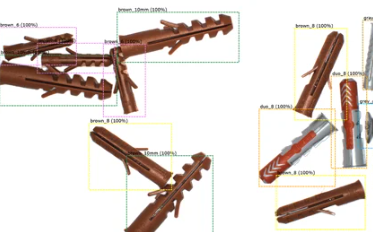
Often, the location of objects or features in an image is relevant. The object detection method is able to determine instances of objects as well as their position within an image. This makes counting objects very easy. The position information is determined by an enclosing rectangle, the so-called bounding box.
Semantic Segmentation
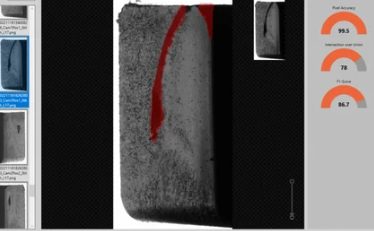
The segmentation approach allows to determine the pixel-based extent of objects belonging to a certain class. As a result, bounding polygons are generated that return accurate information about the perimeter of all surface objects belonging to a class.
Character Recognition (OCR)
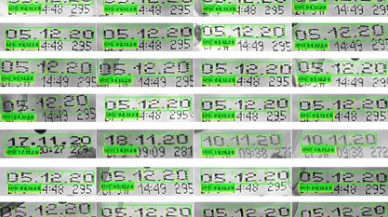
Optical Character Recognition (OCR) is a methodology that has been in use for many years in industrial image processing. The implementation with the help of Deep Learning extends the flexibility of the character recognition enormously, so that the reliability of readings increases strongly with simultaneously reduced effort in the learning phase.
3D Deep Learning
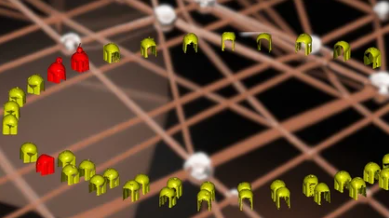
Neuralyze is able to evaluate real 3D point clouds using Deep Learning. This makes it possible to evaluate the complete information contained in the 3D data - in contrast to the typically applied method, which uses so-called depth maps instead of 3D data, which are rasterized 2D projections of 3D datasets.
Model Chaining
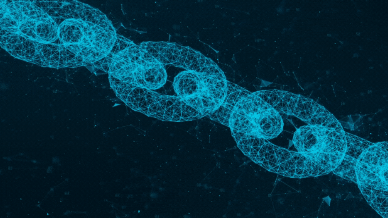
Model chaining is the sequential linking of different methods or models in a sequence. This can be used to create complex evaluation workflows. A popular hybrid approach is object segmentation, which combines object detection and semantic segmentation. In principle, however, any kind of combination is possible in Neuralyze.
Benefits
- Intuitive to use, even without AI expertise
- User-friendly no-code application Neuralyze® Desk
- Maps the complete machine learning workflow to create a solution
- Powerful in difficult inspection situations
- Particularly effective on transparent, reflective, curved or inhomogeneous surfaces
- Detects objects even with high feature variance
- Easy solution development for both experts and beginners
- Integrates with existing applications as a Dynamic Link Library (DLL)
- Seamless integration with senswork VisionCommander®.
When Should You Use Vision AI?
If you would like more in-depth information on how Vision AI works and when to use it, download our free guide below!
Download Now