
Motion Control & Motors Blog
Standard Industrial Network Topologies Pros and Cons
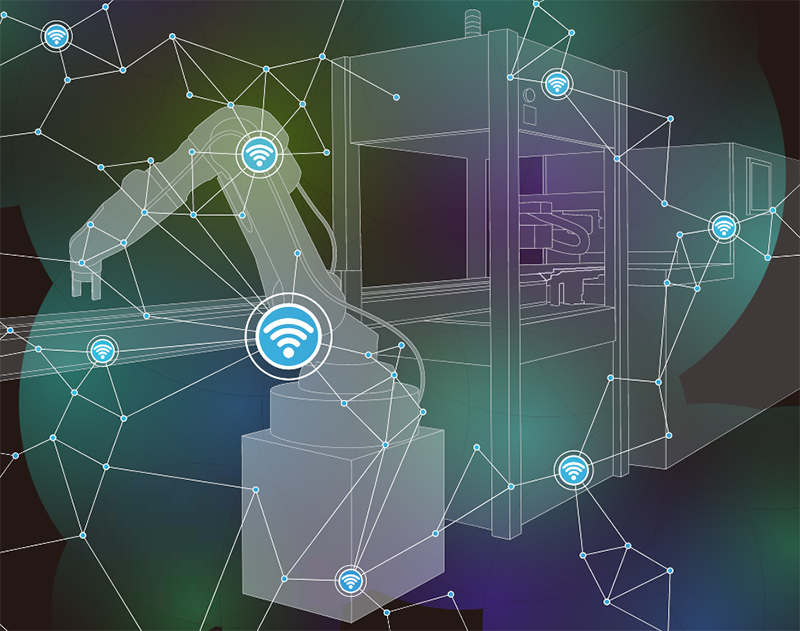 There are many different types of "standard" industrial networks on the market today and it can be difficult to select and implement the one that's correct for your application. Many industrial networks that claim to be standard are actually "standards-based" or "semi-proprietary," which can lead to more complicated set up and future restrictions.
Standard Ethernet/IP is the most common industrial network because it is truly "standard" in the sense that it offers digital interconnectivity and a unified communications network. But even within this standard industrial network, there are many different topologies to choose from, each with various advantages and disadvantages.
The Importance of the Right Industrial Network Topology
For industrial applications, network topology is a vital component of production. If an industrial network fails, it can lead to extremely costly downtime, poor asset utilization and worse return on investment in equipment.
The industrial network topology is important too. Choosing the wrong topology can lead to dead-end migration paths, lengthy set up times or investment in extra hardware or software. It's wise to know your options, understand your application's needs and select the right topology to future-proof your industrial network.
Pros and Cons of Common Network Topologies
For standard Ethernet/IP networks, there are three common topologies, each with various advantages and disadvantages.
ROI Calculator

Discover the potential cost savings of robotic automation over a 20-year system life
This calculator compares your current manual labor costs against the total cost of owning and operating a robotic system over its 20-year lifespan.
- Star Configuration
In this topology, end devices are connected through a home run to a switch. This network configuration is easy to set up, there’s a direct path between the switch and each device, and it's simple to add or remove components. However, this system has a potential single point of failure and there is no media redundancy.
- Linear Network
Switches are daisy-chained together to communicate with each device in this configuration. The major advantage of this is that it allows for long-distance communication with simple set up. The disadvantages of a linear network are that each link is dependent on the one upstream from it, and the number of switches can delay communication.
- Ring Network
This topology is much like a linear network, except the first and last switches are connected to create a ring. This provides protection against a single point of failure where the network will still function if one switch fails. The disadvantage is that ring networks are much harder to set up.
Navigating the complicated market for standard industrial networks can be a daunting task. Choosing the right network and then the right topology is a major decision with major consequences for your operation.
Recent Posts
- Emerging Technologies Driving Modern Motion Control Systems: Five Trends Reshaping Factory Automation
- Electronic Camming: Enabling Superior Flexibility in Advanced Motion Control Systems
- Electronic Camming: Enabling Superior Flexibility in Advanced Motion Control Systems
- How Electrification is Reshaping Motion Control
- Motion Control in Harsh Environments: Engineering for Extremes
- Next-Generation Motion Control: Integrating IIoT and Real-Time Data Analytics
- View All Motion Control & Motors Blogs