
Motion Control & Motors Blog
Brushless Motor Design: A Basic Overview
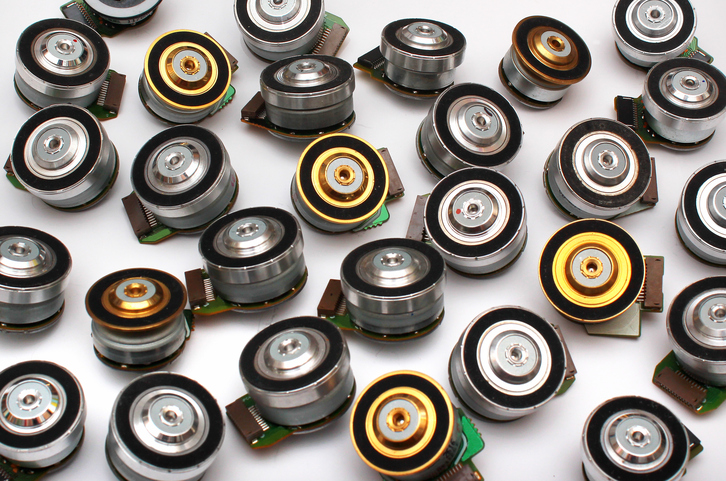 There are many different types of electric motors used in motion control. The design of the motor significantly impacts performance in terms of power, size and energy consumption. To understand if a brushless motor is right for your application, it’s important to first have basic knowledge of how a brushless motor works.
What makes a brushless motor different than a brushed motor? How many types of brushless motors are there in motion control? How do you choose the right one?
Brushless Motor Design vs Brushed Motor Design
As brushed motor depends on a mechanical system to transfer currents in order to create motion in the rotor. In these motors, a wound armature is attached at the center and a permanent magnet surrounds the rotor. The current is passed through to the armature coils, creating motion, when the brushes come into contact with a commutator.
Brushless motors, mainly AC induction motors and brushless DC motors, use an electronic mechanism to control current. No physical contact needs to be made in order to transfer current in a brushless motor, often making them a more energy-efficient option.
Certified Motion Control Professional Program
Strengthen Your Skills and Enhance Your Career
Become a Certified Motion Control Professional (CMCP) and join the elite group of system integrators, machine builders, manufacturers, end-users and others recognized in the industry for their professional knowledge and expertise.
Brushless Motor Designs: AC Induction Motor vs Brushless DC Motor
In an AC motor, electromagnets surround the stator and produce a rotating current when power is applied. This causes the rotor to turn in response to the induction of a rotating magnetic field in the stator.
In a DC motor, permanent magnets are located on the rotor itself, instead of on the stator. Motion is created when current passes through the stator and the permanent magnets rotate based on the electromagnetic poles created by the stator.
AC motor design and DC motor design are quite different, but both produce a more efficient and durable solution when compared to brushed motors.
Brushless motor performance varies widely based on design. Understanding brushless motor design is the first step in finding the motor you need.
Recent Posts
- Emerging Technologies Driving Modern Motion Control Systems: Five Trends Reshaping Factory Automation
- Electronic Camming: Enabling Superior Flexibility in Advanced Motion Control Systems
- Electronic Camming: Enabling Superior Flexibility in Advanced Motion Control Systems
- How Electrification is Reshaping Motion Control
- Motion Control in Harsh Environments: Engineering for Extremes
- Next-Generation Motion Control: Integrating IIoT and Real-Time Data Analytics
- View All Motion Control & Motors Blogs