
Motion Control & Motors Blog
Benefits of DC Motors and Why They’re Great for Robotics
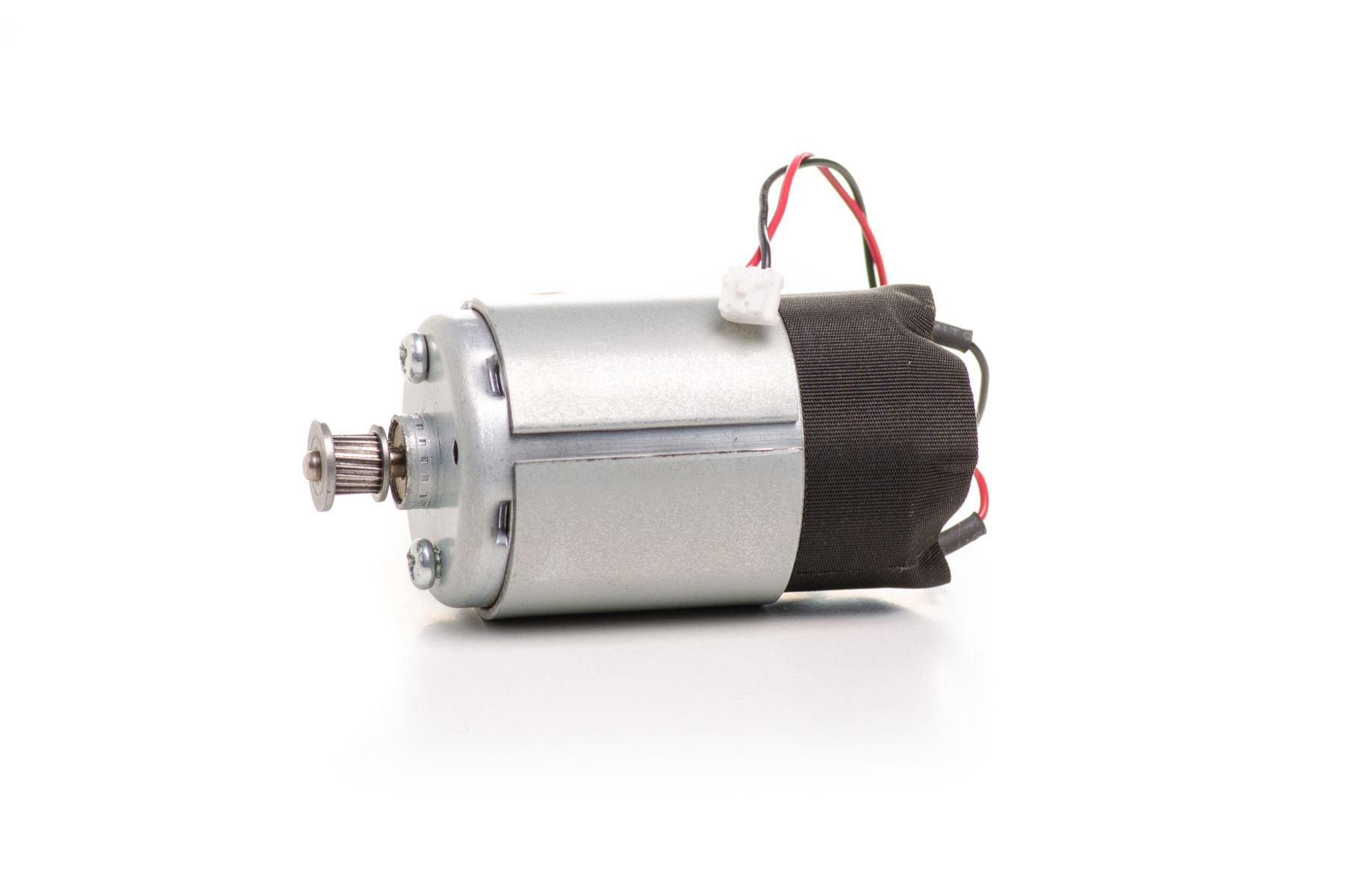 Drive motor selection for use in robotics is a serious consideration and DC motors have certain capabilities that make them a desirable choice. There are several types of DC motors - you can read about four main types in our blog 4 Types of DC Motors: an Introduction. Simply put, a DC motor converts direct current electrical energy into mechanical energy. This differs from an AC motor, which applies alternating current to the electric motor. At the most basic level, DC motors work well in robotics because they allow the robot to be battery powered, which offers great advantages for a variety of robotic applications, particularly mobile and collaborative robots.
That’s not to say that other motors are not used for robotics - like AC synchronous brushless servo motors, which facilitate precise control of the robot’s movements. The drive electronics of these motors actually work from a DC source.
Deciding on your drive motors requires first that you create a robot profile to specify its size, its weight, its speed, what it is manipulation, the environment it will work in and on, and the articulated movements it will need to make. All of these factors will inform your drive motor selection.
In addition to enabling the use of batteries to facilitate mobility, two key features that make DC motors great for robotics are speed variation and torque.
Speed Variation
A desirable feature of a DC motor is that it offers variable speed – a wide range both above and below the rated speed. There are three ways to control the speed of a DC motor. Because the motor speed is directly proportional to the supply voltage, you can vary the speed by varying the supply voltage. Additionally, since the speed of the motor is inversely proportional to the flux due to the field findings, by varying the flux and the current through field winding you can vary the speed. Lastly, with the speed of the motor inversely proportional to the armature voltage drop, you can vary speed by varying armature voltage and resistance.
Certified Motion Control Professional Program
Strengthen Your Skills and Enhance Your Career
Become a Certified Motion Control Professional (CMCP) and join the elite group of system integrators, machine builders, manufacturers, end-users and others recognized in the industry for their professional knowledge and expertise.
Torque
Many say high torque is the biggest advantage of using DC motors in robotics. They are capable of a high starting-torque used for driving heavy loads in starting positions and for applications requiring acceleration. They are also capable of constant torque over a given speed, where shaft power varies with speed.
Further Considerations
Worthy of consideration, DC motors are free from reactive power - which is not really power at all but refers to volts and amperes that are out-of-phase with each other and take away from the active power in an electrical system – so there are no additional power requirements needed to supply the load. Also, in addition to quick starts and acceleration, DC motors are equally beneficial when quick reversing and stopping is needed.
Although they are a more expensive option, DC motors offer many capabilities that make them a desirable drive motor selection for robotics.
Did you like this content? See it in person at Automate.
Share This On X:
There are a number of different #motors that you can utilize for your #motioncontrol application, but #DCmotors offer some benefits specifically for #robotics!
While picking the #motor for your #motioncontrol application, there are some considerations you should take into account before making your final purchase!
Recent Posts
- Emerging Technologies Driving Modern Motion Control Systems: Five Trends Reshaping Factory Automation
- Electronic Camming: Enabling Superior Flexibility in Advanced Motion Control Systems
- Electronic Camming: Enabling Superior Flexibility in Advanced Motion Control Systems
- How Electrification is Reshaping Motion Control
- Motion Control in Harsh Environments: Engineering for Extremes
- Next-Generation Motion Control: Integrating IIoT and Real-Time Data Analytics
- View All Motion Control & Motors Blogs