
Blog
7 Common Types of Robotic Welding Processes and When They’re Used
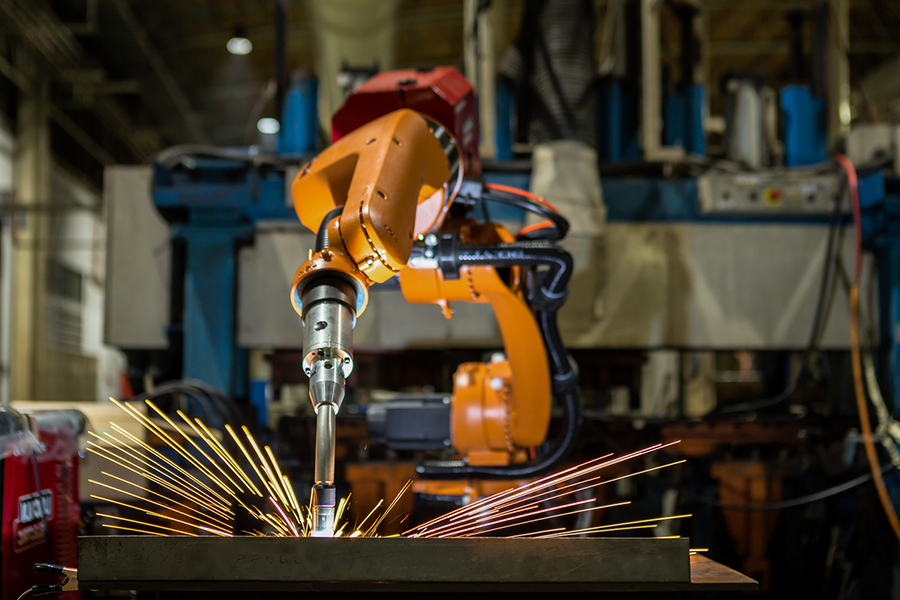 Robotic welding is one of the most common robotic applications in the industrial sector, being driven mainly by the automotive sector for the last several decades. Robotic welding is most productive when completing high-volume, repetitive welding tasks.
There are several different types of robotic welding processes, each with its own benefits and types of applications.
7 Types of Robotic Welding Processes
Although this is far from comprehensive list, the following are some of the most common forms of robotic welding:
- Arc Welding: an electric arc between an electrode and metal base produces an intense heat to melt and intermix two parts. Arc welding is used for applications calling for high accuracy and repeatability.
- Resistance Welding: a current is passed between two metal pieces of metal, a pool is formed by the resulting heat, and the two pieces are joined together. Resistance welding is the most economical form of robotic welding and is best for heat-treating projects.
- Spot Welding: a type of resistance welding, spot welding joins thin metals that resist electrical currents. It’s typically used in the automotive industry to join sheet metal frames together.
- TIG Welding: a high-quality process where an arc is formed between a non-consumable tungsten electrode and the metal part. Also known as Gas Tungsten Arc Welding (GTAW), TIG welding is used when precision is of the utmost importance.
- MIG Welding: a high deposition rate process that involves feeding a wire continuously toward the heated weld tip. Also known as Gas Metal Arc Welding (GMAW), it is best for applications where system simplicity and speed are desirable.
- Laser Welding: a laser generator delivers via a fiber optic cable a laser light through a robotic cutting head to weld pieces together. Laser welding, including remote laser welding for hard to reach weld locations, is often used in high volume applications that require high accuracy, such as the automotive sector or in the medical or jewelry industries.
- Plasma Welding: ionized gas passes through a copper nozzle to produce extremely high temperatures. Plasma welding is used when flexibility is required, as velocity and temperatures can be easily adjusted.
While there are dozens of other types of robotic welding processes out there, the 7 listed above are some of the most common and are deployed across the industrial sector for various applications. If you have a grasp on these processes, you have a good understand of the robotic welding landscape, in terms of the processes they perform.
ROI Calculator

Discover the potential cost savings of robotic automation over a 20-year system life
This calculator compares your current manual labor costs against the total cost of owning and operating a robotic system over its 20-year lifespan.
Recent Posts
- 6 Companies Driving Automation in Mexico
- Humanoids on the Horizon: What Hurdles Remain for Widespread Adoption?
- Safety by Design: How Humanoid Robots Must Evolve to Depart the Walled Garden
- Are Robots Really Taking All the Manufacturing Jobs?
- The Shipping Industry Floats Emerging Opportunities for Maritime Automation
- New to Robotics? Start with These Fundamentals
- View All Blogs