
Robotics Blog
Fenceless Robots Take on New Shapes and Forms
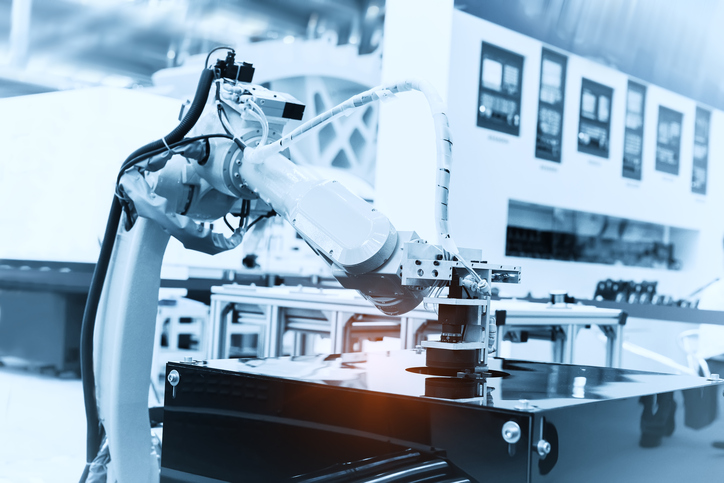 Industrial robots are typically locked behind cages for the sake of the safety of human workers. The introduction of small, force-limiting collaborative robots was a revolution in robotic technology as it allowed humans to work directly alongside a robot without the need for safety fencing. Now, as robotic technology has progressed, fenceless robots are taking on a number of different sizes and forms beyond the typically small and safe collaborative robot.
Fenceless robots deploy a number of sensors and safety protocols to safely work alongside humans. Often, the applications these robots are deployed in applications uniquely suited to their capabilities, which brings about a number of benefits for manufacturers.
The Benefits of Fenceless Robots
The most immediate benefit of fenceless robots is the time and cost saved from building and erecting fences and safety equipment. This equipment can sometimes be extensive, and eliminating it reduces integration and installation costs. Further, the lack of a fence allows workers to more efficiently interact with robots for collaborative processes as well as maintenance.
Fenceless robots take up significantly less space on the factory floor. This allows for far greater flexibility in robotic cell layout. When production needs change, this also makes it quicker and easier to reconfigure and relocate robots. Generally speaking, fenceless robots are a flexible solution with streamlined installation, configuration and operation.
ROI Calculator

Discover the potential cost savings of robotic automation over a 20-year system life
This calculator compares your current manual labor costs against the total cost of owning and operating a robotic system over its 20-year lifespan.
Types of Applications that Require Fenceless Robots
There are many different types of applications that may benefit from a fenceless robot, depending on the type of collaboration, force and movement that’s required from the robot.
In one example, a manufacturer needed to automate the insertion of spark plugs into an engine block. The manufacturer thought they needed a collaborative robot to work alongside a human for this process, but the excessive reach requirements called for a more specialized fenceless robot with greater size than typical collaborative robots. With a limited range of movement and low force, the fenceless robot ended up being an ideal solution for this application.
Fenceless robots are best for applications that call for performance parameters outside of what a collaborative robot can safely handle, just as in the example where significant reach was required.
Collaborative robots were revolutionary when they first emerged, but now the need for fenceless robotic systems has expanded beyond what collaborative robots typically can automate. Fenceless robots are taking on new applications and driving the industry forward.
Share This On X:
Recent Posts
- Creating a Safety Culture in Your Organization at the International Robot Safety Conference
- 6 Companies Driving Automation in Mexico
- Humanoids on the Horizon: What Hurdles Remain for Widespread Adoption?
- Safety by Design: How Humanoid Robots Must Evolve to Depart the Walled Garden
- Are Robots Really Taking All the Manufacturing Jobs?
- The Shipping Industry Floats Emerging Opportunities for Maritime Automation
- View All Robotics Blogs