
Vision & Imaging Blog
Understanding The Role of Vision Systems in High-Throughput Plant Phenotyping in Life Sciences
 Plant phenotyping provides information about the plant’s anatomical, historical, physiological and biochemical properties. Viewed as a bottleneck for breeding advances, high-throughput plant phenotyping processes are leveraging vision systems to improve efficiencies and accuracy.
Phenotyping Techniques
Plant phenotyping is a contributing factor in selection intensity, selection accuracy, and identifying new genetic variation. Genetic gain (the amount of increase in performance over time) within a plant breeding system can be accelerated in a number of ways, including increasing the size of the breeding program to enable higher selection intensity.
Enhancing the accuracy of selection, ensuring adequate genetic variation, and accelerating the breeding cycles also improve genetic gain. High-throughput precision phenotyping is involved directly or indirectly in all these areas.
To achieve desired results, newer methods of phenotyping implement multispectral, hyperspectral, fluorescence, and thermal sensors. These sensors are typically used in ground-based programs. Imagers deployed from aerial platforms or at ground level also assist growers with phenotyping.
RGB Cameras
RGB cameras are commonly used for high-throughput plant phenotyping processes due to their affordability and wide range of applications. RGB cameras are used to measure a long list of factors including, but not limited to the following:
Certified System Integrator Program
Set Yourself at the Forefront of the Global Vision Market
.jpg) Vision system integrators certified by A3 are acknowledged globally throughout the industry as an elite group of accomplished, highly skilled and trusted professionals. You’ll be able to leverage your certification to enhance your competitiveness and expand your opportunities.
Vision system integrators certified by A3 are acknowledged globally throughout the industry as an elite group of accomplished, highly skilled and trusted professionals. You’ll be able to leverage your certification to enhance your competitiveness and expand your opportunities.
- Plant density
- Plant/canopy height
- Fruit quantity and size
- Grain quantity and size
- Weed infestation
- Diseases
- Leaf orientation
- Leaf rolling
- Chlorophyll content
RGB cameras have a much higher resolution (at least four times) than that of multispectral images. This makes them more suitable for aerial platforms, even from nanosatellites and microsatellites.
Radar and LiDAR
Synthetic Aperture Radar (SAR) systems provide a wide range of plant physiological measurements relevant to high-throughput phenotyping in crop breeding. These tools are used to measure soil humidity, root characteristics, plant architecture, and to count fruits beneath the canopy.
LiDAR (light detection and ranging) is an active, visible to near-infrared light sensing that allows a good level of canopy penetration. It can provide details on canopy height and plant architecture. LiDAR is not capable of ground-penetration due to its shorter wavelengths.
Paving the Way for Breeding Advances
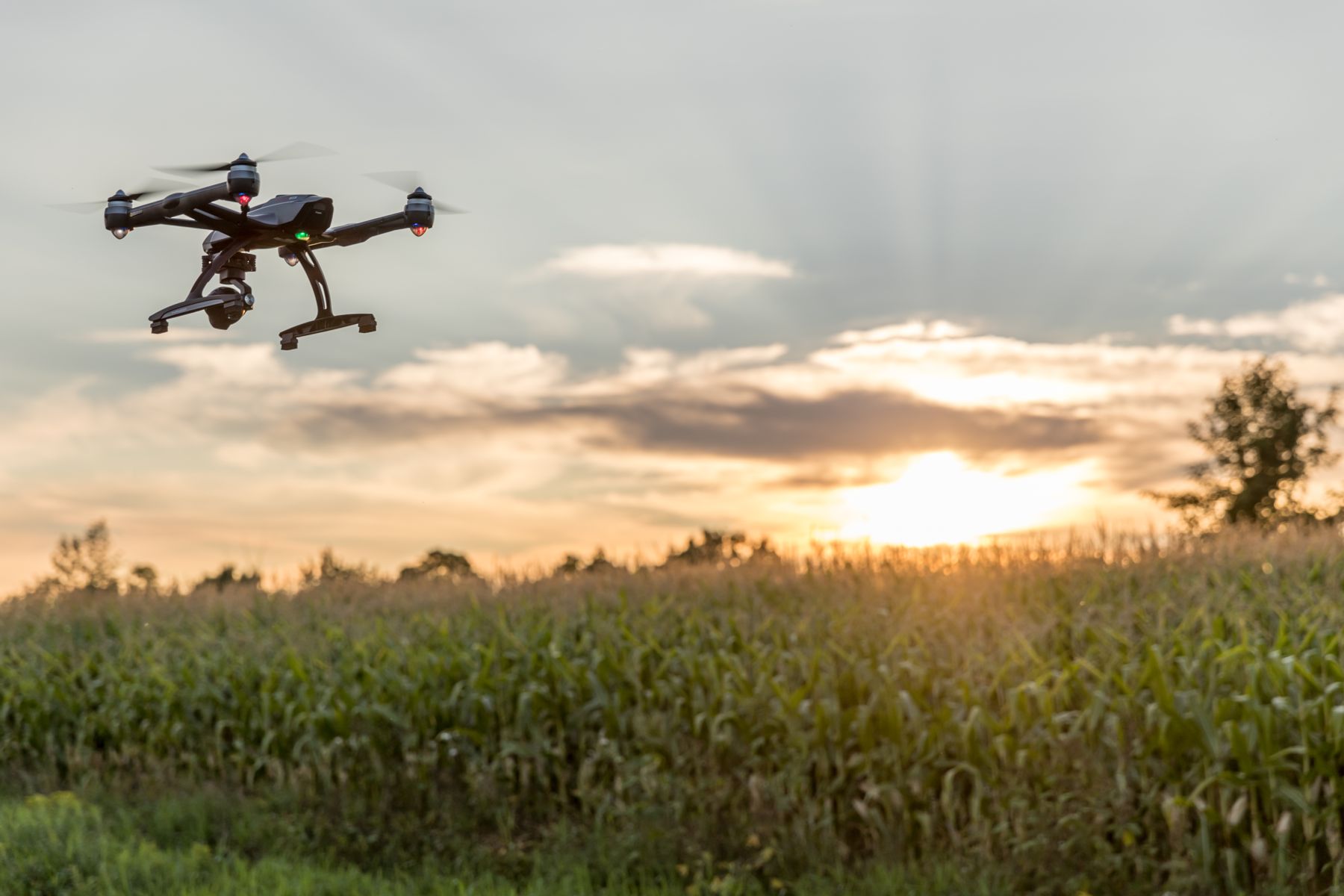
Advances in vision system technologies provide high-throughput phenotyping solutions that are flexible, mobile, and affordable. Mounting RGB cameras to ground-based and unmanned aerial vehicles (i.e.: drones) provides even greater flexibility for remote data collection. With expanded capabilities, improved efficiencies and greater data accuracy, vision systems are paving the way for breeding advances by relieving the bottlenecking challenges.
Recent Posts
- How 3D Vision Systems Are Transforming Food Manufacturing
- Autonomous Driving Technology: Dueling Approaches Fight for Control of the Wheel
- These Farms Are Harnessing Machine Vision for Smarter Agriculture
- Revealing the Hidden Effects of Climate Change with Advanced Imaging
- Innovative Machine Vision Lenses and Trends
- An Early Look at GigE Vision 3.0
- View All Vision & Imaging Blogs