
Vision & Imaging Blog
Machine Vision in Modern Factories
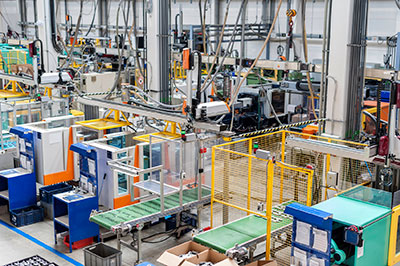 When it comes to efficiency in the modern manufacturing environment, automation is the key. It is one of the main drivers of speed and efficiency, helping maximize the impact of each individual worker. Behind many of the great strides in manufacturing automation is machine vision technology.
“Industry 4.0” – The Industrial Internet of Things Makes its Mark
Sophisticated automation projects rely on the increasing interconnectedness of every machine on the production floor. Machines must be able to work in tandem and adapt effectively to changes in the environment even when the operator is temporarily indisposed.
Machine vision has already contributed plenty to this development:
Robots Can Now Operate Side-by-Side with Humans
Early industrial robots were huge, taking up a vast portion of the factory floor. Their moving parts represented such a great danger to their human counterparts that they almost always had to be confined inside massive “safety cages.” Now, a more compact generation of robots can perform duties within a few feet of humans and pause operations if they get too close.
High-Resolution Cameras Drive Process Improvement
Although robots are more versatile than they were even just a few years ago, it may be a long time before they can assess tasks autonomously. For now, expert input from real humans will be required to re-engineer and improve processes. Machine vision now has the potential to record processes from all angles so opportunities can be recognized.
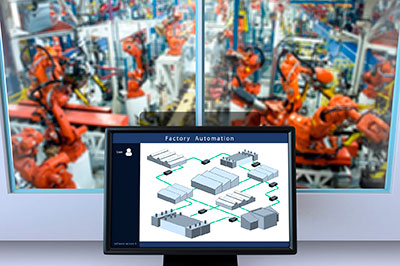 Image-Focused Equipment Setup is Growing
Conventional industrial robots must be configured and calibrated. Until recently, this has been a complex process involving custom coding – in effect, an SME in manufacturing must also master computing and robotics. In recent iterations, machine vision has been integrated directly into configuration to create an automated setup where robots "learn" from the visual data produced by others.
Certified System Integrator Program
Set Yourself at the Forefront of the Global Vision Market
.jpg) Vision system integrators certified by A3 are acknowledged globally throughout the industry as an elite group of accomplished, highly skilled and trusted professionals. You’ll be able to leverage your certification to enhance your competitiveness and expand your opportunities.
Vision system integrators certified by A3 are acknowledged globally throughout the industry as an elite group of accomplished, highly skilled and trusted professionals. You’ll be able to leverage your certification to enhance your competitiveness and expand your opportunities.
3D Scene Flow is Growing More Common
Traditional manufacturing robots have been able to “get by” in tasks using 2D imaging systems, similar to simple line cameras responsible for low-speed inspection tasks. With the increasing prevalence of 3D vision, however, an entire machine workforce can be monitored and coordinated at once. This increases safety, optimizes space, and reduces shutdowns.
A Bright Future for Machine Vision in the Industrial Space
Machine vision is poised to explode thanks to a number of interrelated trends now maturing in manufacturing. The prevalence of complex, interconnected cloud networks, combined with ultra-fast machine vision controller software, may soon allow virtually all visual production data to be captured, analyzed, and integrated into ongoing improvement efforts.
Since 2010, the machine vision market in North America has grown by an average of 13% per year, and growth is expected to continue in the years to come. Additionally, the International Federation of Robots has released research estimating that 1.3 million industrial robots will be in service worldwide by 2018. There’s now an average of 66 robots for every 10,000 workers, and machine vision is a big part of their growing influence.
Recent Posts
- How 3D Vision Systems Are Transforming Food Manufacturing
- Autonomous Driving Technology: Dueling Approaches Fight for Control of the Wheel
- These Farms Are Harnessing Machine Vision for Smarter Agriculture
- Revealing the Hidden Effects of Climate Change with Advanced Imaging
- Innovative Machine Vision Lenses and Trends
- An Early Look at GigE Vision 3.0
- View All Vision & Imaging Blogs