
Robotics Blog
Machine Vision Technology in 3D Printing: A Surgeon’s Best Friend
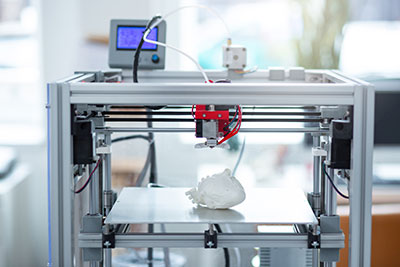 Many medical professionals are excited about 3D printing in medicine. Medical practitioners look forward to using the custom health care solutions it offers to patients. 3D printing, paired with machine vision technology, makes prototyping, manufacturing, and research readily available regardless of physical location.
3D printing in medicine is especially beneficial to surgeons. Applications are being made in the following areas for the team in the OR:
Surgical Preparation
With CT or MRI scans, a surgeon must look through hundreds or even thousands of 2D images. Now, a 3D printed model of a patient’s organ or tumor can be created using those same CT and MRI scans. Machine vision can help 3D printers create a near-perfect replica to be held in their hands and able to be inspected from all angles before surgery.
3d printing can also replicate patient-specific organs that are used for practice to prep before the actual operations take place. The application is far better and more accurate than looking at X-rays, CT scans, and MRIs. Procedures can be completed faster and minimize patient trauma.
Some procedures include spinal repair, birth complication operations, organ transplants, and repairing of fractures and cracks. Surgeons can anticipate what to expect during procedures, which helps increase the number of successful recoveries.
Certified System Integrator Program
Set Yourself at the Forefront of the Global Vision Market
.jpg) Vision system integrators certified by A3 are acknowledged globally throughout the industry as an elite group of accomplished, highly skilled and trusted professionals. You’ll be able to leverage your certification to enhance your competitiveness and expand your opportunities.
Vision system integrators certified by A3 are acknowledged globally throughout the industry as an elite group of accomplished, highly skilled and trusted professionals. You’ll be able to leverage your certification to enhance your competitiveness and expand your opportunities.
3D Printing of Tissues and Organs
For many patients, 3D printing of tissues and organs solves moral and ethical issues tied to traditional transplant methods. As an added benefit, it also increases the body’s own acceptance as customized organs use the patient’s own cells.
Some applications for this technology include skin tissue repair, limb replacement, kidney and heart transplants. Bone and muscle repair have been made possible with 3D printing with the production of orthopedic implants. 3D printing of tissue cells and organs has contributed to research on diseases like cancer.
Medical Tools and Devices
Metal 3D printing has given facilities the ability to 3D print their own surgical tools and other medical devices. Forceps, scalpel handles, clamps, and more are now being 3D printed on demand.
3D printing produces the tools in a more sterile form and costs less than stainless steel equivalents. 3D printing lets facilities replace tools as needed. Surgeons also have the option to design and print tools in unique shapes and sizes, customized for their use.
3D printing is mostly used to manufacture orthopedic implants and to guide surgical cutting. But, the use of 3D printing in healthcare is just getting started. Even though current software designed for the medical community is still limited, peer-reviewed research is expanding exponentially.
Recent Posts
- How 3D Vision Systems Are Transforming Food Manufacturing
- Autonomous Driving Technology: Dueling Approaches Fight for Control of the Wheel
- These Farms Are Harnessing Machine Vision for Smarter Agriculture
- Revealing the Hidden Effects of Climate Change with Advanced Imaging
- Innovative Machine Vision Lenses and Trends
- An Early Look at GigE Vision 3.0
- View All Robotics Blogs