
Motion Control & Motors Blog
Thermal Imaging is Advancing Diagnostic Capabilities in Medical Applications
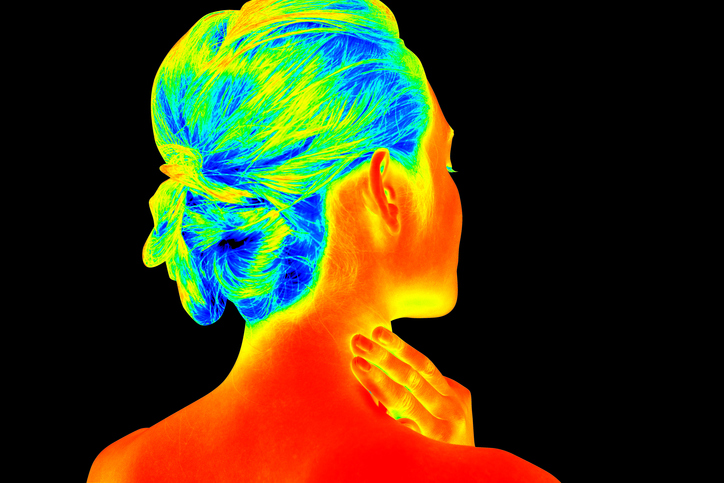 Thermal imaging is used for a wide range of applications today. From security and surveillance to monitoring critical infrastructure, the ability to see beyond the visible spectrum of light to detect heat sources has been highly valuable in numerous ways. One of the latest adopters of thermal imaging is the medical industry, specifically for diagnoses and monitoring of chronic conditions.
Recent research has found that many diseases and conditions affect the temperature of the skin, depending on the underlying medical issue. Thermal imaging cameras can capture this temperature difference to give medical professionals a better understanding of medical conditions.
Thermal Imaging Proves Useful in Pain Relief
One of the first ways that thermal imaging is being introduced in medicine is for the diagnosis and treatment of rheumatoid arthritis. This chronic autoimmune disease affects the joints in the hands, wrists, feet, knees, and shoulders. Researchers have recently discovered that arthritic joints, excluding the knee, had slightly elevated temperatures when compared to non-arthritic joints.
Thermal imaging cameras are able to detect the temperature variation between arthritic and non-arthritic joints. This could potentially enable physicians to better discover, diagnose and treat patients with inflammation and pain due to rheumatoid arthritis.
Certified System Integrator Program
Set Yourself at the Forefront of the Global Vision Market
.jpg) Vision system integrators certified by A3 are acknowledged globally throughout the industry as an elite group of accomplished, highly skilled and trusted professionals. You’ll be able to leverage your certification to enhance your competitiveness and expand your opportunities.
Vision system integrators certified by A3 are acknowledged globally throughout the industry as an elite group of accomplished, highly skilled and trusted professionals. You’ll be able to leverage your certification to enhance your competitiveness and expand your opportunities.
Other Thermal Imaging Applications in Medicine
Thermal imaging has proven useful for physicians treating arthritis patients, but there are several other ways in which thermal imaging has great potential. The treatment of sports injuries, specifically muscular injuries, may benefit from thermal imaging because injured muscles become inflamed and therefore slightly higher in temperature.
Infectious skin diseases may also be diagnosed through thermal imaging. Recent research proved that a skin disease called tungiasis, caused by fleas, can be detected with the use of thermal imaging. Some researchers are even looking into using thermography to detect people’s emotions. Results of this so far show that there are slight differences in temperature in specific parts of the body when people are shown pictures of loved ones and when they’re shown standard stock photos from a large repository.
The use of thermal imaging in medicine is relatively new, but there are several potential applications on the horizon and current research suggests that thermal imaging could be a major ally for physicians.
Share This On X:
#Thermalimaging is used for a wide range of applications. The ability to see beyond the visible spectrum of light to detect heat sources has been highly valuable in numerous ways.
The use of #thermalimaging in medicine is relatively new, but there are several potential applications on the horizon and current research suggests that thermal imaging could be a major ally for physicians.
Recent Posts
- How 3D Vision Systems Are Transforming Food Manufacturing
- Autonomous Driving Technology: Dueling Approaches Fight for Control of the Wheel
- These Farms Are Harnessing Machine Vision for Smarter Agriculture
- Revealing the Hidden Effects of Climate Change with Advanced Imaging
- How Vision Systems Are Transforming Predictive Neurodiagnostics
- Innovative Machine Vision Lenses and Trends
- View All Motion Control & Motors Blogs