
Vision & Imaging Blog
How 3D Imaging Helps Medical Professionals
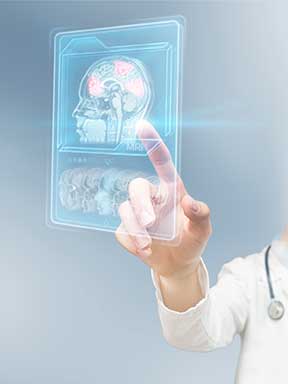 Over the last several years, enhanced imaging technology has become essential to health care. The more detailed and nuanced an image is, the easier it is to determine and execute on the best possible decisions for patient care. Good imaging can help clinicians spot the earliest signs of an emerging medical condition – and early detection is often crucial.
X-ray, MRI, ultrasounds, and other technologies have done a great deal for healthcare. However, each of these technologies brings its own limitations. Now, 3D images constructed through the use of multiple cameras are beginning to appear throughout the medical field. Such technology creates the appearance of depth by simulating human stereoscopic vision.
Even traditional imaging methods can be coupled with 3D displays for enhanced clarity.
Cutting-Edge Applications of 3D Imaging in Healthcare
Naturally, it is challenging to develop and implement 3D imaging technology at both the size and the sophistication required for medical applications. However, the engineering challenges come with a remarkably high pay-off for patients and their doctors.
Some of the most exciting real-world applications include:
Surgery Preparation
Everyone shares major anatomical features, of course, but we all have differences that can be important in a surgical situation. Up until recently, surgeons have had to adapt fast-paced problem-solving skills to a patient’s needs based on 2D images. 3D images significantly increase understanding and allow surgeons to strategize more accurately before a procedure.
Certified System Integrator Program
Set Yourself at the Forefront of the Global Vision Market
.jpg) Vision system integrators certified by A3 are acknowledged globally throughout the industry as an elite group of accomplished, highly skilled and trusted professionals. You’ll be able to leverage your certification to enhance your competitiveness and expand your opportunities.
Vision system integrators certified by A3 are acknowledged globally throughout the industry as an elite group of accomplished, highly skilled and trusted professionals. You’ll be able to leverage your certification to enhance your competitiveness and expand your opportunities.
Telemedicine
Even under the best of circumstances, medical expertise is distributed all over the world. With 3D imaging, team members who may be dispersed across distant medical facilities can work on a case together and have confidence that they have all the information they need. This accelerates response in an emergency and cuts down on the need for patients to be transported.
 3D Printing
3D printing is making it easier for medical professionals to develop small, customized medical devices, such as stints, more rapidly than ever. Soon, thanks to the emerging science of “bio-printing,” it may be possible to augment human tissue in a wide range of surgical situations. To do so, however, surgeons need remarkably exact images to work from.
Diagnostic Imaging
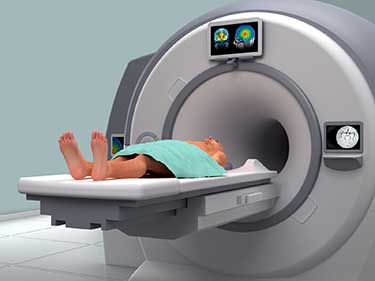
An MRI scan generates hundreds of images that must be painstakingly reviewed. Experts must be careful to ensure all angles are represented and that images meet the needs of the referring physicians and radiologists. 3D imagery can be reviewed more quickly and with less chance of human error, since the individual images can be synthesized into a complete cross-section.
3D imaging has the potential to improve medical collaboration and help physicians probe the mysteries of the human body. As healthcare technology advances at an astonishing rate, many of its triumphs will depend on efficient, modern imaging.
Recent Posts
- How 3D Vision Systems Are Transforming Food Manufacturing
- Autonomous Driving Technology: Dueling Approaches Fight for Control of the Wheel
- These Farms Are Harnessing Machine Vision for Smarter Agriculture
- Revealing the Hidden Effects of Climate Change with Advanced Imaging
- How Vision Systems Are Transforming Predictive Neurodiagnostics
- Innovative Machine Vision Lenses and Trends
- View All Vision & Imaging Blogs