
Vision & Imaging Blog
Companies Working On Self Driving Cars
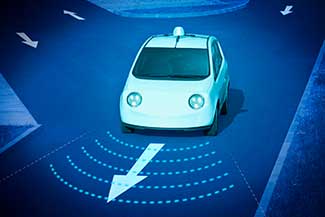 Now more than ever, consumers and technologists are fascinated by the groundbreaking potential of the autonomous car. Such a car has the potential to revolutionize driving on every level: Not only will it be easier and more convenient to commute, but a fully-realized “driverless” vehicle may eventually be safer than even the most experienced human motorist.
Let’s look at some top companies striving to harness the driverless revolution:
Tesla
First becoming known for powerful hybrid and electric vehicles, Tesla has probably done more than any other company to bring autonomous vehicles into the public eye. In late 2015, Elon Musk, the company’s high-profile CEO, asserted that driverless cars would be ready in three years. Since then, some safety incidents have created challenges for Tesla.
Google’s powerful mapping and data aggregation capabilities position it to tackle the machine learning challenges inherent in autonomous vehicles. The company has tested self-driving cars since 2009, and its technology can now recognize pedestrians, cyclists, and hundreds of other potential hazards. It even has the ability to “read” and respond to stop signs.
Mercedes-Benz
Mercedes-Benz has long been known as the gold standard in quality. Now, it’s becoming known for its aggressive pursuit of driverless technology, which it has tested in California since 2014. During the 2015 International Consumer Electronics Show, it revealed a driverless car that synthesizes the cutting-edge technology with the brand’s accustomed luxury.
Certified System Integrator Program
Set Yourself at the Forefront of the Global Vision Market
.jpg) Vision system integrators certified by A3 are acknowledged globally throughout the industry as an elite group of accomplished, highly skilled and trusted professionals. You’ll be able to leverage your certification to enhance your competitiveness and expand your opportunities.
Vision system integrators certified by A3 are acknowledged globally throughout the industry as an elite group of accomplished, highly skilled and trusted professionals. You’ll be able to leverage your certification to enhance your competitiveness and expand your opportunities.
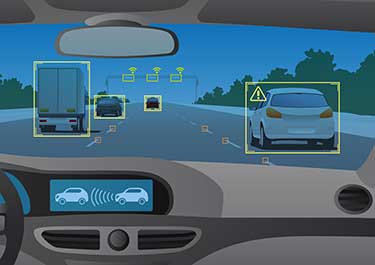 Nissan
Using the all-electric Nissan Leaf, this respected firm has autonomous vehicle testing programs in place in Japan and California. With about three years of effort behind it, Nissan has predicted its autonomous cars will be able to navigate urban traffic by 2020. Recently, it announced an innovative private-public partnership with NASA intended to accelerate development.
Audi
Audi’s contributions to autonomous driving date all the way to an obstacle course sponsored by DARPA in 2004. By 2015, Audi had increased its autonomous range from a few miles to more than 550. An Audi spokesman anticipated the company would roll out features for slow traffic driving in just a few years, but a fully self-driving vehicle might be decades away.
Apple
Although late to the race, Apple is coming in strong with a projected release date of 2019 for its autonomous vehicle project. Although a completely self-driving vehicle is not expected by that date, the company has already ramped up its holdings to ensure it has sufficient space to test and store the cars. Like many others, Apple seems to be centering its efforts around Silicon Valley.
Recent Posts
- How 3D Vision Systems Are Transforming Food Manufacturing
- Autonomous Driving Technology: Dueling Approaches Fight for Control of the Wheel
- These Farms Are Harnessing Machine Vision for Smarter Agriculture
- Revealing the Hidden Effects of Climate Change with Advanced Imaging
- Innovative Machine Vision Lenses and Trends
- An Early Look at GigE Vision 3.0
- View All Vision & Imaging Blogs