
Robotics Blog
New Robot Standards in Development for Industrial Mobile Robots
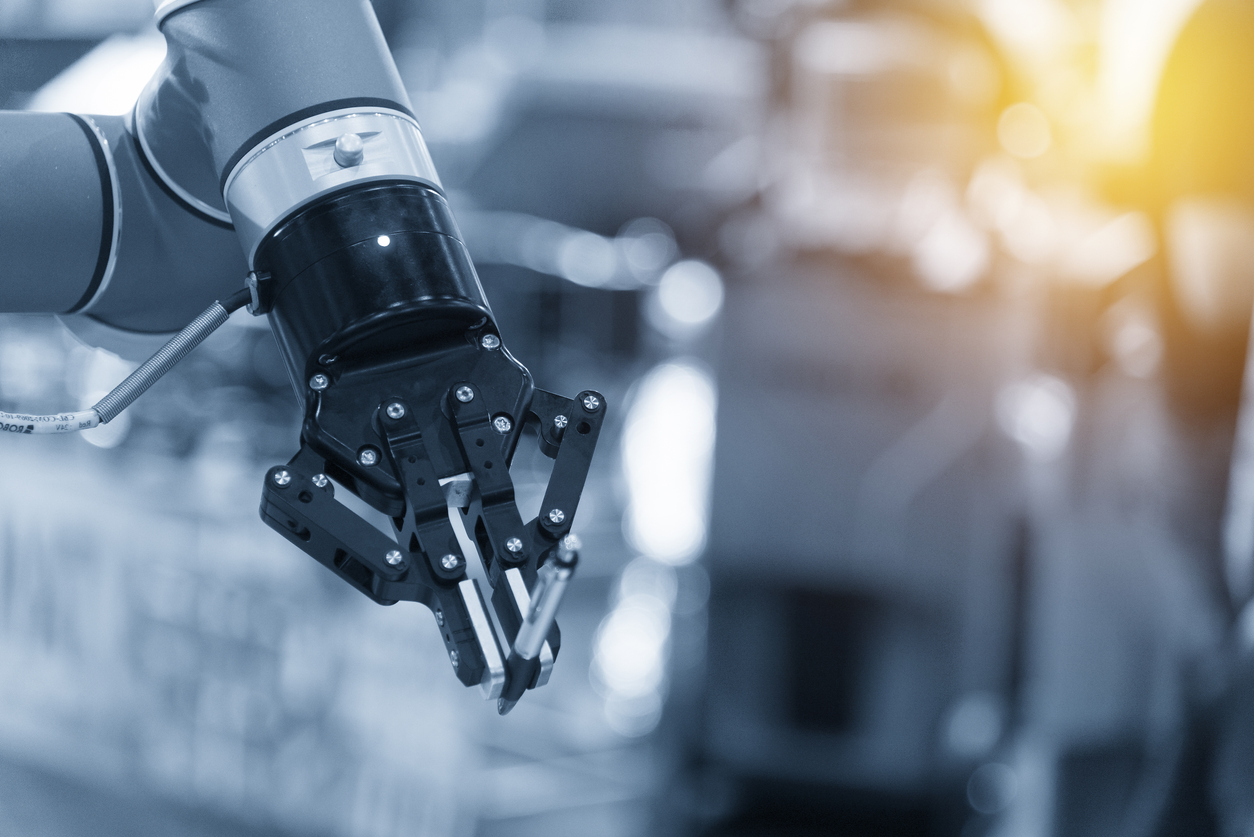 Industrial mobile robots (IMRs) are becoming increasingly common on factory floors around the world. IMRs are essentially the combination of a robotic arm and a mobile platform. By definition, they are ground-based vehicles with some degree of autonomy that operate in semi-structured or structured industrial environments.
They deliver enhanced productivity by moving from one task to another without operator intervention, flexibly taking care of several different applications. This frees up human workers to complete more high-value and cognitive-focused tasks that robots can’t automate.
The Growing Need for Industrial Mobile Robot Standards
As the popularity of IMRs grows, so does the need for a comprehensive set of standards. Industrial robots, collaborative robots, and automated guided vehicles (AGVs) all have their own unique set of standards outlining their safety and operational requirements.
While these standards are useful, they do not cover the full scope of the latest robotic technology – particularly the new safety hazards and requirements of IMRs. In order for this technology to be fully adopted and achieve its full market potential, a definitive set of standards must be developed to guide their adoption, use and safe operation.
ROI Calculator

Discover the potential cost savings of robotic automation over a 20-year system life
This calculator compares your current manual labor costs against the total cost of owning and operating a robotic system over its 20-year lifespan.
The Timeline of Industrial Mobile Robot Standards Development
A new IMR standard, R15.08, is currently under development. The team consists of experts in both the B56.5 AGV standards and the R15.06 industrial robot standard, as well as members of the American National Standards Institute (ANSI), Canadian Standards Association, and members involved in the work of the International Organization for Standards (ISO) Technical Committee (TC) 299, Robotics.
Part 1 of R15.08 will specify the safety requirements for suppliers of IMRs and is expected to be released in 2019. Part 2 will describe requirements for integrators who are designing, installing, and integrating IMRs, while Part 3 will define safety standards for end users of IMRs. Part 2 and Part 3 will be published as they are completed following the publication of Part 1.
To learn more about industrial mobile robots and standards development, take a deeper dive with a recent blog post at the International Federation of Robotics site, “New U.S. Standard Sets the Bar for Industrial Mobile Robot Safety.”Carole Franklin, Director of Standards Development at RIA, talks in depth about the development of industrial mobile robot standards and why they’re needed.
Share This On X:
Industrial mobile robots (IMRs) are becoming increasingly common on factory floors around the world. As the popularity of IMRs grows, so does the need for a comprehensive set of standards.
In order for IMRs to be fully adopted and achieve its full market potential, a definitive set of standards must be developed to guide their adoption, use and safe operation.
Recent Posts
- 6 Companies Driving Automation in Mexico
- Humanoids on the Horizon: What Hurdles Remain for Widespread Adoption?
- Safety by Design: How Humanoid Robots Must Evolve to Depart the Walled Garden
- Are Robots Really Taking All the Manufacturing Jobs?
- The Shipping Industry Floats Emerging Opportunities for Maritime Automation
- New to Robotics? Start with These Fundamentals
- View All Robotics Blogs