
Robotics Blog
Autonomous Robots Monitor Fertilizer Use in Agriculture
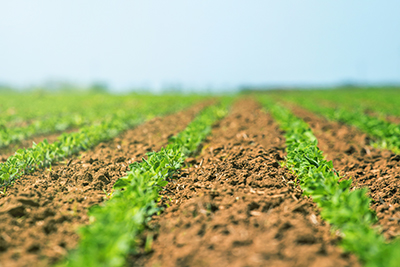 Autonomous robots are finding their way on to more and more farms. From spraying to weeding to predicting yields, autonomous robots are helping to fill voids in the struggling agriculture industry. The world’s population is expected to grow by more than a third by 2050, but labor shortages in agriculture have decreased crop production by billions of US dollars.
Vision and machine learning technology have recently made advancements that allow autonomous robots to see and map out their surroundings. The decreased cost of connected sensors has made implementing these technologies more affordable, even for small farms.
Cost reduction is critical, as almost half of U.S. farm expenditures now go to wages and labor.
Improving and Reducing Fertilizer Use
Fertilizer is one of the largest costs for row crop farmers, so agricultural technology firms are developing autonomous robots that can collect more accurate soil samples to help farmers make better decisions about the use of fertilizers. Autonomous robots are able to correctly measure the depth and location of each core of soil every time.
Agricultural robots navigate the fields using complex algorithms and LiDAR sensors. LiDAR (Light Detection and Ranging) sends out laser beams to detect objects and avoid them. The robots are able to collect soil samples in a way that guarantees accuracy, purity, and depth control. The robots can also make use of GPS and navigational algorithms to revisit an exact location every season.
ROI Calculator

Discover the potential cost savings of robotic automation over a 20-year system life
This calculator compares your current manual labor costs against the total cost of owning and operating a robotic system over its 20-year lifespan.
Other Ways Agriculture Robots are Being Used
Many farmers have adopted the use of drones -- these flying autonomous robots have saved time and labor costs. Drones use multi-spectral and photo cameras that can monitor plant growth, crop stress, and predict yields. Some drones deliver herbicides, fertilizer, and water.
On the ground, autonomous robots have been trained to detect, pluck, and spray pesticide on weeds. A growing number of weeds have become resistant to pesticides, and the cost of agricultural robots is proving itself cheaper than the tens of billions spent on herbicides each yield. Both farmers and the environment are reaping the benefits.
With the use of GPS, farmers can have equipment run automatically. This helps to offset the labor shortage and driver fatigue while in the cab. Most of these autonomous vehicles can navigate with a tolerance of only a few inches, and they can even adjust to hilly terrain. Farmers also can track the equipment’s progress via smartphone.
Recent Posts
- 6 Companies Driving Automation in Mexico
- Humanoids on the Horizon: What Hurdles Remain for Widespread Adoption?
- Safety by Design: How Humanoid Robots Must Evolve to Depart the Walled Garden
- Are Robots Really Taking All the Manufacturing Jobs?
- The Shipping Industry Floats Emerging Opportunities for Maritime Automation
- New to Robotics? Start with These Fundamentals
- View All Robotics Blogs