
Motion Control & Motors Blog
What is Motion Control
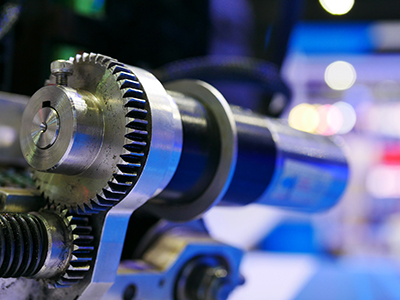
It certainly is no secret that manufacturing operations are quickly being modernized and upgraded to meet customer demands for quality and just-in-time delivery. There is a strong shift toward automating manual processes and motion control is integral to this transition.
At its core, motion control can be defined as a sub-field of automation that deals with moving individual parts of a machine in a controlled manner. This is especially helpful in applications such as production lines, where power, efficiency, and accuracy of movement are of vital importance. Not only does a motion control system enable movement, but, more importantly, it ensures that a machine can stop.
What Are the Components of Motion Control?
The term “motion control” doesn’t describe a particular component or part. Rather, it describes a group of individual components that all work together to create controlled movement in a machine. Some of the major parts include:
- Controller - The controller is just that - an electronic device that serves as the “brain” of a motion control system that controls the motors and drives. The number of controllers used in a particular application, such as in a production line, will vary based on the number of individual processes that need to be controlled. For a complex system, there could be numerous controllers. Each of these controllers has the ability to receive instructions from, and provide feedback to, the main computer that controls the entire production line.
- Motor Drive - The motor drive serves as a middle-man of sorts between the controller and motor. It interprets the signal from the controller and then supplies the correct level of power to the motor to achieve the desired motion result.
- Motor - Motors used in motion control systems can take many forms and have many different applications. Their main function, though, is to receive inputs from the motor drive and convert these inputs into motion. Some types of motors typically used in motion control systems include:
- Stepper - Stepper motors tend to operate in a similar fashion to regular electric motors. However, due to the specific arrangement of magnets inside of them, each shaft rotation is able to be broken down into individual “steps”. An average stepper motor might have 200 steps of 1.8 degrees each per shaft rotation. This allows for highly accurate positioning of production line components.
- Servo - A servo motor provides a very accurate and powerful way to control angular motion.
- Linear Actuator - Linear actuators convert the rotational motion of a motor into linear motion similar to a pneumatic cylinder.
These three main components, along with subsidiary components such as sensors and cabling, are the bulk of modern motion control systems.
Certified Motion Control Professional Program
Strengthen Your Skills and Enhance Your Career
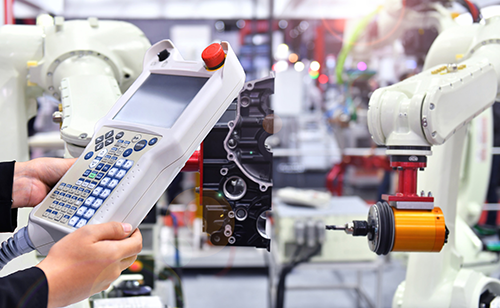
Become a Certified Motion Control Professional (CMCP) and join the elite group of system integrators, machine builders, manufacturers, end-users and others recognized in the industry for their professional knowledge and expertise.
Recent Posts
- Emerging Technologies Driving Modern Motion Control Systems: Five Trends Reshaping Factory Automation
- Electronic Camming: Enabling Superior Flexibility in Advanced Motion Control Systems
- Electronic Camming: Enabling Superior Flexibility in Advanced Motion Control Systems
- How Electrification is Reshaping Motion Control
- Motion Control in Harsh Environments: Engineering for Extremes
- Next-Generation Motion Control: Integrating IIoT and Real-Time Data Analytics
- View All Motion Control & Motors Blogs