
Blog
What is Deep Embedded Vision?
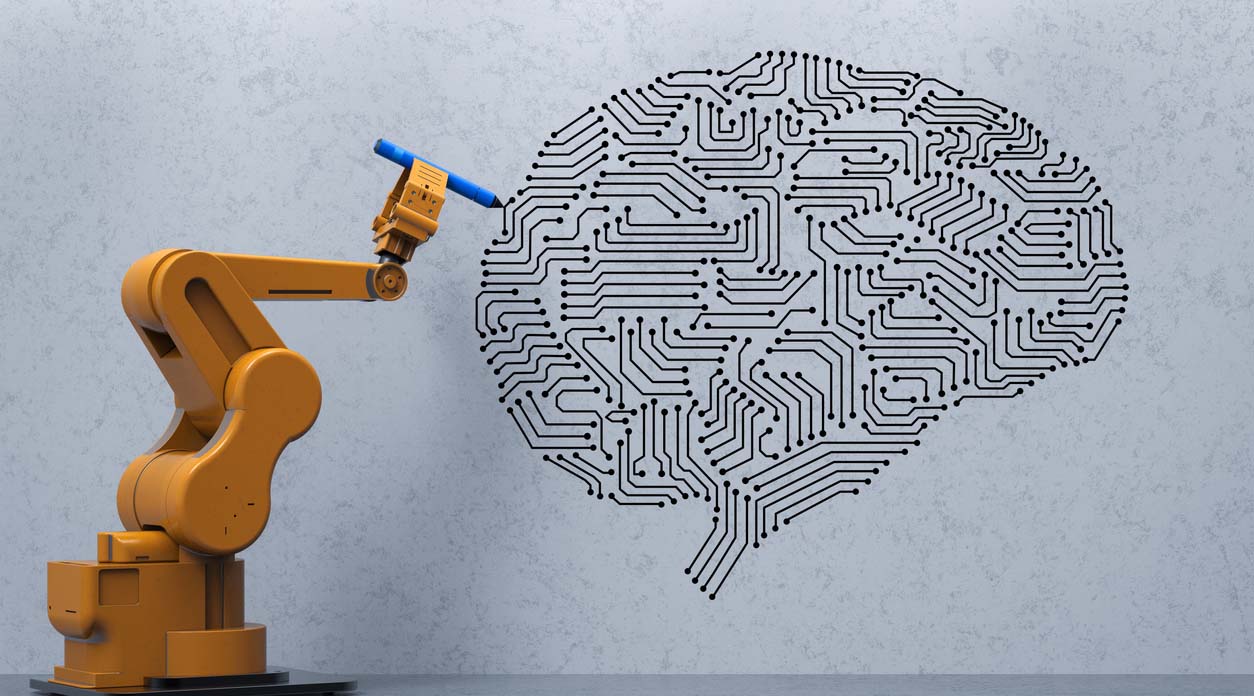 Embedded vision systems promise compact machine vision directly integrated into machines or devices. Computer platforms and lower power consumption allow for intelligent image processing in diverse applications with dedicated PCs.
Deep Embedded Vision systems are being developed for specific tasks. These systems can work without operating systems, requiring even less power and programming. This allows for longer run times when only powered by a battery. These systems feature advanced algorithms for processing raw image streams from integrated image sensors. They are also taught through deep learning.
The communication options of these systems are defined during the design process. High initial costs are incurred during system design, and these systems can only be changed later with a high cost of time and effort.
Convolutional Neural Networks and Deep Learning
Convolutional neural networks (CNNs), or computer systems modeled after the brain, have been around for a long time. But only recently have processors achieved the speeds to make them practical. The use of neural networks has now been applied to image classification, detection, and recognition. This has led to a key component of deep embedded vision.
Deep neural networks make deep embedded vision possible. Object detection no longer needs to be manually coded. Deep neural networks let vision systems learn from training examples. Deep learning indicates that the neural network has an input layer, an output layer, and at least one hidden middle layer.
Certified System Integrator Program
Set Yourself at the Forefront of the Global Vision Market
.jpg) Vision system integrators certified by A3 are acknowledged globally throughout the industry as an elite group of accomplished, highly skilled and trusted professionals. You’ll be able to leverage your certification to enhance your competitiveness and expand your opportunities.
Vision system integrators certified by A3 are acknowledged globally throughout the industry as an elite group of accomplished, highly skilled and trusted professionals. You’ll be able to leverage your certification to enhance your competitiveness and expand your opportunities.
CNNs are the current method for implementing the deep neural networks needed for deep embedded vision. CNNs can be trained to detect multiple objects. With traditional algorithms, an algorithm would have to be crafted for each new object type. A deep learning framework uses large data sets of images to train the CNN to detect specific features in an image.
Putting Deep Embedded Vision to Work
One application where deep embedded vision is being applied is in the field of meter reading. Compact modules are integrated with cameras, OCR software, and radio links. The vision system can be mounted on a mechanical meter and enable inexpensive automatic recording without having to replace meters with electronic versions.
Readings can be forward to a master computer at defined time intervals. The labor-intensive task of manual reading becomes unnecessary. And because of the low power consumption, modules can run maintenance-free for years.
With continued innovation, deep embedded vision systems will be developed for a growing number of tasks that can be taught through deep learning - benefitting from lower power requirements, longer run times, and working without an operating system.
Share This On X:
Recent Posts
- How 3D Vision Systems Are Transforming Food Manufacturing
- These Farms Are Harnessing Machine Vision for Smarter Agriculture
- Revealing the Hidden Effects of Climate Change with Advanced Imaging
- Innovative Machine Vision Lenses and Trends
- An Early Look at GigE Vision 3.0
- Looking at the Latest Machine Vision Standards Updates
- View All Blogs