
Blog
The Latest Technological Innovations in Autonomous Mobile Robots
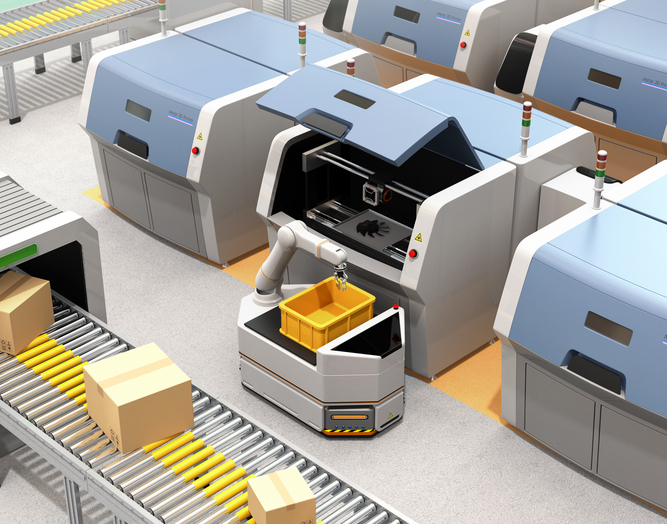 Robots in the industrial sector are quickly evolving from powerful, stationary machines into sophisticated, mobile platforms to address a broader range of automation needs. Autonomous mobile robots (AMRs) are one of the latest and most innovative automation solutions on the market.
AMRs differ from automated guided vehicles (AGVs) by their degree of autonomy – AMRs are far more independent than AGVs. AMRs will be an important part of lean operations in a wide range of industrial settings once they are widely deployed, as they are built to address specific challenges in typical industrial environments.
Operational Challenges Autonomous Mobile Robots Overcome
Typical AGVs need some form of external guidance, whether it’s permanent wires, magnetic strips or sensors embedded in the floor. This creates a rigid system that’s difficult and expensive to adjust as production needs change, which is the main obstacle AMRs aim to overcome.
Autonomous mobile robots are much more capable of navigating dynamic environments. They require little external input to do so, which is an important capability. Industrial environments like construction sites are inherently dynamic. Manufacturing facilities are becoming more dynamic as they pursue leaner operations. Robots that can operate within these environments will have major commercial potential, introducing process automation without hindering the need for frequent changes in the production environment.
ROI Calculator

Discover the potential cost savings of robotic automation over a 20-year system life
This calculator compares your current manual labor costs against the total cost of owning and operating a robotic system over its 20-year lifespan.
Technological Innovations in Autonomous Mobile Robots
One of the latest innovations in AMRs is the inclusion of onboard intelligence systems. These come in a variety of formats but differentiate AMRs from AGVs. Many AMRs can learn their surroundings either by having a blueprint uploaded, or by having the AMRs drive around and develop their own map. This type of autonomy allows them to quickly adapt to just about any industrial environment.
Another major innovation in AMRs is their computer vision capabilities. Most AMRs are equipped with an array of complex sensors to detect objects around them. The ability to accurately perceive a dynamic environment in real-time is incredibly difficult, but it’s what make AMRs so valuable in a constantly shifting industrial setting.
AMRs are one step above and beyond AGVs. In most applications, AMRs will provide unrivaled flexibility and ease of use due to their high levels of autonomy. These capabilities fit perfectly with today’s lean operating environments.
AMRs are an important robotic innovation that supports the constant pursuit of productivity in the industrial sector. AMRs have great commercial potential and are likely to be deployed in a wide range of settings.
Recent Posts
- 6 Companies Driving Automation in Mexico
- Humanoids on the Horizon: What Hurdles Remain for Widespread Adoption?
- Safety by Design: How Humanoid Robots Must Evolve to Depart the Walled Garden
- Are Robots Really Taking All the Manufacturing Jobs?
- The Shipping Industry Floats Emerging Opportunities for Maritime Automation
- New to Robotics? Start with These Fundamentals
- View All Blogs