
Blog
How to Choose the Dimension Your Robot Needs to Function
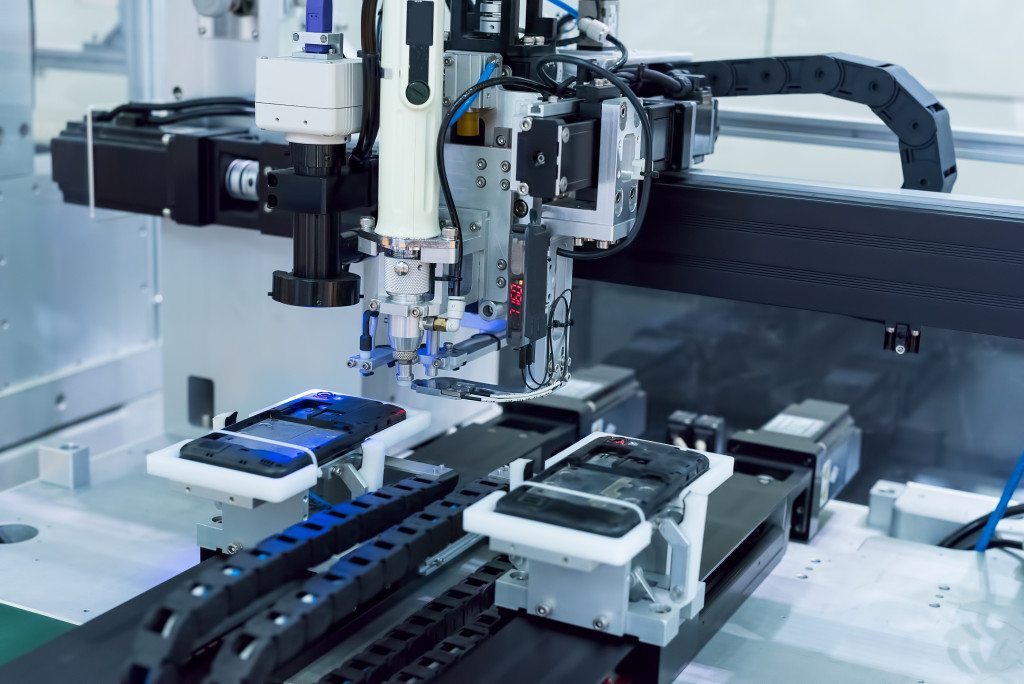
Perception is key if you're trying to choose between 2D and 3D. What's best for quality inspections and handling products? There's also 2.5D. Read on to get the basics you need to make an informed decision for your manufacturing automation.
Know Your Dimensions
Here are the different traits and uses for 2D, 2.5D, and 3D and how each works with the different dimension of an object.
A standard 2D machine vision image is flat and measures length and width, but it does not provide any height information. 2D machine vision is traditionally used for applications like barcode reading, label orientation and printing verification.
2.5D includes the height information and provides information that allows the machine vision system to estimate the object's rotation (pitch and yaw) around two of the three dimensions.
True 3D provides X, Y, and Z information as well as rotational information around all three axes (rX, rY, and rZ). A task like bin picking is considered the “holy grail” of 3D vision and only 3D is capable of handling many other emerging applications.
3D machine vision scanners output a point cloud, which is a digitized model of shape and location of objects. This enables a robot to sense and adapt to changes in its physical environment. A "blind" robot is limited to performing repetitive and structured tasks.
What the Robot Needs to Know
Picking a tool or other object from a bin requires that the robot needs to know key information. Locating the part is only one data point as mentioned in the article 2D or 3D Machine? Why Not Both?
The robot needs to know where to grab the part and how to avoid the bin walls. 3D machine vision is making bin picking a reality for a part that's not on a flat surface or if the dimensions of the part aren't completely known.
Handling boxes on a pallet is an appropriate use for 2D or 2.5D if the conditions are right. Poor lighting and other issues may make it tough to tell where one box ends and another begins. A lack of contrast may warrant the use of 3D machine vision.
Quality control is another area in manufacturing automation where 3D can be effective. Snack-food producers are using 3D to measure 100 percent of their product as it passes below the camera on a conveyor. A candy maker that promises a 5-inch chocolate bar and only produces a 4.9-inch bar risks getting in trouble for fraud.
ROI Calculator

Discover the potential cost savings of robotic automation over a 20-year system life
This calculator compares your current manual labor costs against the total cost of owning and operating a robotic system over its 20-year lifespan.
Manufacturers may tolerance the bars between 5 and 5.2 inches to make sure they’re safe. A company doing massive volume and that can trim the tolerance to 5.05 inches will save millions of dollars each year.
What the Cameras Know
Image clarity is critical. A 3D calibrated camera knows where every pixel moves in space, as noted in 2D or 3D Machine Vision? Why Not Both? There are products using both 2D and 3D to simplify systems that are also robust. Specialized software, faster sensors, and greater computing power are contributing to the growth of multi-dimensional imaging.
What You Need to Know
Success in machine vision depends on lighting. In the article Tips and Tricks for Designing Successful Vision-Guided Robot Solutions improper lighting is called "the number one pitfall." Ambient light on the factory floor is often unreliable, fixed lighting can be undesirable, and there’s usually little room for lighting on the equipment itself. A practice called "binning" can be the solution by increasing light collection and providing the sensitivity of a larger pixel.
Managing cables has to be part of your strategy. The write-up Robots, Cameras, and Cables: Avoiding Catastrophic Failures has a reminder that "it's not unheard of for a $300,000 cell to go down because of a $300 cable."
A cable may be as thin as a strand of hair and if one breaks then the signal is weakened. Tie wraps also come with a warning. Once the robot starts running, the wraps will wear or cut through the cable or hose jacket Internal camera cables.
A hook and loop fastener or polyurethane tie strap to bundle the hoses offer a proven alternative to tie wraps. Dresspacks using high-flex tubing is another way to protect cable life.
Learn more ways to improve your manufacturing automation. Articles and the video series "Why I Automate" are some of the helpful resources on A3.
Recent Posts
- 6 Companies Driving Automation in Mexico
- Humanoids on the Horizon: What Hurdles Remain for Widespread Adoption?
- Safety by Design: How Humanoid Robots Must Evolve to Depart the Walled Garden
- Are Robots Really Taking All the Manufacturing Jobs?
- The Shipping Industry Floats Emerging Opportunities for Maritime Automation
- New to Robotics? Start with These Fundamentals
- View All Blogs