
Blog
How a Robot's Touch Helps Manufacturers Succeed
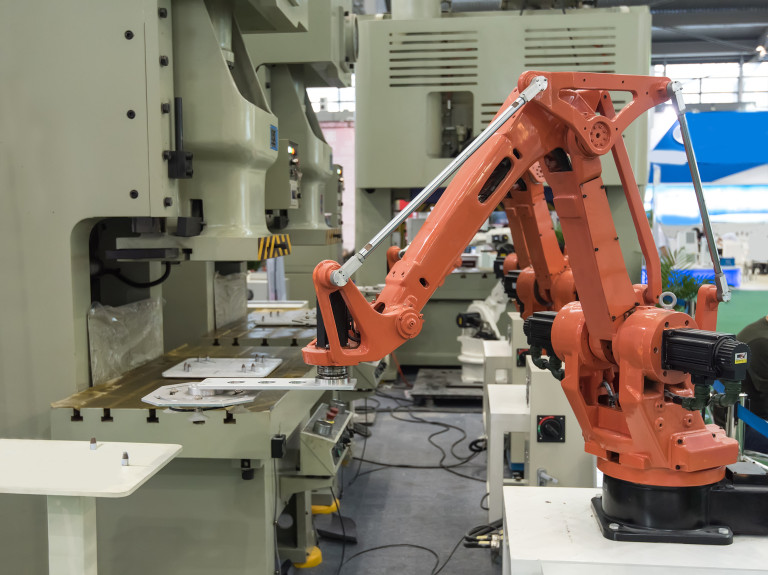
Robots that have the ability to feel can perform the most demanding mechanical assemblies. Affixing tiny parts that are delicate or grinding and sanding a finished surface to perfection are ways that intelligent robots work with controlled velocity and force.
There are many components like vision systems and advanced software that allow robots to adapt to their environment. Sorting through random objects and picking specific items from a bin is an important advance in robotic automation.
Other types of precision are important to manufacturers in areas like assembly and product testing. Force sensors help robots meet these critical needs to serve manufacturers in a variety of industries.
Why Force Sensors
Many robots no longer need highly structured environments to operate. Vision systems let robots do tasks like picking and placing objects. As noted in the article Intelligent Robots: A Feast for the Senses, the sense of touch has tremendous value.
ROI Calculator

Discover the potential cost savings of robotic automation over a 20-year system life
This calculator compares your current manual labor costs against the total cost of owning and operating a robotic system over its 20-year lifespan.
Sensors send data signals that allow the robots to "feel" what they touch and they can manipulate objects with precision, speed, and accuracy that surpass human capabilities. Robot manufacturers and system integrators want high-performance force sensors for applications in material removal, part fitting and assembly. Force sensing is also known as tactile feedback.
Accurate Assembly
Today's mobile phones are complex pieces of electronics. Some assembly can be achieved by hand but the complex designs are making human production impossible. Small parts assembly is another important use of robotic automation. Robots are described as a multifunction tool in the article Small Assembly Robots with Big Gains. The same one can put screws in a circuit board and even in the same process handle finishing and quality inspection.
Recent Posts
- 6 Companies Driving Automation in Mexico
- Humanoids on the Horizon: What Hurdles Remain for Widespread Adoption?
- Safety by Design: How Humanoid Robots Must Evolve to Depart the Walled Garden
- Are Robots Really Taking All the Manufacturing Jobs?
- The Shipping Industry Floats Emerging Opportunities for Maritime Automation
- New to Robotics? Start with These Fundamentals
- View All Blogs