
Blog
Electronic Camming: Enabling Superior Flexibility in Advanced Motion Control Systems
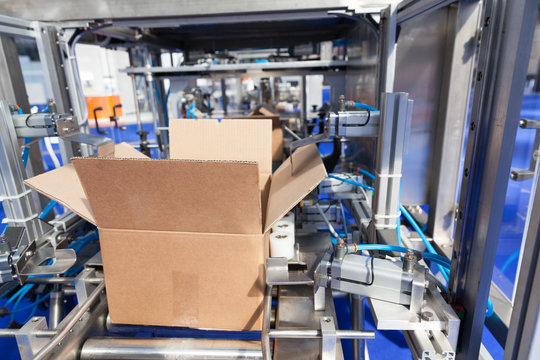 In manufacturing, motion control has always been about precision and repeatability. For decades, motion control synchronization was achieved through mechanical means — cams, linkages, and carefully machined components that translated rotary motion into highly specific movement profiles.
In many cases, these standards continue to work well. But as product variability increases, changeovers become more frequent, and uptime expectations climb, mechanical camming is starting to show its limits.
Electronic camming brings the same core concept as a mechanical cam — coordinated motion between axes — but replaces fixed hardware with software-driven control. The result is a level of flexibility and performance that aligns far better with the realities of modern manufacturing.
How Does Electronic Camming Work?
At its simplest, electronic camming uses a software-defined cam profile to synchronize the movement of one axis (the follower) to another (the master) based on a defined relationship.
Instead of a physical cam profile machined into metal, the motion profile is defined digitally — typically as a cam table or mathematical function. As the master axis moves, the motion control system continuously calculates and commands the follower axis position in real time. This allows manufacturers to precisely coordinate complex motion profiles without being locked into a single, unchangeable design.
What’s the Difference between Mechanical and Electronic Camming?
Mechanical cams were foundational to automation for a reason. They’re robust, deterministic, and capable of producing highly repeatable motion. But they come with trade-offs that are increasingly difficult to justify.
A mechanical cam is fixed by design. If you need to change the motion profile, you’re looking at machining a new cam, reconfiguring hardware, and dealing with downtime. That’s manageable in high-volume, low-variation environments, but not in today’s landscape of mass customization and shorter production runs.
Electronic camming, by contrast, shifts that rigidity into software-defined control. Need to adjust dwell time? Change acceleration? Synchronize with a different product size? Those changes can often be made through the control interface — sometimes even on the fly.
There’s also a performance angle. Mechanical systems are subject to wear, backlash, and physical constraints. Electronic camming systems, when paired with modern servo drives and high-resolution feedback, can deliver smoother motion, tighter synchronization, and better overall control.
Why Electronic Camming Matters in Advanced Motion Control
Advanced motion control systems are increasingly defined by their ability to coordinate multiple axes with precision, adaptability, and speed. Electronic camming is a core building block of that capability.
Rather than thinking of motion control as a series of isolated movements, electronic camming allows engineers to treat machines as coordinated systems. One axis doesn’t just move — it moves in relationship to another, with a defined and tunable profile.
This is especially important in applications where timing and synchronization directly impact product quality or throughput. Packaging, converting, printing, and assembly operations all rely on tightly coordinated motion between conveyors, cutters, feeders, and actuators. Electronic camming enables that coordination without the mechanical complexity that used to be required.
ROI Calculator
Discover the potential cost savings of robotic automation over a 20-year system life
This calculator compares your current manual labor costs against the total cost of owning and operating a robotic system over its 20-year lifespan.
It also simplifies machine design. Instead of designing around physical constraints — gear ratios, cam shapes, linkage geometry — engineers can design motion profiles in software, simulate them, and refine them without cutting metal. That shortens development cycles and opens the door to more innovative machine architectures.
The Key Benefits of Electronic Camming
Electronic camming brings several important benefits to today’s manufacturing environment:
- Flexibility for Changeovers: One of the most immediate advantages is the ability to handle product variation. Different product sizes, formats, or materials often require different motion profiles. With electronic cams, those profiles can be stored, recalled, and adjusted quickly, significantly reducing changeover time.
- Electronic Cams Reduce Mechanical Complexity: Eliminating physical cams, linkages, and gear trains simplifies machine design. Fewer moving parts means less maintenance, fewer wear points, and a lower likelihood of mechanical failure.
- Improved Motion Control Automation: Electronic cam profiles can be optimized for smooth acceleration and deceleration, reducing jerk and vibration. This not only improves product quality but also extends the life of machine components.
- Faster Time to Market: Because motion profiles are defined in software, engineers can iterate quickly. Adjustments that would have required new hardware in the past can now be made in minutes, not days or weeks.
- Real-Time Adjustability: In some systems, electronic cam parameters can be modified during operation. This enables adaptive control strategies — adjusting motion based on sensor feedback, upstream conditions, or process variability.
- Integration With Broader Automation Systems: Electronic camming doesn’t exist in isolation. It integrates with PLCs, HMIs, and higher-level control systems, making it easier to align motion with overall process control, data collection, and optimization efforts.
Electronic cams are particularly valuable in applications where synchronization, precision, and flexibility are critical, including packaging and converting, printing and web handling, assembly automation, food and beverage processing, and pharmaceutical and medical device manufacturing.
Moving Beyond Fixed Motion to Electronic Camming
The shift from mechanical to electronic camming is part of a broader transition in manufacturing — from fixed, hardware-defined systems to flexible, software-driven ones.
That shift isn’t just about convenience. It’s also about competitiveness. Manufacturers are under pressure to do more with less: more product variants, shorter lead times, higher quality expectations, and tighter margins. Motion Control systems that can adapt quickly without sacrificing performance have a clear advantage.
Electronic cams deliver that advantage. It preserves the precision and repeatability that mechanical cams were known for, while unlocking the level of flexibility that modern production demands.
For manufacturers evaluating their next generation of equipment or looking to modernize existing lines, electronic camming is a foundational capability for advanced motion control systems built to handle what comes next.
Recent Posts
- Electronic Camming: Enabling Superior Flexibility in Advanced Motion Control Systems
- How Electrification is Reshaping Motion Control
- Motion Control in Harsh Environments: Engineering for Extremes
- Next-Generation Motion Control: Integrating IIoT and Real-Time Data Analytics
- Servo Systems vs. Stepper Motors: Finding the Optimal Solution for Precision Automation
- The Evolution of Motion Control: Trends Shaping High-Speed Automation
- View All Blogs