
Blog
Electromechanical Actuators in the Automotive Industry
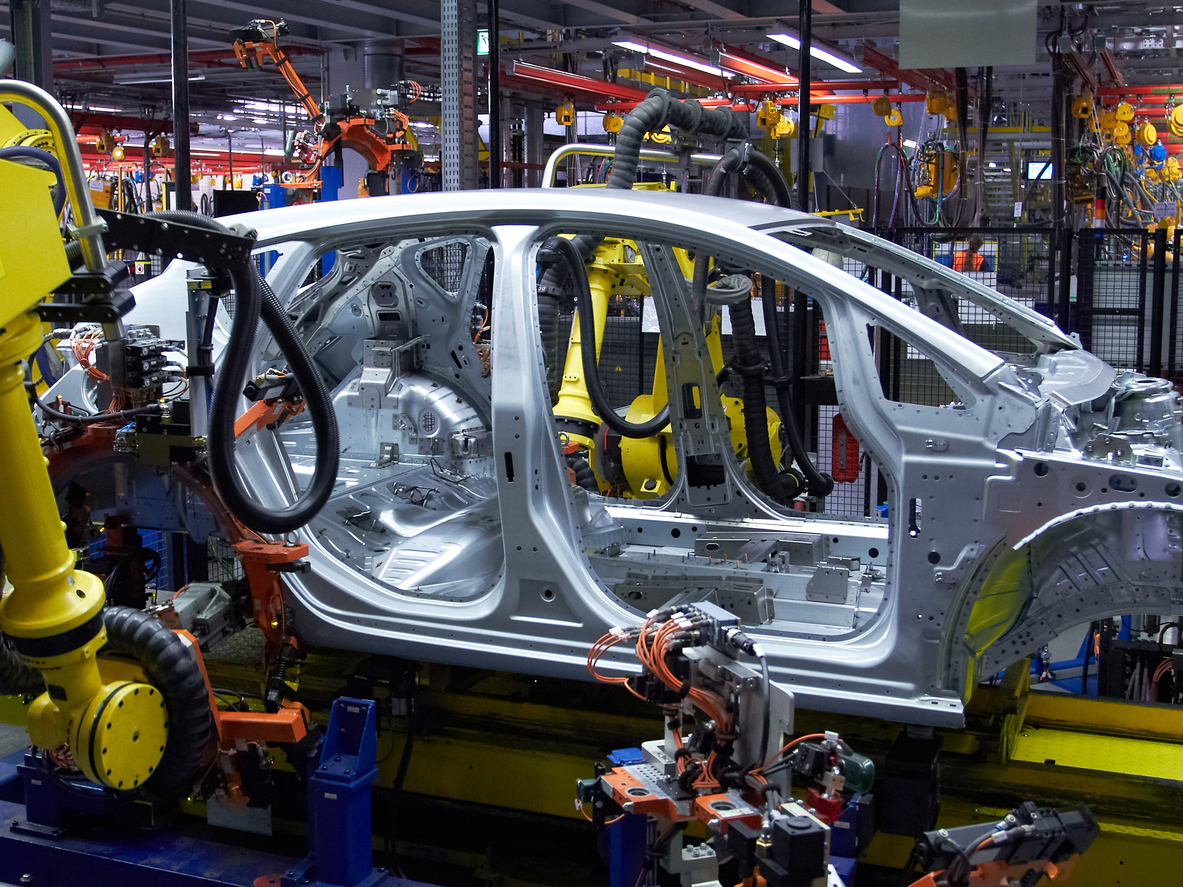 Linear actuation is a crucial part of factory automation. There are many kinds of linear actuators, but electromechanical actuators are proving effective in a variety of applications, particularly in the automotive industry.
Equipment in automotive factories is often subjected to extreme or hazardous conditions. At the same time, automotive manufacturing requires extreme precision and repeatability. Electromechanical actuators are perfectly suited for creating a safe and still effective environment.
Where are Electromechanical Actuators Used?
Electromechanical actuators are primarily used for robotic weld guns. These weld guns mainly perform spot welding of stamped sheet metal for automotive chassis – a dangerous and repetitive task that robots need to perform on a consistent basis.
Automotive manufacturers have traditionally used servo-pneumatic actuators due to their low acquisition costs and overall simplicity. However, these actuators have limited spot welding capability.
To improve accuracy and consistency, automotive manufacturers have turned to electromechanical actuators for the numerous benefits they provide.
The Benefits of Electromechanical Actuators in the Automotive Industry
Electromechanical actuators provide many benefits compared to traditional actuators for robotic applications. There are three main benefits to these actuators:
ROI Calculator

Discover the potential cost savings of robotic automation over a 20-year system life
This calculator compares your current manual labor costs against the total cost of owning and operating a robotic system over its 20-year lifespan.
1. Lifecycle Performance
Electromechanical actuators are built to have a high load capacity, which typically diminishes the life of an actuator. But, electromechanical actuators can be used with a roller screw, which increases the lifetime of the actuator by 15x as compared to a ball screw. They can also be side loaded, increasing performance and precision to a level not attainable by other actuators.
2. Consistency
Electromechanical actuators have a high degree of environmental resistance. This allows for less maintenance, loss of load capacity and ultimately more consistent performance. These actuators also maintain high force repeatability after a cold start up, enabling consistent performance across the production cycle.
3. Energy Savings
A study at the University of Kassel in Germany compared the energy performance of an electromechanical actuator with comparable pneumatic and hydraulic actuators. Electromechanical actuators provided up to 90% energy savings. Hydraulic actuators used 4.4 times more energy, and pneumatic actuators used 10 times more energy. With their very low energy consumption, electromechanical actuators can provide cost savings.
Electromechanical actuators are durable, consistent and energy efficient. They are finding their way into more and more applications, especially in the automotive industry where repeatability in harsh conditions is vital.
Recent Posts
- Adaptive Robotics Is Expanding What's Possible in Manufacturing
- Creating a Safety Culture in Your Organization at the International Robot Safety Conference
- 6 Companies Driving Automation in Mexico
- Humanoids on the Horizon: What Hurdles Remain for Widespread Adoption?
- Safety by Design: How Humanoid Robots Must Evolve to Depart the Walled Garden
- Are Robots Really Taking All the Manufacturing Jobs?
- View All Blogs