
Blog
An Update on Vision Guided Robot Technology
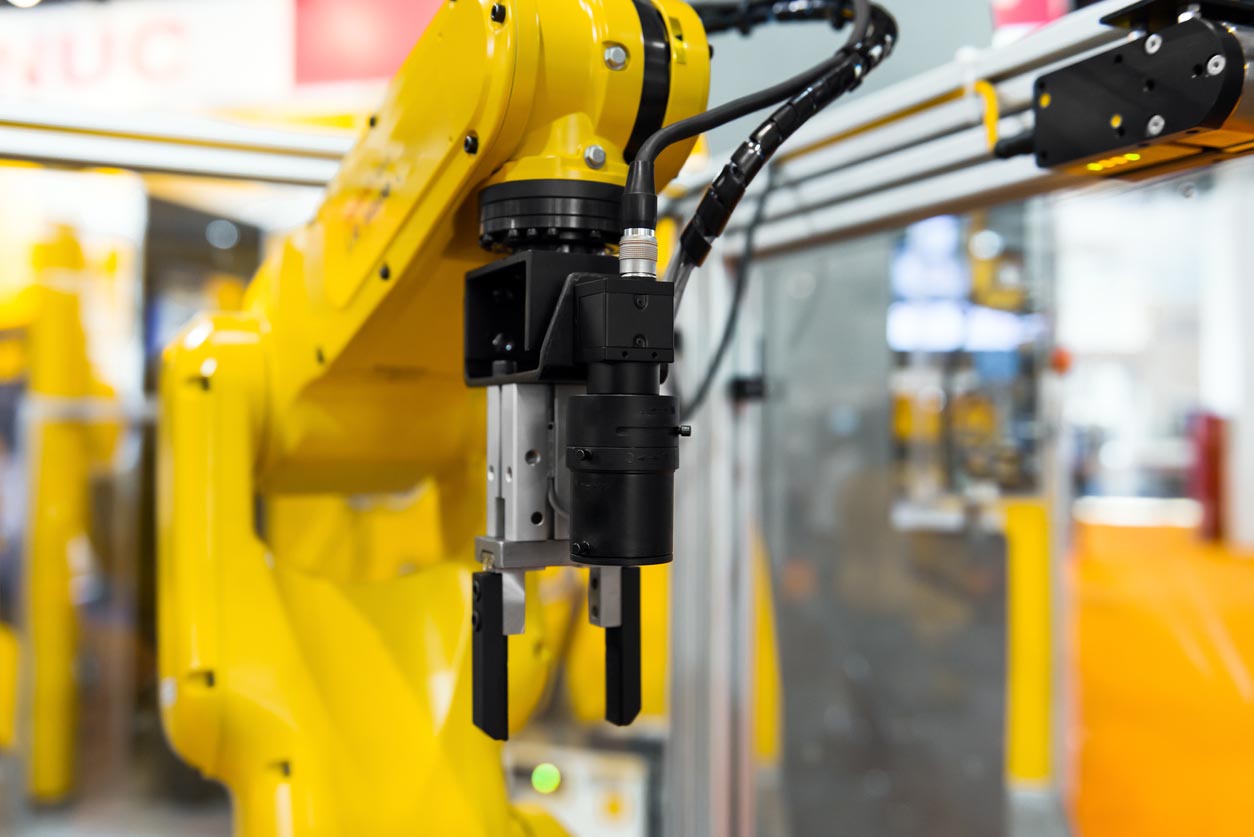 Over the past few decades, automation technology has advanced dramatically. Robots have become faster, more accurate and more capable of automating a wider range of tasks. Vision technology has become cheaper, faster and more intelligent over the years too. Recently, the two automation technologies have proven useful when used together.
Vision guided robot (VGR) applications are quickly becoming commonplace. This is in large part due to the fact that the cost of the latest technology is steadily decreasing. The lights, cameras, lenses, lasers and software needed to operate a VGR application are all dropping in price, making them more accessible to a wider range of end users. On top of this, vision technology is becoming more capable too. Cameras are smarter than ever, while sensors can capture more detail and transfer more image data to a computer for better analysis.
VGR technology is a primary driver of market adoption, but customers are demanding more than ever.
The Latest Vision Guided Robot Demands from End Users
Demands from the end users of vision guided robots help determine the future direction of the technology. Today, end users are demanding a few common things from their VGR technology.
ROI Calculator

Discover the potential cost savings of robotic automation over a 20-year system life
This calculator compares your current manual labor costs against the total cost of owning and operating a robotic system over its 20-year lifespan.
- Random picking: End users are more frequently requesting random bin picking capabilities in order to replace dedicated operators and simplify the assembly line.
- Less hard fixtures: VGR technology needs to be able to pick and place objects with variations in part orientation in location to reduce costs associated with fixtures.
- Higher flexibility: In addition to handling variety in part orientation, VGR technology needs to handle multiple parts on the same assembly line for added flexibility and productivity.
- High integration: End users are requiring an increasing convergence of robot and vision technology, requesting robots that position cameras for inspection, or position parts in front of a camera, to maximize efficiencies in production.
End user demand helps drive technological innovation and shapes the future of this technology. In today’s manufacturing environment, end users are requesting many of the same things and suppliers are working to be the first to meet these demands.
VGR technology has advanced rapidly over the years. The integration of robot and vision technologies has increased the flexibility, speed, and profitability of robotic applications in the industrial sector.
Share This On X:
End user demand for vision guided robots helps drive technological innovation and shapes the future of this technology.
VGR technology has advanced rapidly over the years. The integration of robot and vision technologies has increased the flexibility, speed, and profitability of robotic applications in the industrial sector.
Recent Posts
- 6 Companies Driving Automation in Mexico
- Humanoids on the Horizon: What Hurdles Remain for Widespread Adoption?
- Safety by Design: How Humanoid Robots Must Evolve to Depart the Walled Garden
- Are Robots Really Taking All the Manufacturing Jobs?
- The Shipping Industry Floats Emerging Opportunities for Maritime Automation
- New to Robotics? Start with These Fundamentals
- View All Blogs