
Vision & Imaging Blog
Types of Processors Best Suited for Embedded Vision Applications
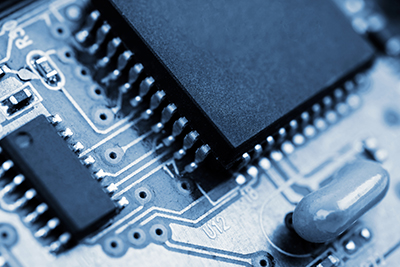 One reason we are witnessing an explosion of embedded vision technology is due to the shrinking size of embedded vision processors. The algorithms needed for embedded vision are hungry for a processor’s resources. Speed, bandwidth, and throughput must be carefully balanced with cost and power consumption to create suitable processors for embedded vision.
Our society is more mobile than ever. Consumers expect technology to be mobile too. Battery-powered devices like your cellphone can use embedded vision only if your device’s battery is up to the task. Plus, there’s only so much real estate inside your device. Manufacturers have had to make processors smaller and smaller so you can bring embedded vision along for the ride.
Types of Processors for Embedded Vision Applications
Computer vision technology typically uses a central processing unit (CPU) and a graphics processing unit (GPU). Manufacturers have realized that there is a need for processors that are specifically designed for deep learning algorithms and deliver far better efficiency. These processors can be made even smaller when paired with robust sensor technology.
Graphics processing units can deliver large amounts of parallel computing. They are especially well-suited for processing visual data right down to the individual pixel. General-purpose GPUs (GPGPUs) are also optimized to reduce power consumption while still providing high performance.
ROI Calculator

Discover the potential cost savings of robotic automation over a 20-year system life
This calculator compares your current manual labor costs against the total cost of owning and operating a robotic system over its 20-year lifespan.
Field programmable gate arrays (FPGAs) are growing in popularity for embedded vision applications. FPGAs have very low latency levels. They’re essentially a fusion of algorithms and hardware. They have lower power requirements and can simultaneously accelerate multiple portions of a computer vision pipeline.
Architectures for Embedded Vision Processors
Several designs help to get embedded vision into your everyday devices. One type is the system-on-chip (SoC) architecture. Here, the CPU, GPU, interface controller, and often more, are all on a single chip. Your mobile device manufacturer is keenly interested in the development of SoCs.
Another architecture is referred to as the system-on-module (SoM) design. SoMs include SoCs but also add RAM (random access memory), power management, and bus systems. A carrier board can add a power connection and additional connectivity. This is a design you might see on the production line at your manufacturing facility.
There are a couple more architectures to consider. The single-board computer (SBC) is essentially an SoM paired up with a carrier board in one. SBCs have low costs, but can’t be easily customized to specific applications. One other architecture is fully custom designs. These designs are most commonly used in highly specific applications to reduce costs.
Recent Posts
- How 3D Vision Systems Are Transforming Food Manufacturing
- Autonomous Driving Technology: Dueling Approaches Fight for Control of the Wheel
- These Farms Are Harnessing Machine Vision for Smarter Agriculture
- Revealing the Hidden Effects of Climate Change with Advanced Imaging
- How Vision Systems Are Transforming Predictive Neurodiagnostics
- Innovative Machine Vision Lenses and Trends
- View All Vision & Imaging Blogs