
Vision & Imaging Blog
How Machine Vision is Shaping the Future of Parking
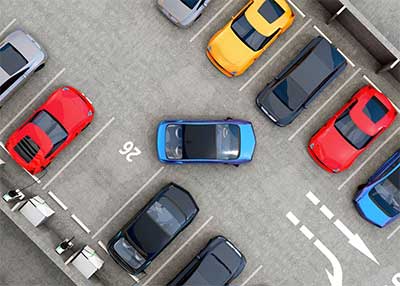 Many places around the United States suffer from parking congestion. This can lead to a great deal of lost time and effort – drivers have to search lots and facilities for spaces, circling and circling, while enforcement officials spend time on minor breaches of conduct.
Since the advent of the automobile, there’s been one fundamental problem: Parking spaces are first come, first serve. It’s impossible to predict when – or for how long – they’ll be needed.
With the help of advanced machine vision systems, however, that may be changing.
Now: A More Convenient, User Friendly Parking Garage
Particularly in urban areas, parking regulation is essential to daily life. If parking spaces don’t “turn over” regularly, locals are left unable to go about their business or forced into pricey, multi-level garages.
Cambridge Consultants, the robotics company behind the groundbreaking automated warehouse, is now tackling parking problems. The firm’s new smart monitoring system addresses some of the biggest complaints around city parking.
Using advanced machine vision, industrial cameras are able to monitor parking activity in real time. They can compute occupancy for both parking garages and on-street parking spaces.
Certified System Integrator Program
Set Yourself at the Forefront of the Global Vision Market
.jpg) Vision system integrators certified by A3 are acknowledged globally throughout the industry as an elite group of accomplished, highly skilled and trusted professionals. You’ll be able to leverage your certification to enhance your competitiveness and expand your opportunities.
Vision system integrators certified by A3 are acknowledged globally throughout the industry as an elite group of accomplished, highly skilled and trusted professionals. You’ll be able to leverage your certification to enhance your competitiveness and expand your opportunities.
Parking Improvements to Come Today and in the Future
Developing a low-cost system capable of monitoring parking occupancy in an accurate way was a big step. In the future, however, even greater things may be possible.
As the system matures, some aspirational features are already on the drawing board:
- Instant, automated assignment of a particular parking garage space to cars as they enter;
- Automated payment capabilities using a driver’s smartphone or in-vehicle computer;
- Hyper-accurate assistance finding one’s parked car through license plate recognition.
Although the system would not be possible without robust machine vision, it’s important not to overlook the powerful algorithm that controls its “situational awareness.” There’s huge potential for such an algorithm to grow more sophisticated and feature-rich as development continues.
Combined with the growing power of data science, such machine vision systems may someday have revolutionary capabilities: For example, predicting how long a space is likely to be occupied or providing city planners with more granular traffic flow information than ever.
Recent Posts
- How 3D Vision Systems Are Transforming Food Manufacturing
- Autonomous Driving Technology: Dueling Approaches Fight for Control of the Wheel
- These Farms Are Harnessing Machine Vision for Smarter Agriculture
- Revealing the Hidden Effects of Climate Change with Advanced Imaging
- How Vision Systems Are Transforming Predictive Neurodiagnostics
- Innovative Machine Vision Lenses and Trends
- View All Vision & Imaging Blogs