
Vision & Imaging Blog
Deep Learning May Be the Second Machine Vision Revolution
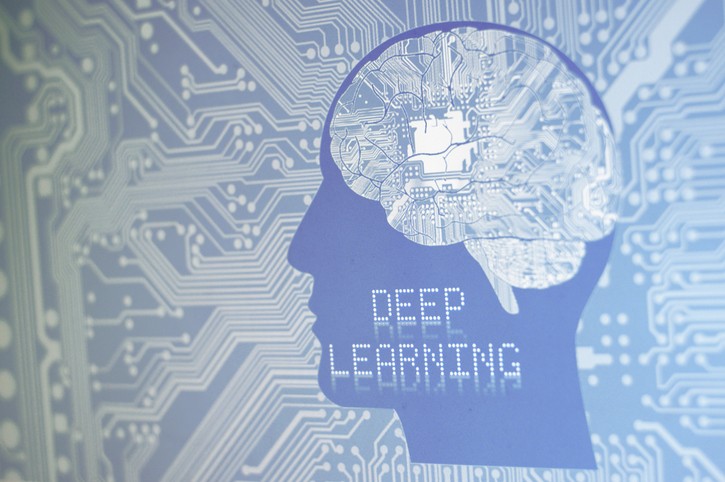 Several decades ago, machine vision burst onto the scene as a disruptive automation technology with the promise of game-changing results for manufacturers. Today, machine vision technology is commonplace in factory settings and its benefits and limitations are well understood. The introduction of deep learning to machine vision pushes the boundaries of what’s possible and promises to be the next major disruption.
Deep learning and machine vision are a powerful combination, opening up new applications and capturing the attention of C-level executives across the world.
What Exactly is Deep Learning?
Deep learning machine vision software, in its most basic form, allows machines to learn from large representations of data, as opposed to relying on task-specific algorithms. For the sake of machine vision, this data is huge troves of images pre-tagged by human inspectors.
Deep learning programs use software-based neural networks to learn the parameters they need to perform in specific applications. Essentially, they learn in a similar way to children. They eventually learn to recognize “good” and “bad” after seeing thousands of images labeled as “good” or “bad”.
Certified System Integrator Program
Set Yourself at the Forefront of the Global Vision Market
.jpg) Vision system integrators certified by A3 are acknowledged globally throughout the industry as an elite group of accomplished, highly skilled and trusted professionals. You’ll be able to leverage your certification to enhance your competitiveness and expand your opportunities.
Vision system integrators certified by A3 are acknowledged globally throughout the industry as an elite group of accomplished, highly skilled and trusted professionals. You’ll be able to leverage your certification to enhance your competitiveness and expand your opportunities.
Deep Learning Machine Vision Applications
Not every application benefits from deep learning capabilities. For example, locating an object based on a defined shape may not be a good candidate for deep learning machine vision. Mainly, this is because traditional machine vision systems can handle this task perfectly well and have been doing so for decades.
Good candidates for deep learning then, may be inspection applications where there is no pre-defined shape. For example, identifying the presence of surface scratches or in assembly verification where object orientation and location are unpredictable. In general, when objects appear differently from the camera’s perspective, deep learning will be a superior choice for machine vision.
Deep learning and machine vision make a powerful combination. Deep learning enhances machine vision capabilities and opens up entirely new application possibilities. The two technologies are only just beginning to merge and have the potential to revolutionize the way machine vision is deployed in nearly every way.
Recent Posts
- How 3D Vision Systems Are Transforming Food Manufacturing
- Autonomous Driving Technology: Dueling Approaches Fight for Control of the Wheel
- These Farms Are Harnessing Machine Vision for Smarter Agriculture
- Revealing the Hidden Effects of Climate Change with Advanced Imaging
- How Vision Systems Are Transforming Predictive Neurodiagnostics
- Innovative Machine Vision Lenses and Trends
- View All Vision & Imaging Blogs