
Vision & Imaging Blog
An Introduction to Hyperspectral Imaging
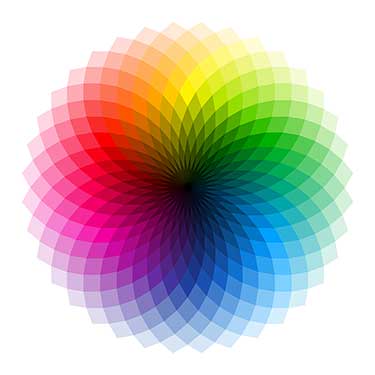 Hyperspectral imaging is an advanced approach to stereoscopy, combining it with the power of digital imaging to develop incredibly precise and detailed images. These can be used in a wide range of scientific and industrial applications.
For each pixel present in a given image, a specialized hyperspectral camera captures the light intensity of multiple contiguous spectral bands. This might be 20-30 bands for a basic system or several hundred for a more advanced one.
Each pixel in the completed image is furnished with a continuous spectrum of reflectance or radiance. This provides unprecedented depth of information about each object in a scene and the relationship of objects to one another.
What is Hyperspectral Imagery Used For?
Hyperspectral images are massively more sophisticated and precise than the images produced by standard color cameras, which can only capture the spectral channels associated with the three primary colors – that is, red, green, and blue.
As a result, hyperspectral imagery is appropriate for any situation where images have to encompass a large amount of terrain and encode a great deal of information within a single view. Hyperspectral imaging is used widely in cutting edge military, ballistics, and satellite applications.
Certified System Integrator Program
Set Yourself at the Forefront of the Global Vision Market
.jpg) Vision system integrators certified by A3 are acknowledged globally throughout the industry as an elite group of accomplished, highly skilled and trusted professionals. You’ll be able to leverage your certification to enhance your competitiveness and expand your opportunities.
Vision system integrators certified by A3 are acknowledged globally throughout the industry as an elite group of accomplished, highly skilled and trusted professionals. You’ll be able to leverage your certification to enhance your competitiveness and expand your opportunities.
It has also been applied to industrial quality control tasks and in the laboratory for medical and biophysics research.
How Does a Hyperspectral Camera Capture Images?
Hyperspectral imaging is done line by line in so-called “pushbroom” mode. A very slender spatial line is captured and split into its spectral components before any work starts on the next line. This level of processing generally occurs in one dedicated sensor array.
Within the second sensor array, one dimension is dedicated to spectral separation while the other is used for imaging in a single spatial direction. Splitting the work allows for faster processing of the complex image information across a wide field of view.
Although the technology is powerful, it has yet to be commercialized in a way that permits for widespread use. Experts in hyperspectral imaging are in great demand among the institutions that have access to it. To learn more about hyperspectral imaging, watch this free webinar.
Recent Posts
- How 3D Vision Systems Are Transforming Food Manufacturing
- Autonomous Driving Technology: Dueling Approaches Fight for Control of the Wheel
- These Farms Are Harnessing Machine Vision for Smarter Agriculture
- Revealing the Hidden Effects of Climate Change with Advanced Imaging
- How Vision Systems Are Transforming Predictive Neurodiagnostics
- Innovative Machine Vision Lenses and Trends
- View All Vision & Imaging Blogs