
Blog
Machine Vision Lighting: A Brief Design Overview
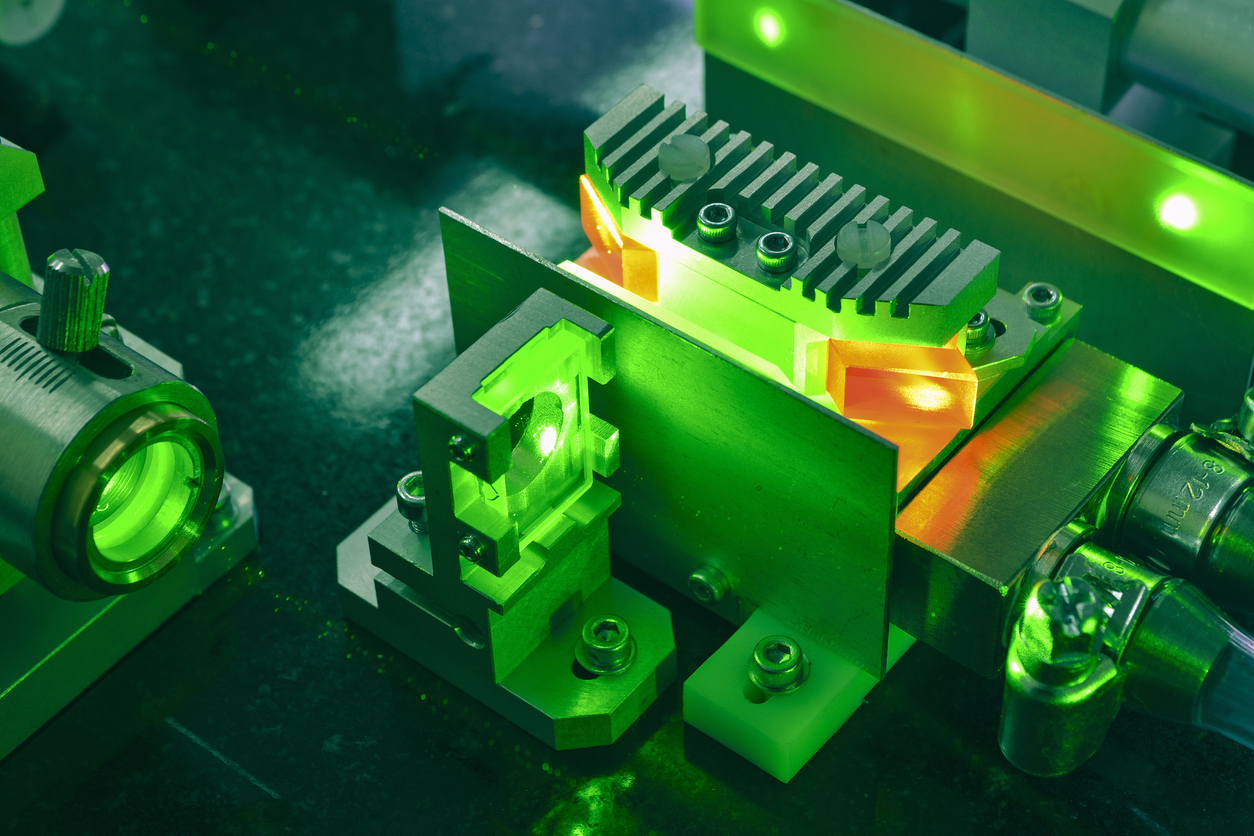 Machine vision lighting is a critical component of a successful automated imaging system. Without proper lighting, your machine vision system will not function as intended and may provide skewed or inaccurate results.
Every machine vision application needs its own lighting solution. Many processes could be illuminated a few different ways and every lighting technique has its pros and cons.
Integrating a machine vision lighting system is a complicated undertaking and there are several application-specific considerations to take into account before implementing anything. The best way to start is to know what lighting design factors to consider for your application.
6 Machine Vision Lighting Design Considerations
Here are 6 considerations for integrating and designing a machine vision lighting solution that’s applicable to any application:
- Determine the Exact Features of Interest
Determine in advance exactly what a proper machine vision and lighting system will produce. For example, in inspection applications, determine what a properly illuminated part will look like, and which areas are most important for inspection, and therefore most important for lighting.
- Analyze Part Access/Presentation
Will the part be clear or obstructed? Will it be moving or stationary? You need to understand how the part is presented to be able to accommodate for this in lighting design. Part presentation will have a significant impact on the resulting lighting system.
Certified System Integrator Program
Set Yourself at the Forefront of the Global Vision Market
.jpg) Vision system integrators certified by A3 are acknowledged globally throughout the industry as an elite group of accomplished, highly skilled and trusted professionals. You’ll be able to leverage your certification to enhance your competitiveness and expand your opportunities.
Vision system integrators certified by A3 are acknowledged globally throughout the industry as an elite group of accomplished, highly skilled and trusted professionals. You’ll be able to leverage your certification to enhance your competitiveness and expand your opportunities.
- Analyze Surface Characteristics
Texture, reflectivity, contrast and surface shape all have an impact on lighting and must be taken into consideration. A curved surface, for example, will have different lighting requirements than a flat surface.
- Understand Your Lighting Options
What type of lighting equipment will you use: rings, domes, bars, spots and/or controllers? Will you use bright field, diffuse, dark field or back lighting? You need to understand all your available options to choose the best one for your application.
- Understand Your Lighting Limitations
Many applications have inherent limitations for enhancing illumination. Contrast enhancement, for example, could be limited by light direction and wavelength. Take into consideration the pre-existing limitations in your application.
- Factor in Environmental Issues
Machine vision lighting does not take place in a vacuum – environmental factors will always be an issue. Ambient light, for example, can have a dramatic effect on lighting systems, creating inconsistent lighting environments.
The 6 considerations above are a broad overview of all the things you need to consider before implementing a machine vision lighting solution.
Machine vision lighting is an integral component of any machine vision system, but integration and design can be a challenge because of the number of variables you need to consider.
Recent Posts
- How 3D Vision Systems Are Transforming Food Manufacturing
- These Farms Are Harnessing Machine Vision for Smarter Agriculture
- Revealing the Hidden Effects of Climate Change with Advanced Imaging
- Innovative Machine Vision Lenses and Trends
- An Early Look at GigE Vision 3.0
- Looking at the Latest Machine Vision Standards Updates
- View All Blogs