
Blog
How is Embedded 3D Machine Vision Enhancing Automotive Production Processes?
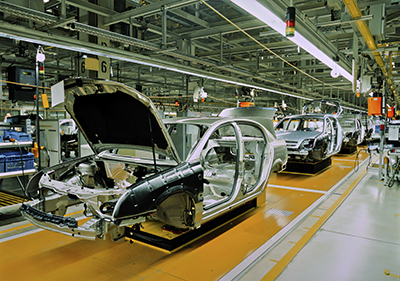 Auto manufacturers are now using 3D machine vision to build automobiles more efficiently. This technology is helping them meet strict quality standards, competitive production goals, and cost constraints. 3D machine vision can be used for a wide range of applications where fast and accurate object detection is needed.
The auto industry puts special demands on 3D machine vision. Quality standards and production environments require the systems to be robust, reliable, and powerful. Price pressures require the systems to provide maximum value and lower costs over time. The products used must remain available for a long time, include product support, and be engineered with the utmost precision in mind.
3D Machine Vision Improves Automation
Machine vision speeds up the production process in a variety of ways. It can be used to inspect component surfaces and identify defective products and materials, and can also quickly check to see if a product was built correctly. A machine can accomplish this in milliseconds, a much shorter timeframe than human inspection. The cameras can also read barcodes and more easily identify an object.
Moving from 2D vision to 3D machine vision has helped increase the viability of automation in production. 2D image data could track moving objects and determine location but only in 2D space, such as when laying on a conveyor belt. In contrast, 3D machine vision lets automated systems detect and move objects regardless of where they reside in 3D space. Better picking processes are made possible, especially when components are pulled from a bin. The cameras can even select an item based on features like color or surface.
ROI Calculator

Discover the potential cost savings of robotic automation over a 20-year system life
This calculator compares your current manual labor costs against the total cost of owning and operating a robotic system over its 20-year lifespan.
3D Machine Vision Better Equips Robots
3D machine vision particularly benefits robot-assisted automation processes by giving the production process a way to see. Many robots now have their own cameras or are linked to cameras elsewhere on the line that let them see what is happening in real-time. 3D machine vision can oversee the entire line and be used to optimize process steps. The robots can combine tasks, better position objects, or change its end effectors when needed.
A specific application lies in the design of the interior of a vehicle. Manufacturers use foam in armrests and headrests that are expertly designed for adaptability, flexibility, and durability. Reducing waste and increasing the effectiveness of the interior is important to manufacturers. One way to do so is for a robot to capture 3D images of a foam part and then trim and rework using the 3D machine vision data.
Recent Posts
- How 3D Vision Systems Are Transforming Food Manufacturing
- Autonomous Driving Technology: Dueling Approaches Fight for Control of the Wheel
- These Farms Are Harnessing Machine Vision for Smarter Agriculture
- Revealing the Hidden Effects of Climate Change with Advanced Imaging
- How Vision Systems Are Transforming Predictive Neurodiagnostics
- Innovative Machine Vision Lenses and Trends
- View All Blogs